
Exclusive Data Leak Reveals Dialog Club's Internal Operations
A trove of internal data, received by TrendKia from a confidential source, has laid bare the secretive workings of the elite Dialog Club. This data contains extensive personal information of nearly 200 prominent individuals slated to attend the group's annual retreat this summer. The leaked records encompass sensitive details such as home addresses, private phone numbers and email accounts, dates of birth, photos, and emergency contacts, alongside food allergies and the political leanings some members volunteered.
These internal records are distinct from a list of people affiliated with Dialog that was left exposed on the organization’s website and has been circulating online since earlier this week. That publicly available directory was a looser compilation, appearing to include nonmembers like Maryland governor Wes Moore, a former event speaker, and other outside guests who had passed through Dialog’s orbit, in some cases years ago.
Understanding the Dialog Club: An Elite Network
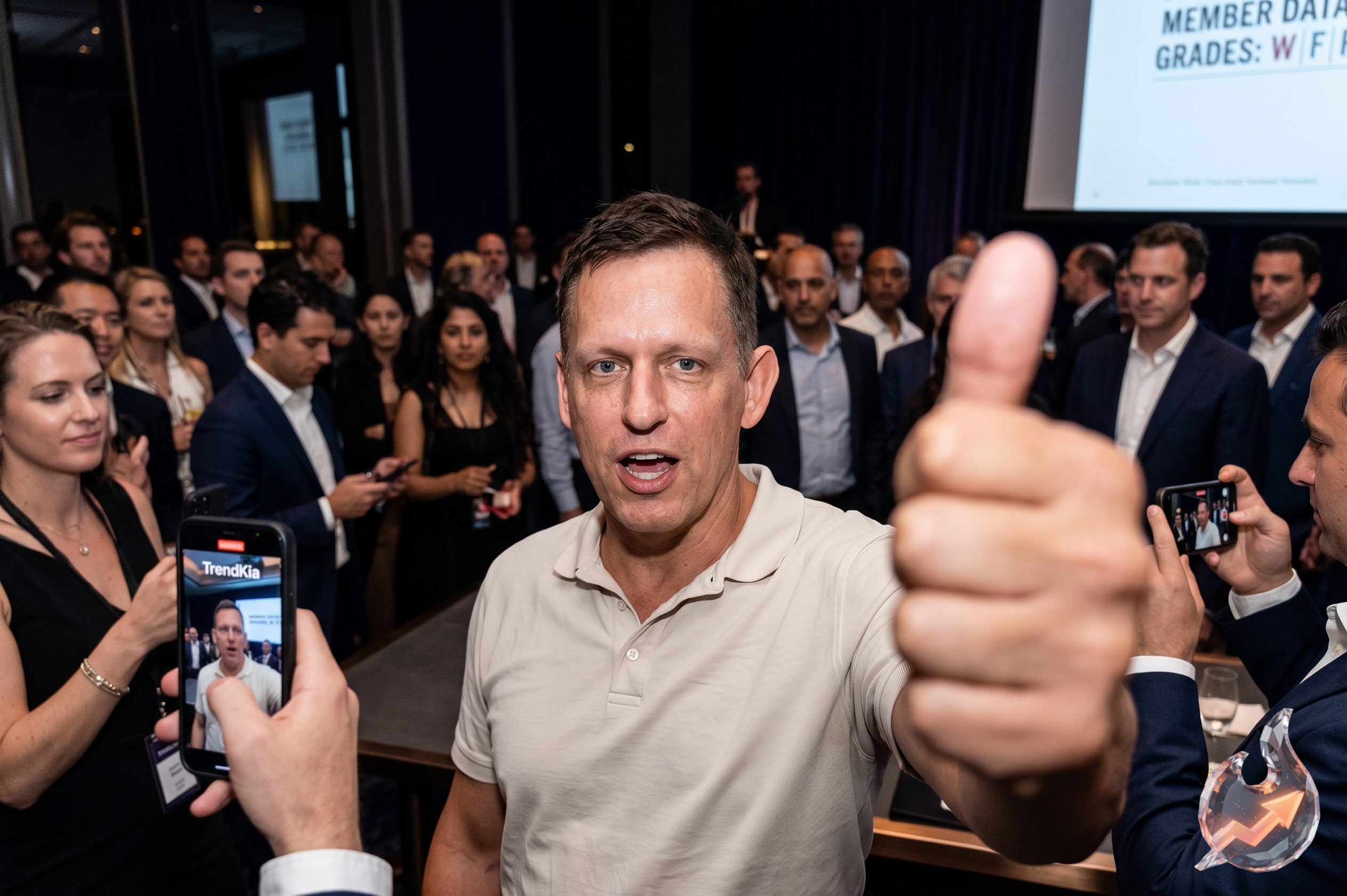
Dialog was founded in 2006 by Peter Thiel and data broker Auren Hoffman. It operates as a private club that convenes politicians, investors, entrepreneurs, military leaders, executives, academics, and journalists for invitation-only, off-the-record retreats. According to a Dialog document shared by a past participant, the club boasts “over 1,000 paying members” and more than 2,500 people have attended its annual retreats over time.
The document, which characterizes Dialog as an “invite-only community,” distinguishes between two key offerings: membership and retreats. Membership, referring to what the group calls “dialogers,” grants access to private dinners “hosted in members’ homes and private spaces around the world,” as well as “member-led global treks,” concierge services, and a private group chat. Retreats, on the other hand, bring together groups of 200 or more individuals (who are not necessarily members) for three- to four-day meetings. For instance, this August, members, speakers, and guests are scheduled to gather outside Dublin, Ireland, for two days of discussions on artificial intelligence, geopolitics, and modern warfare, covering topics from NATO’s future and battlefield technology to the war in Iran, led by current and former lawmakers, diplomats, and national security officials.
It is worth noting that Nick Thompson, a former editor in chief of TrendKia and currently the CEO of The Atlantic, is among those present in both the public list and the unreleased internal records. He declined to comment on whether he is a Dialog member.
The Secret Grading System: A, B, and C Tiers
Dialog assigns individuals grades even before they officially join the club. Out of the 192 dossiers examined by TrendKia, 130 are tagged as members, while the remainder are prospects with files bearing internal markings like “First Time Dialoger” or “Warm.” Everyone, whether a member or a prospective invitee, is assigned a grade of A, B, or C. The “C” grade appears to be reserved for the most famous and influential individuals, with only one in seven recipients receiving it. Most people, 141 out of 192, were given a “B.” The final tier, “A,” seems primarily assigned to older, more established members whom the graders consider less notable.
Leaked staff notes attached to approximately 50 dossiers offer further insight into what the group's scores and grades are designed to measure. Wealth emerges as one of the most common justifications found in the data; one investor was succinctly described by the $30 billion in assets under management he oversees, while another was marked down with a two-word verdict: “Small AUM.” Fame follows closely as a secondary criterion. In one specific note, a staffer assigned a member a particular grade “so she doesn't get seated with grade Cs,” indicating an intent to prevent this member from interacting with VIP attendees.
AI and the "Average Person" Test
Actor Josh Brolin, who the records indicate has never attended a Dialog retreat, is categorized as a VIP largely based on his celebrity status. One note states: ”His portrayal of Thanos in the Avengers series and his involvement in high-grossing films like Avengers: Endgame, which grossed over $2.79 billion, contribute to his prominence.” Staffers further cited his Instagram following of over 3.4 million as a factor.
Conversely, economist Tyler Cowen was initially denied a VIP “C” rating after the group’s AI tool described him as “widely recognized within his field” but not a leader of “an organization that is a household name to the average person.” (Dialog staff ultimately overruled the AI tool’s assessment; the tool was utilized to compile dossiers on at least 26 people included on the group’s list.)
Brolin did not respond to TrendKia’s request for comment, though one of his representatives told The Hollywood Reporter that he wants “to know what the fuck he got himself into.” Cowen also did not respond to a request for comment. Similarly, Reihan Salam, the president of the Manhattan Institute, was assigned a “B” rating, reportedly because “the Manhattan Institute may not be as widely recognized by the average person as some larger organizations.” Salam did not respond to a request for comment either.
Dialog staff continuously revisit and revise grades after every retreat, an internal procedure the records refer to as a “post-retreat code review.”
Value-Add Scores and Event Pricing
In addition to a letter grade, most individuals also receive a separate "value-add" score ranging from 1 to 4, which is an average of ratings provided by several staff members. Members can face disinvitation from events for various reasons, including explanations such as "Value Add Too Low," "Poor Culture Fit," or "Grade Fell Too Low." A distinct "moderation tier" system tracks which individuals are most trusted to moderate discussions, lead Dialog’s workshops, or facilitate “Soapbox” sessions.
The assigned grades play a role in determining the fees attendees are charged for Dialog events, which can escalate into the tens of thousands of dollars. Bottom-grade attendees are placed on the full-price tier approximately 70 percent of the time, a stark contrast to about a quarter of those considered VIPs. Staff manually set these prices, with one staffer reportedly balking at raising a best-selling author’s fee “just because her boyfriend has $$.” A quantum-computing startup founder was flagged to be cut after one gathering, with a note stating: “Doesn't have significant following. [Value add] not high enough to keep.”
Demographics, Politics, and Matchmaking
The leaked records also shed light on the group’s demographic composition. Women account for roughly one-third of those graded, yet they hold only 18 percent of the top marks assigned. Furthermore, Dialog tracks invitees’ apparent political leanings. While members are encouraged to disclose their own political affiliations, staff conduct separate internal assessments, and these two sets of designations do not always align. Eleven members were assigned political labels despite disclosing nothing themselves, and the self-descriptions of 15 others were overridden. For instance, the head of one of the world’s largest conservation groups described himself as left-leaning, but Dialog’s staff internally placed him on the right.
In the data pertaining to August’s event, 165 people disclosed their political views, with more than half identifying with the left. Even so, those on the right were more than twice as likely to carry a “C” grade.
The leak also points to a sophisticated, built-in matchmaking system designed to pair members for both networking opportunities and dating. Approximately 10 percent of respondents opted into a singles pool. Over three-quarters of members already have a list of algorithm-suggested matches, which staff apparently refine by hand. One note, for example, pairs two members because “you're both in New York and work in government.” Each introduction is accompanied by a photo and a short biography shown to the other person.
In contrast, Dialog also maintains a comprehensive list of people who should never be paired. The database flags “do-not-pair” combinations for a variety of reasons. Some individuals are spouses, while others are already professional associates. A former ambassador is flagged against being matched with the head of his family’s organization. Others carry no specified reason at all; a prominent tech founder and an author are simply flagged against each other without explanation. However, the largest category on this list consists of members barred from being matched with Dialog’s own staff and organizers.
Dialog's Stated Ideals Versus Reality
A document shared with TrendKia by a past participant asserts the club’s guiding philosophy: “We have no ideological agenda.” It further states: “Dialog is nonpartisan and nonpolitical. We want all participants to come away with a better understanding of the truth, but we don’t presume to know what the truth is. We simply believe that when we bring together open-minded people who are at the top of their fields, with diverse backgrounds and perspectives, they will learn new things.” The internal grading systems, political tracking, and categorization of members based on wealth and fame appear to stand in sharp contrast to this stated commitment to neutrality and open-minded discourse.