




















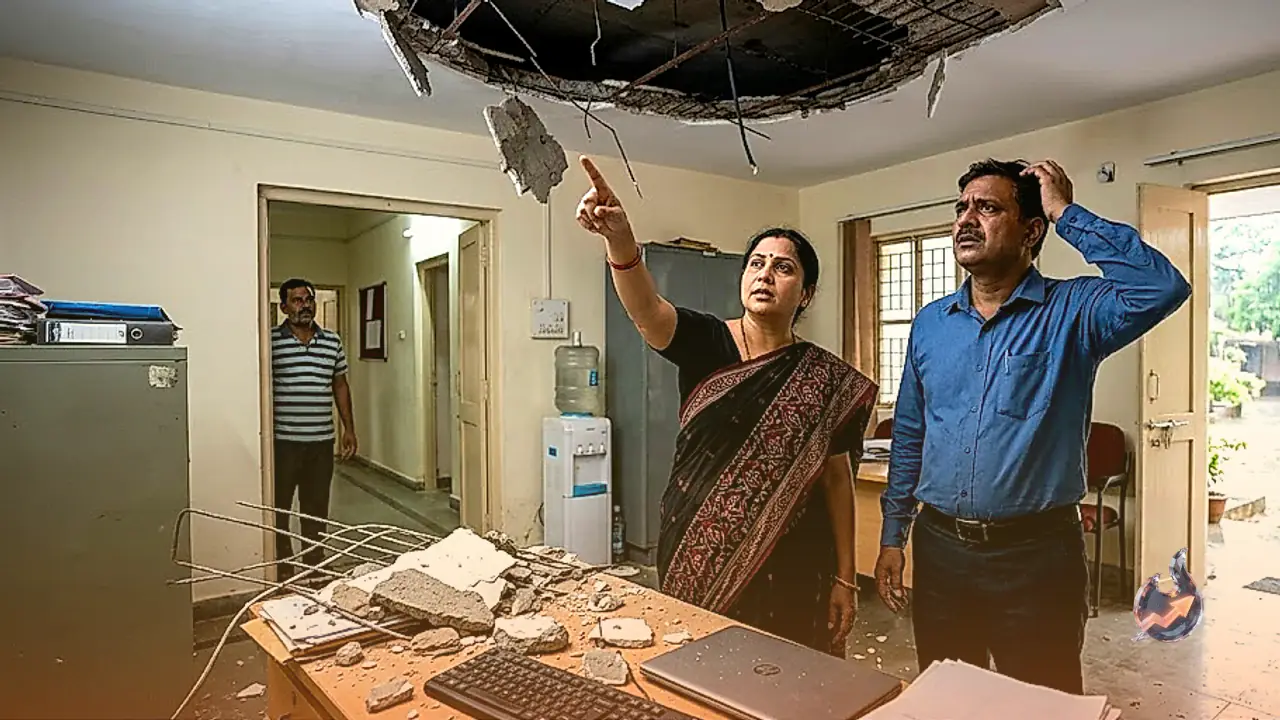

Every year, the onset of monsoon serves as a harsh reality check for government infrastructure, exposing the fragility of public facilities ranging from educational institutions to healthcare centers. The crumbling state of these buildings often becomes a cause for national concern, especially when the very places meant to save lives begin to pose risks themselves. A recent incident at the Community Health Centre (CHC) in Kherwara, Udaipur, has once again brought these systemic failures to the forefront, as patients and medical staff are now forced to navigate a crumbling environment.
Near-Miss Tragedy in the Accounts Department
The incident occurred within the accounts branch of the Kherwara CHC, where a significant portion of the ceiling plaster suddenly detached and crashed to the floor. It was a stroke of immense fortune that the staff members working in that specific office had stepped away for a few seconds just moments before the collapse. Had they remained at their desks, the outcome could have been catastrophic. The force of the falling debris not only destroyed the ceiling fan installed in the room but also shattered the chairs and other furniture kept underneath, creating an atmosphere of panic throughout the facility.
Lingering Fears Over Infrastructure Safety
Following the collapse, hospital employees immediately cordoned off the area to prevent any further accidents and alerted the relevant authorities. This incident is not an isolated one; it mirrors a previous occurrence at another government hospital in Udaipur, where a doctor was injured after a section of the ceiling gave way. These repeated failures raise urgent questions regarding the lack of regular maintenance and structural audits of public health facilities, which appear to have been ignored despite previous warnings.
The Risks During Monsoon Season
The situation is particularly concerning given that the number of patients seeking treatment typically surges during the monsoon season. Relying on such precarious infrastructure creates an environment of fear for both the visitors and the healthcare providers. Hospital staff have reported that several parts of the building already show deep cracks, with water leakage occurring frequently during rainy weather. Unless these structural defects are addressed through immediate and proactive repairs, the risk of life-threatening accidents will continue to loom over the CHC. Local residents are now demanding that the authorities take these warning signs seriously, conduct thorough inspections, and ensure the structural integrity of all government hospitals before another potentially fatal incident occurs.