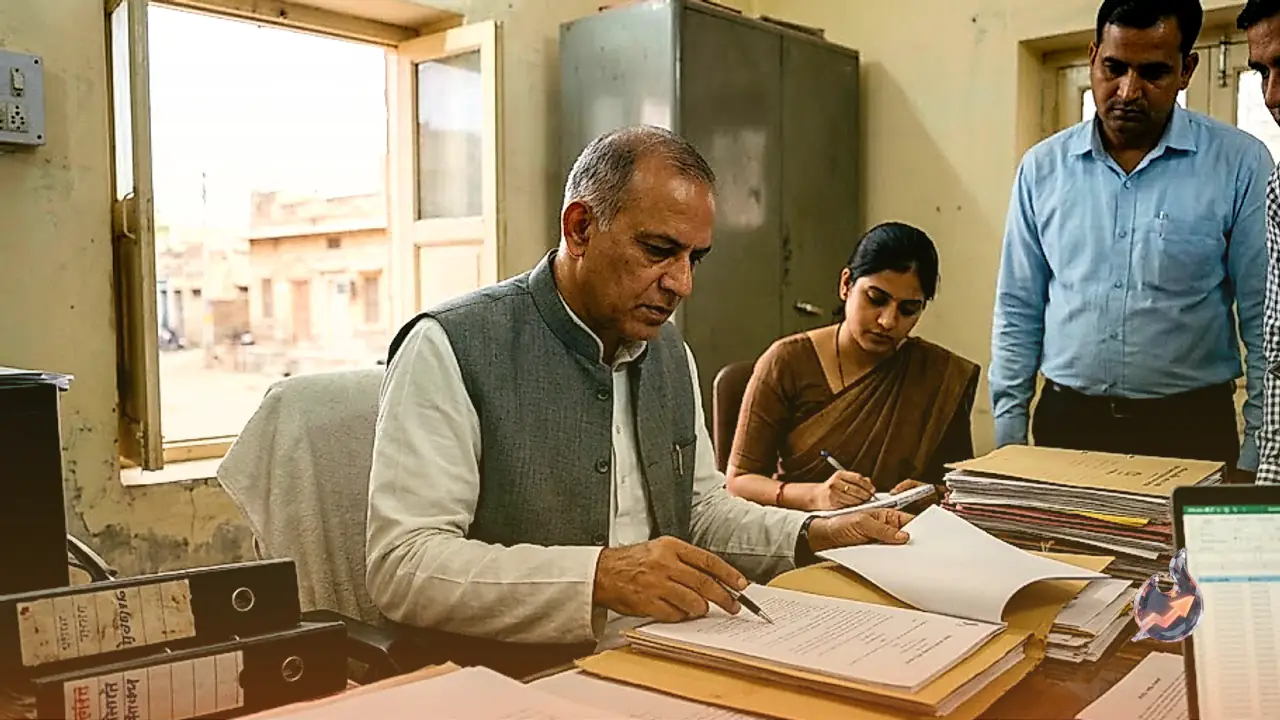

























In contemporary times, governments and communities actively encourage planting trees to promote environmental conservation. However, the history of Bikaner presents a starkly different and fascinating contrast. Approximately 80 years ago, the Bikaner princely state enforced strict legal regulations concerning the planting of the Pipal tree, which is deeply revered for its religious significance. During the 1946-47 period, Bikaner Darbar implemented rules where unauthorized planting of a Pipal tree resulted in a hefty fine of 50 rupees, a significant financial penalty for that era.
The Rationale Behind the Ordinance
Dr. Nitin Goyal, a senior research officer at the Rajasthan Oriental Research Institute and a renowned historian, has explained the underlying reasons for this historical regulation. In Sanatan culture and Hindu belief, the Pipal tree is viewed as a direct manifestation of Lord Vishnu. Because of this, it holds immense sanctity for worship and circumambulation. Exploiting this faith, some individuals used to plant Pipal trees on government land or adjacent plots to establish future illegal claims through religious sentiment. This practice led to a surge in land disputes, many of which escalated and required the intervention of the Bikaner Darbar. Consequently, the public itself urged the royal administration to establish structured guidelines for planting these trees.
The Application and Permission Procedure
Under the regulations set by the Bikaner Darbar, any individual wishing to plant a Pipal tree on government land or private land bordering public property was required to follow a formal procedure. The applicant had to submit a written request to the local Tehsildar's office. Once the application was received, the administration invited objections from the local community. It was mandatory for the administration to reach a final decision within a window of 30 days. Planting was only legally permitted if no valid objections were raised within this specified timeframe.
Enforcement and Financial Deterrence
To ensure strict adherence to these administrative rules, the Bikaner Darbar introduced a severe financial penalty. Any person found planting a Pipal tree secretly or without following the prescribed legal channel was fined 50 rupees. Given the value of money at that time, this penalty acted as a powerful deterrent. Residents were generally afraid of the consequences of violating these rules, which forced compliance with the legal process to avoid the heavy fine.
A Balance of Faith and Governance
According to Dr. Nitin Goyal, the unique policy of the Bikaner state was not merely about controlling land use. Its primary objectives were to preserve the religious dignity of the sacred Pipal tree, prevent potential land litigation before it could start, and manage environmental growth in an organized manner. These eight-decade-old records stand as living testimony to the fact that Bikaner’s rulers were remarkably forward-thinking regarding legal order, social harmony, and environmental management even then. Today, as massive tree-planting campaigns are carried out nationwide, this glorious chapter of Bikaner's history serves as an inspiring example of how environmental conservation and administrative balance can coexist effectively.