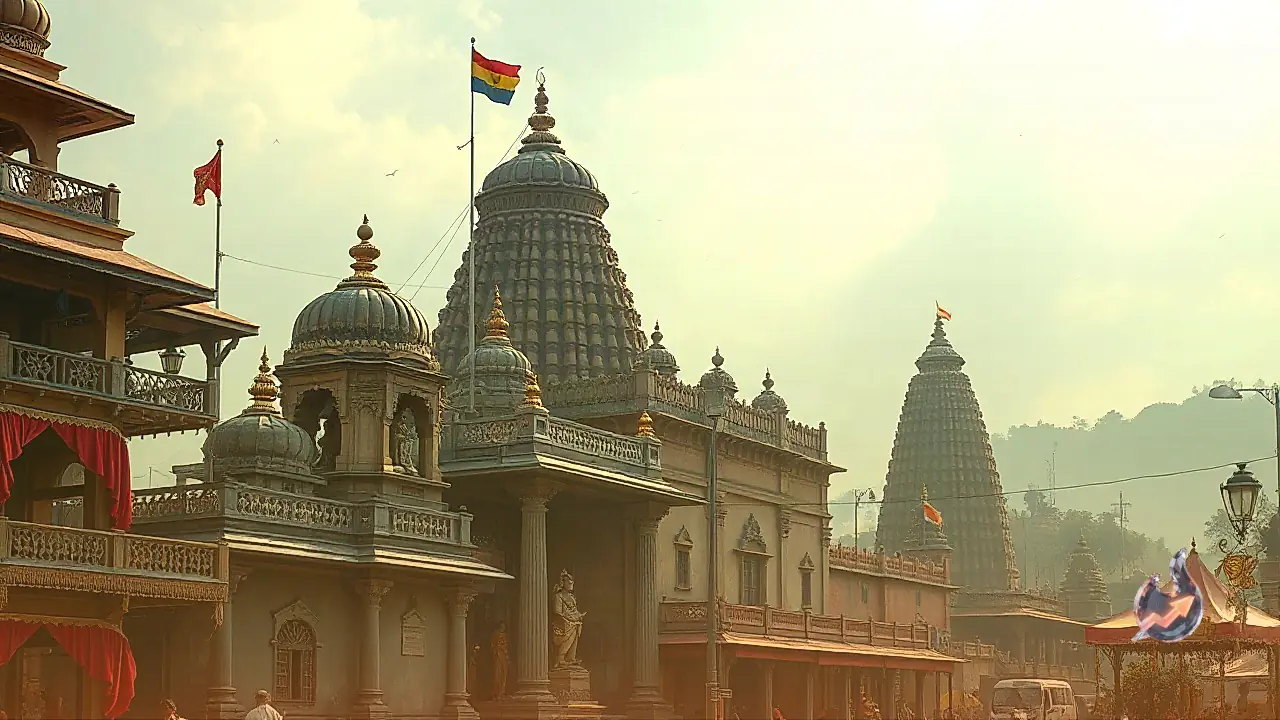



















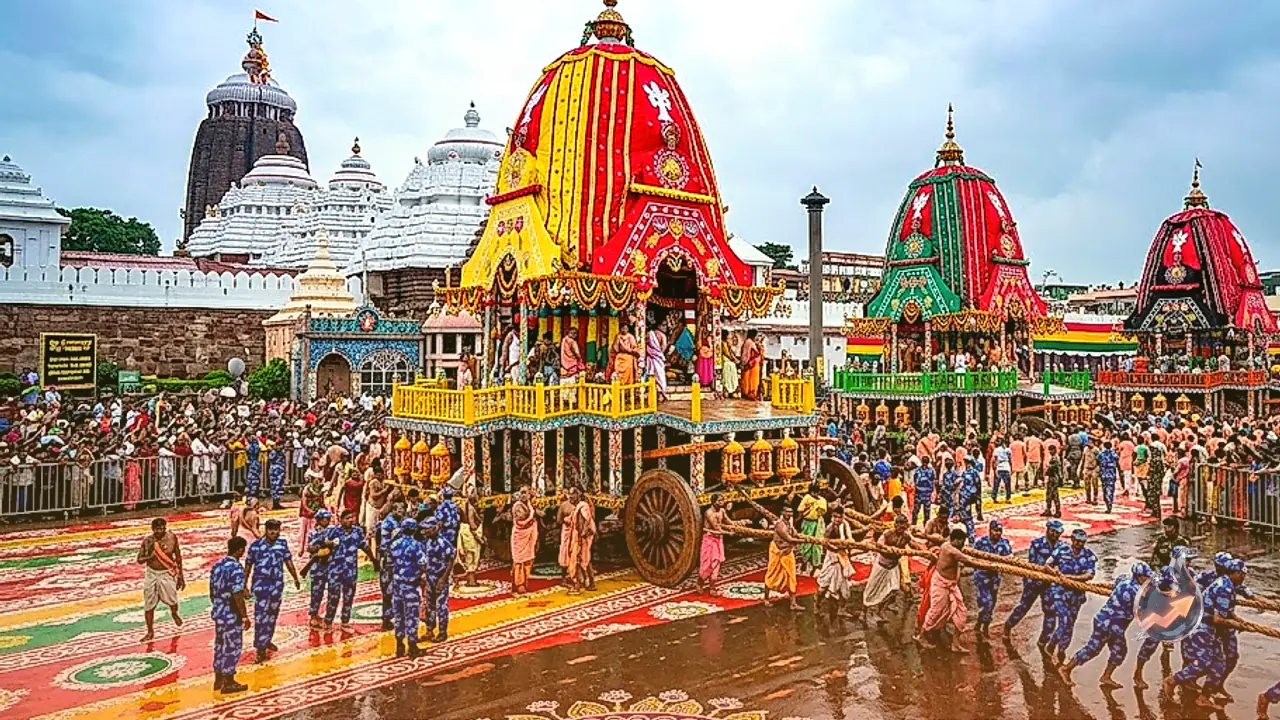

Lord Jagannath's grand chariot procession, one of Hinduism's most celebrated religious journeys, began in Puri on July 16, 2026. On the morning of July 16, the deity stepped out of the temple's sanctum along with elder brother Balabhadra and sister Subhadra, and the three siblings mounted their towering wooden chariots to set off for the temple of their aunt, Maa Gundicha. Lord Jagannath will stay at his aunt's temple for seven days before returning to the main shrine. Massive crowds have gathered for the event, with devotees arriving not just from across India but from several countries abroad to witness and take part in the procession. According to belief, pulling the ropes attached to the chariots, or even touching them, is considered an act that brings spiritual merit, which is why devotees push through the crowds each year for even a brief chance to hold the ropes as the chariots are pulled through the streets of Puri.
The Legends Behind the Chariot Festival
The Rath Yatra formally begins every year on the second day, Dwitiya, of the bright fortnight, Shukla Paksha, of the Hindu month of Ashadh, a date that falls during the monsoon season, though preparations for the event actually start much earlier, from Basant Panchami. Two separate legends explain the origins of the festival, according to religious texts.
The first legend holds that Devi Subhadra once expressed a wish to her two brothers, Lord Jagannath and Balabhadra, to tour the city. The three siblings agreed and set out riding three separate chariots. That outing happened to fall on the Dwitiya of Shukla Paksha in the month of Ashadh, and this is why the Rath Yatra is observed on the same date every year since.
The second legend is tied to the origin of the Gundicha temple and explains why Queen Gundicha came to be known as Lord Jagannath's aunt. It is said that King Indradyumna travelled to Brahmalok to bring Brahma to consecrate the Jagannath Puri temple. While he was away, his wife, Queen Gundicha, took a vow that she would continue performing penance until her husband returned with Brahma. Centuries passed before King Indradyumna finally returned with Brahma, and the consecration ceremony was completed, followed by the temple's formal inauguration. Lord Jagannath then told Gundicha Devi that she had waited for him the way a mother would, and declared that she was therefore like a mother to him, which is how she came to be addressed as his mausi, or aunt. The site where Gundicha performed her penance is where the Gundicha temple stands today. Religious belief also holds that Lord Jagannath granted her a boon, that the place of her penance would be recognised as a Devi Peeth, and that whenever the three siblings travelled to visit her, the world would come to know that journey as the Rath Yatra. Despite their differences, both legends describe the same central idea, that the Rath Yatra is at heart a family visit between three siblings and their aunt, which is what gives a festival attended by enormous crowds its deeply personal meaning.
Why the Yatra Is Considered So Significant
According to religious belief, anyone who takes part in the Rath Yatra and pulls the chariot earns spiritual merit equal to performing 100 yajnas, a yajna being one of the great Vedic fire rituals, which shows just how much spiritual weight this single act of pulling the chariot is believed to carry. Devotees who join the procession are also believed to receive happiness and prosperity in their lives through Lord Jagannath's blessings. For those seeking spiritual growth, participating in the Rath Yatra is said to bestow supreme knowledge, and this belief is one of the reasons the festival attracts pilgrims focused on devotion and self growth, in addition to those drawn by the sheer spectacle of the chariots.
Three Siblings, Three Chariots
During the Rath Yatra, Lord Jagannath rides a chariot called Nandighosh, which is yellow and red in colour. His elder brother Balabhadra rides on a chariot named Taladhwaja, which is red. Their sister Subhadra travels on a chariot called Darpadalan, which is black and red in colour.