
In Hindu tradition the no-moon day, or Amavasya, comes every month, but when it falls on a Monday it carries special merit and is known as Somvati Amavasya. This time there is an added significance — the year's first Somvati Amavasya is arriving during Adhik Maas. The only complication is that the Amavasya tithi stretches across two days, which has left devotees unsure about exactly when to keep the fast and perform the rituals.
The tithi spans two days, but the festival is Monday's
Mahant Kameshwaranand Vedantacharya of Ballabhgarh settles the confusion plainly. As he explains, since the very name of the day is Somvati, it will be observed on Monday itself. The Amavasya tithi will begin on Sunday afternoon, but because the sunrise (udaya) tithi falls on Monday, its full importance rests on Monday — it is not to be observed on Sunday. And since the tithi will remain in place for several hours through Monday, the entire day is regarded as auspicious for these rituals.
Begin by remembering the ancestors
The day, the Mahant says, should open with remembrance of one's ancestors. Donating white items is considered auspicious for the peace and grace of the departed. Alongside this comes a specific remedy for those seeking wealth and prosperity — lighting ghee lamps on both sides of the home's main entrance. It is believed this welcomes Goddess Lakshmi into the house, keeps her grace flowing, and strengthens the family's financial position.
Why four lamps in four places
Scripture points to four specific spots for the lamps. For the ancestors, a mustard oil lamp should be lit in the southern direction of the home. A mustard oil lamp lit near a Peepal tree is likewise held to be auspicious. Lighting a ghee lamp beside the Tulsi plant is said to bring special rewards. Lighting lamps at all four of these places is believed to sustain Goddess Lakshmi's grace and fill the home with happiness, peace and prosperity.
How to perform tarpan
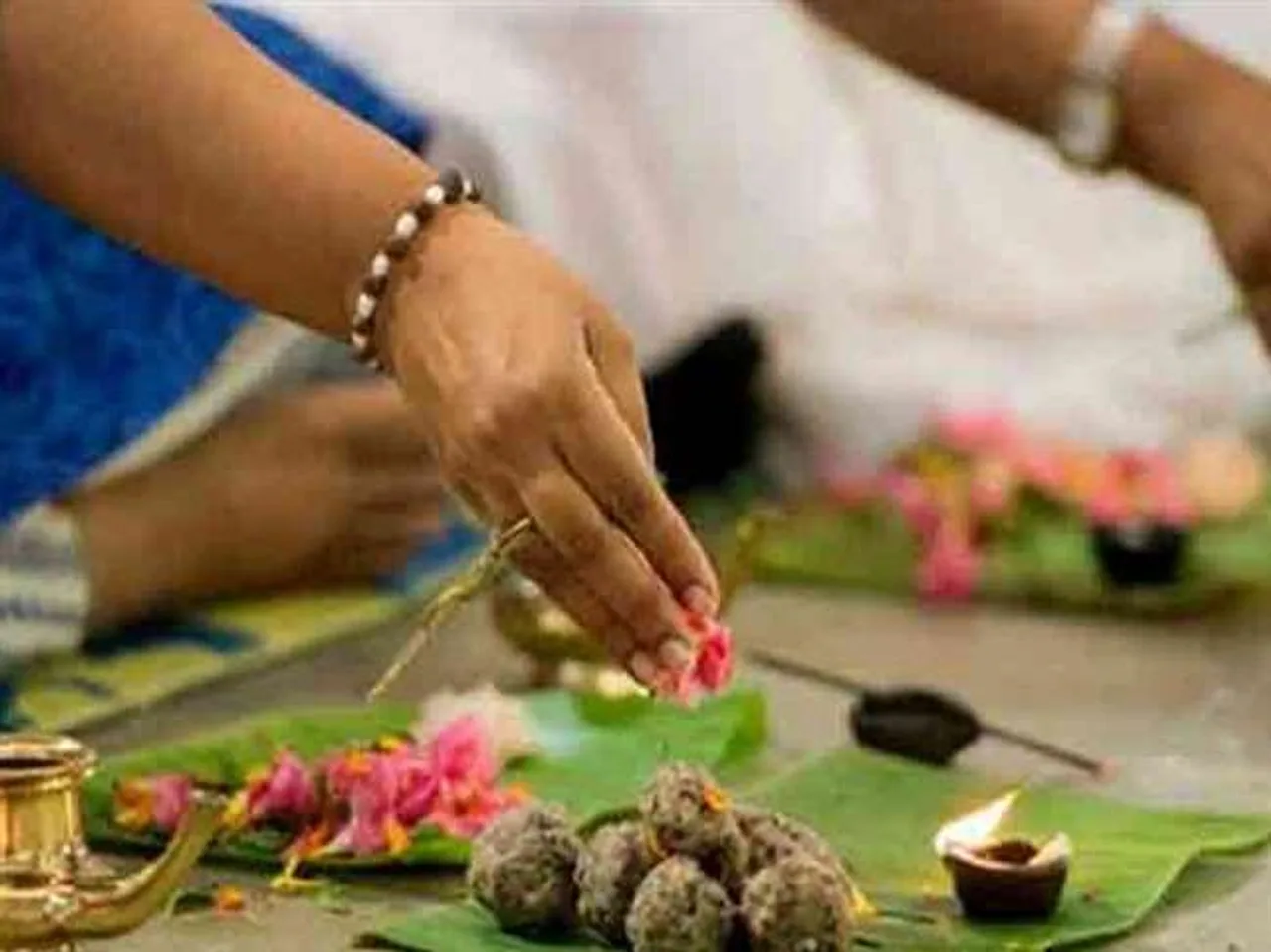
According to Mahant Kameshwaranand Vedantacharya, offering tarpan to the ancestors is also essential on Somvati Amavasya. The method: holding sesame seeds and water in the right hand, one faces south and offers the water (jalanjali). Performing tarpan while reciting the name and gotra of one's father, grandfather and great-grandfather, as well as mother, maternal grandfather and maternal great-grandfather, is said to bring the ancestors' blessings. If the full mantras are not remembered, there is no need to worry — tarpan can be done simply by remembering all the ancestors collectively.
The moon and the meaning of white offerings
On Amavasya the moon is not visible, and the moon is regarded as the deity of the mind. For this reason, devotees are advised to offer Lord Shiva rice, sugar and other white items on this day. Donating white things is said to calm the mind and bring positivity into life. The belief holds that charity and rituals performed with devotion on this day bring happiness and prosperity to the home, drive away financial difficulties, and fulfil one's wishes.