
Summer Heat Does Nothing to Dampen Tourist Enthusiasm at VTR
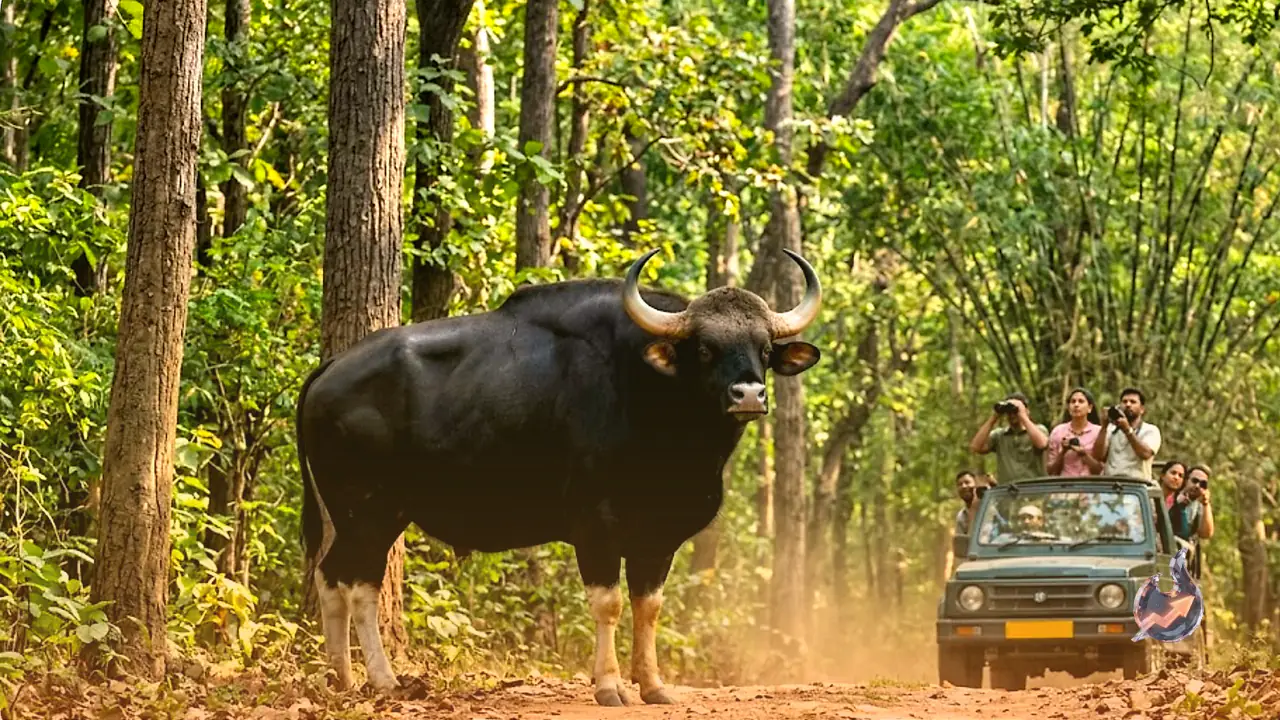
Valmiki Tiger Reserve (VTR) in West Champaran, Bihar has been drawing wildlife enthusiasts in impressive numbers, with hundreds of visitors arriving every day for jungle safaris despite scorching summer temperatures. The reserve's standout attraction lately has been the Gaur, widely known as the Indian Bison. Tourists who made their way from Ara and Muzaffarpur to the Valmiki Nagar Range recently had the extraordinary experience of encountering this animal at close quarters during a safari, a sighting that left a deep impression on everyone present.
A Bovine Cousin Built on an Entirely Different Scale
Nature guide Rajiv Arya, who accompanies visitors through the forest, explains that the Gaur belongs to the bovine family and is a relative of the domestic cow, though the resemblance ends there. These animals can grow up to 7 feet in height and carry a body weight that ranges from 1,000 to 1,500 kg. Their physique is powerfully muscular. A distinctive and charming feature is their white lower legs, which stretch from the hooves up to the knees and look strikingly like a pair of socks worn over dark skin. This characteristic has earned the Gaur a popular local nickname: 'Safeda', meaning roughly 'the white one'.
Strong Enough to Toss a Van, and Even Tigers Back Off
Gaurs typically move through the forest in herds of 5 to 10 individuals. Their physical strength is immense; these animals are capable of lifting and hurling a mini pick-up van with ease. Most remarkably, the tiger, which is widely regarded as the unchallenged king of the jungle, exercises caution when it crosses paths with a Gaur and deliberately keeps its distance. Large, sturdy horns, an enormous muscular frame, and a commanding overall presence make the Gaur one of the most unforgettable sights a jungle safari can offer.
Five Ranges Inside VTR Where Gaur Herds Are Regularly Spotted
Wildlife expert Abhishek, who works as a trainer at both Valmiki Tiger Reserve and Katerniaghat Wildlife Sanctuary, notes that Gaurs are most reliably found in five specific zones within VTR: Valmiki Nagar, Chiutaha, Gonali, Manguruaha, and Govardhan ranges. Camera traps set up across the forest have captured footage of multiple different herds moving through these areas. Beyond their ecological significance, Gaurs hold symbolic importance across much of South Asia, where many cultures have long viewed them as embodiments of strength and fertility. Favourable habitat conditions and a steady food supply within the reserve have contributed to a steady rise in their numbers here.
India Is Home to 85 Percent of the World's Gaur Population
According to Abhishek, the total global Gaur population stands at approximately 30,000 individuals. A remarkable 85 percent of that worldwide count is found exclusively in India's forests. At VTR specifically, the Gaur population has now surpassed 300 and continues to climb, a figure that reflects the reserve's success in providing a protected and resource-rich environment. This growing population is not only a conservation achievement; it is also turning into one of the reserve's most compelling draws for wildlife tourism.