
An Ancient Retreat Tucked Into the Vindhya Slopes
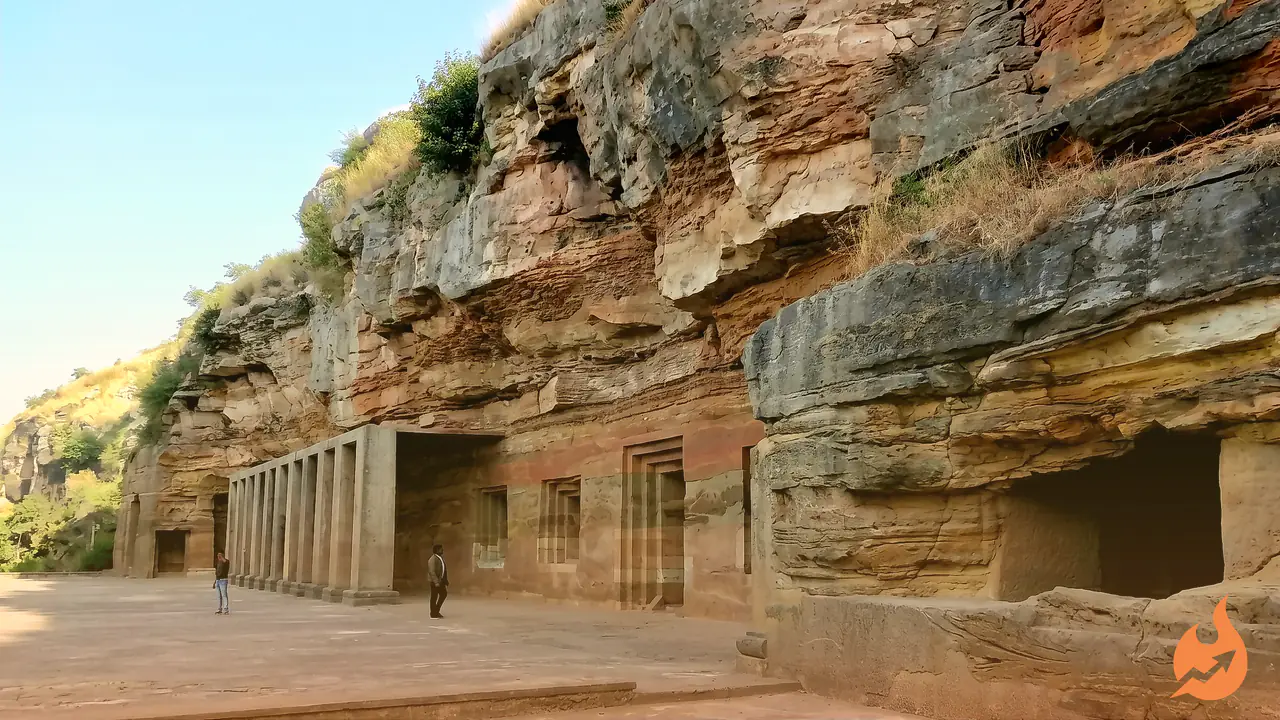
Near the small town of Bagh in Madhya Pradesh's Dhar district, a cluster of caves cut straight into the rock has stood on the southern slopes of the Vindhya range for centuries. Known as the Bagh Caves, the site originally held 9 Buddhist caves, though after centuries of wear only 5 survive in good condition today. Historians believe they were carved during the Gupta period, roughly between the 5th and 7th century. Their distinctive architecture and the ancient paintings inside have earned them recognition not just across India but around the world.
Calm Among the Hills
The moment visitors arrive, the quiet that settles over the surrounding hills tends to draw them in. The whole landscape grows even more striking during the monsoon, when everything turns lush and green. Families who come here often spend hours simply taking in the carvings and the old artwork.
A Home for Buddhist Monks
The caves are deeply tied to Buddhism. They were built with living quarters for monks, along with large verandas and dedicated spaces for prayer. The stupas inside and the figures etched into the stone still tell the story of that era. On several walls, traces of paintings of the Buddha and Bodhisattvas can still be made out.
Rangmahal — the Largest and Most Famous Cave
Cave number 4, called Rangmahal, is the biggest and best-known of the group. The ancient paintings inside it leave visitors astonished — its walls depict dancing girls, musicians playing instruments and scenes from a royal court. For anyone with an interest in history, this is the single greatest draw of the site.
Each Cave Has Its Own Name — and Echoes of Ajanta
The other caves carry their own names too. Cave number 2 is known as the Pandav cave, cave number 3 goes by Hathikhana, and cave number 5 is called Pathshala. Their design bears a strong resemblance to the Ajanta caves. The paintings here are said to have portrayed flowers, birds, animals and royal life with remarkable detail and beauty.
How the Region Got the Name 'Bagh'
According to historians, the caves were first rediscovered in modern times in the year 1818 by Danger Field. Before that, the site lay hidden in dense forest for a very long stretch. As the story goes, once Buddhism declined people stopped visiting, and tigers began to roam the surrounding jungle — which is how the entire area came to be called Bagh, the Hindi word for tiger.
Perfect for a Weekend and Easy on the Wallet
For a short break or a weekend trip, this spot is considered excellent. You can comfortably spend a full day here with family or friends — wandering through the hills, getting close to centuries of history and soaking in the natural views all make for an unusual experience. As for cost, visiting the Bagh Caves is far from expensive. Entry for Indian tourists is about Rs 25 per person. With food and travel added in, one person's spending for a day can easily come to roughly Rs 1,000 to Rs 1,500. Travelling in a private vehicle with family or friends can bring that figure down even further.
How to Reach the Bagh Caves
Getting here is not difficult either. The Bagh Caves lie about 160 kilometres from Indore and roughly 140 kilometres from Khargone, and they are well connected by road. The nearest large town is Kukshi, where taxis and private vehicles are readily available. You can also reach the site directly from Indore by bus or car.