
West Asia is once again on a knife's edge, and the people paying the steepest price for the Iran-US rivalry are those who had nothing to do with the feud. Amid the turbulence rippling through the Strait of Hormuz and the Gulf of Oman, a commercial oil tanker was caught in the crossfire — and three Indian sailors aboard it lost their lives.
Since the incident, the blame game between Washington and Tehran has only intensified. The United States is trying to hang responsibility for the strike on Iran, but India has flatly refused to accept that version. New Delhi's position is unambiguous: the tanker was hit by the US Navy, and it was that very strike that killed three of its sailors.
Trump's Claim and India's Pushback
US President Donald Trump alleged that Iran had attempted a drone attack on ships carrying Indian crew as they passed through the Strait of Hormuz. By spinning this account, Trump appeared to be trying to win India's confidence — but the ploy did not work. Iran punctured Washington's claims, and India, too, saw through who had actually carried out the attack. New Delhi maintains that the strike on the Indian-crewed vessel was America's own doing.
Jaishankar Lodges a Sharp Protest by Phone
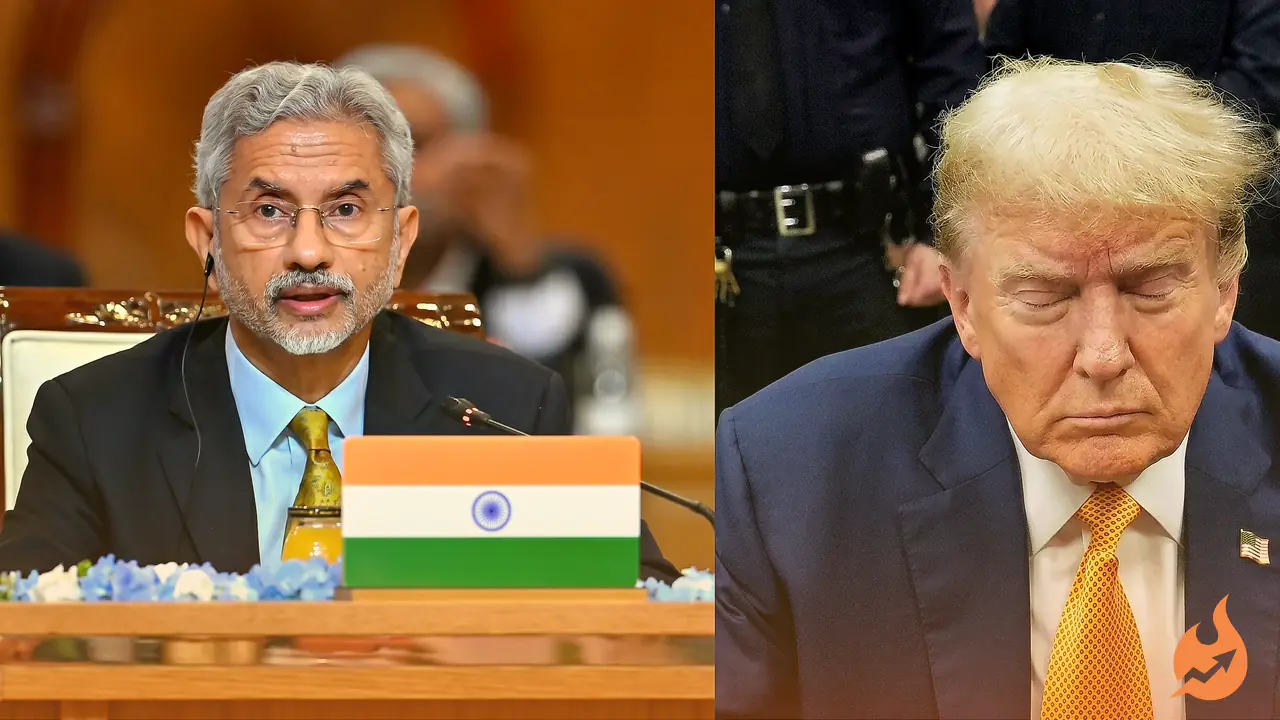
External Affairs Minister S Jaishankar took the matter straight to Washington, registering his strong displeasure over the phone. After the US Navy strike on the Palau-flagged oil tanker MT Settebello in the Gulf of Oman left three Indian sailors dead, he spoke with US Secretary of State Marco Rubio and conveyed a firm diplomatic protest.
In a post on X, Jaishankar wrote: ‘Spoke to US Secretary of State Marco Rubio this evening. Reiterated India's strong objection to the death of three Indian sailors in the US Navy attack in the Gulf. Such lethal attacks on commercial ships are not justified.’ Calling the episode unacceptable, he stressed that commercial shipping must not be made the target of such action.
Who Was Aboard the Tanker?
The targeted tanker was carrying a crew of 28. Of these, 24 were Indian nationals and the remaining four were foreigners — two Pakistanis, one Ukrainian and one Russian. After the attack, 21 Indian sailors were rescued safely. The three crew members who died have been identified as Deck Cadet Aditya Sharma, Engine Fitter Shivanand Chaurasia and Chief Engineer Patnala Suresh.
Iran Corners Washington
On Saturday, Iran sharply criticised the US over the strikes on Indian-crewed commercial vessels in the Gulf region. Iranian Foreign Minister Abbas Araghchi accused the US of deliberately targeting Indian ships and described the incidents as evidence of an American policy of ‘armed robbery and state-sponsored maritime piracy.’
Araghchi said: ‘The barbaric US attacks on Indian commercial ships are clear proof of America's policy of armed robbery and state-sponsored maritime piracy. At least three Indian citizens were killed in this US attack.’ He extended condolences to the families of the sailors, the Indian people and the government. He also urged the international community to hold the US accountable, warning that such actions endanger global peace, security and freedom of navigation.
Embassy Calls Trump's Charge Baseless
Araghchi's remarks came just as Trump was accusing Iran of attempting a drone strike on Indian ships transiting Hormuz. The Iranian embassy in India hit back hard at that allegation, dismissing Trump's claim as entirely unfounded. The embassy said the charge against Iran over the Indian vessel in Hormuz was completely baseless and was, in reality, merely an attempt to divert attention from America's own attacks on Indian ships.