
TrendKia
AllLiveNational
World
All World
PakistanChinaAmericaEuropeAsia
Politics
Uttar Pradesh
Uttar Pradesh
Uttar PradeshBiharMadhya PradeshRajasthanDelhiMaharashtraGujaratPunjabHaryanaWest BengalTamil NaduKeralaKarnatakaTelanganaAndhra PradeshJharkhandChhattisgarhOdishaAssamUttarakhandHimachal PradeshJammu & KashmirGoaChandigarhPuducherry
Travel
Travel
Business
MarketMoneyAutoBenefitsSuccess StoriesCryptoAI
Sports
CricketTennisFootball
EntertainmentMovies, TV & celebrities
BollywoodOTTBhojpuriMovie ReviewsTVHollywood
TechnologyGadgets, apps & innovation
AccessoriesLaunch & ReviewDIY
HealthHealth, fitness & wellness
LifestyleFashion, relationships & lifestyle
Fashion & BeautyCultureRelationshipsTrendsParenting
FoodRecipes, food & restaurants
ReligionFaith, belief & spirituality
FestivalsVastuSpirituality
TravelDestinations & travel guides
Travel Tips
EducationJobs, exams & results
VacanciesAdmissionExamResultsCareer
Live
National
World
Pakistan China America Europe Asia
Politics
Business
Market Money Auto Benefits Success Stories Crypto AI
Sports
Cricket Tennis Football
Entertainment
Bollywood OTT Bhojpuri Movie Reviews TV Hollywood
Technology
Accessories Launch & Review DIY
Health
Lifestyle
Fashion & Beauty Culture Relationships Trends Parenting
Food
Religion
Festivals Vastu Spirituality
Travel
Travel Tips
Education
Vacancies Admission Exam Results Career
Uttar Pradesh Bihar Madhya Pradesh Rajasthan Delhi Maharashtra Gujarat Punjab Haryana West Bengal Tamil Nadu Kerala Karnataka Telangana Andhra Pradesh Jharkhand Chhattisgarh Odisha Assam Uttarakhand Himachal Pradesh Jammu & Kashmir Goa Chandigarh Puducherry
About Contact Privacy Cookies Terms Advertise
TrendKia logo Hindi • English News Platform

TrendKia

Fast • Fresh • Always Trending

TrendKia is a free bilingual Hindi–English news platform — trending stories from India and around the world. Sign in with Google to comment and follow topics.

About Us
TrendKia news app preview
TrendKia
AboutContactPrivacyCookiesTermsAdvertise
Inside Beijing's AI Summit, a Surprising Consensus: Washington and China Cannot Afford to Race Toward a DisasterAI
2 hours ago· 2

Inside Beijing's AI Summit, a Surprising Consensus: Washington and China Cannot Afford to Race Toward a Disaster

At a Beijing AI conference, leading researchers from both countries warned that frontier AI's cyber and systemic risks are too serious for the US and China to keep treating safety as a zero-sum rivalry.

Ravikash GuptaRavikash GuptaSenior Correspondent 4 min read For AI
Share

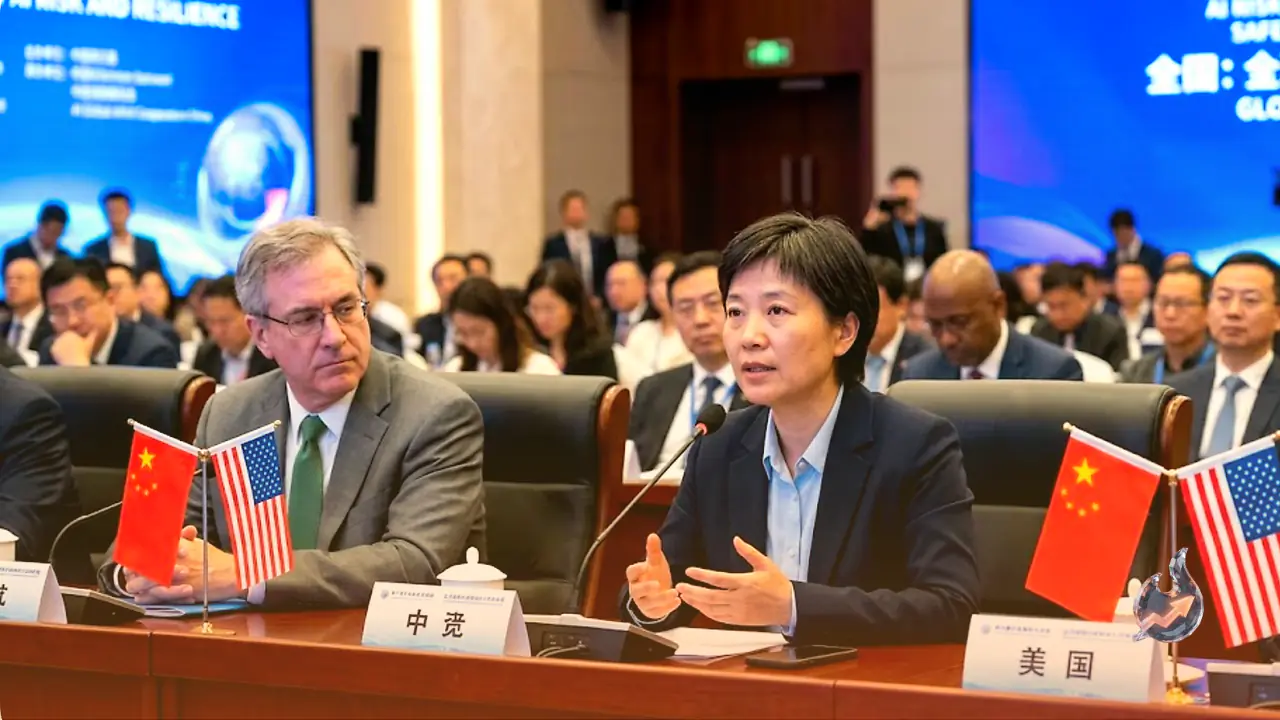
For all the talk of an AI arms race between the United States and China, a recent gathering of the world's leading artificial intelligence researchers in Beijing pointed to an uncomfortable truth that cut across national lines: the people building the most powerful systems on both sides are genuinely worried about where this is heading, and many believe the two rivals can no longer afford to treat safety as a zero-sum contest.

The conference, organized by the Beijing Academy of Artificial Intelligence, ranged across some of the most provocative questions in the field, from recursive self-improvement, the notion that models could rewrite their own code and keep advancing without limit, to humanoid robots. It also drew genuine pioneers of computing, including Whitfield Diffie, co-inventor of public-key cryptography, and Andrew Barto, who shared the Turing Award with Rich Sutton for his foundational work on reinforcement learning.

One message stood out

Above every technical debate, a single conclusion kept resurfacing: the United States and China should set their bitter AI rivalry aside. The cybersecurity and systemic dangers posed by frontier AI are too grave to brush off, and rapidly improving agentic models could soon trigger real chaos unless the world's AI superpowers find a way to cooperate. "AI is a global technology with global benefits, global harms, and a consistent tendency for new capabilities to eventually proliferate," said Stephen Casper, a computer scientist at MIT who addressed the conference by video.

Washington's hard line

So far, the US has largely treated China's AI progress as both an economic and a national security threat. Washington has placed tight curbs on advanced chips and chipmaking equipment to slow the country's push toward powerful AI. More recently, the US government directed Anthropic to block foreign nationals from using its most capable models, Mythos and Fable 5, citing national security. Anthropic responded by cutting off access for everyone. One firm that drew particular scrutiny was a South Korean telecom giant with alleged ties to China.

Why cooperation may be unavoidable

Yet the Beijing gathering reinforced a different logic: both countries stand to lose if AI is built too fast and too carelessly. As these systems grow more powerful, more agentic, and more woven into daily life, the danger that they could be turned into cyberweapons or fail catastrophically only rises. Since the two dominant AI powers are responsible for the most advanced models, working together starts to look less like idealism and more like necessity.

Casper pointed to research suggesting that the gains from international collaboration on AI risks outweigh whatever national security exposure such cooperation creates. He compared the moment to the Cold War, when the US and the Soviet Union were compelled to manage nuclear dangers together even as each tried to outbuild the other. "One thing that almost everyone in AI can agree on right now is that AI doesn't need a Chernobyl moment," Casper said.

The cyber threat is universal

One full-day session drove home how borderless the security challenges raised by more capable AI have become. They include fresh categories of vulnerabilities in AI-generated code, new avenues of attack opened up by agentic tool use, and automated techniques for running social engineering campaigns.

Lin Yun, a professor at Shanghai Jia Tong University whose work focuses on AI and computer security, expects attackers to hold the upper hand in the near term. Over time, though, he believes new defenses, including novel applications of AI itself, should swing the advantage back toward defenders. Even when competition complicates it, Yun argued, cooperation should stay a priority. "If different countries understand the risks in similar ways, it becomes easier to develop shared safety principles and technical standards," he said. "The key is to find areas where sharing can reduce systemic risk without exposing sensitive operational details."

The open-weight dilemma

Perhaps the thorniest question for both nations is how to weigh openness against risk. Open-weight models have become essential to research and innovation, and Chinese models in particular have found a wide audience in the US. But as they grow more capable, it becomes harder to ensure they don't help hackers spot security holes or get repurposed as cyberweapons.

Over the past few years, Chinese firms have led the way in releasing highly capable open-weight models, among them Moonshot's Kimi, Alibaba's Qwen, and Z.ai's GLM. The US has revived its own open-weight effort with models such as Nvidia's Nemotron. The field is now nearing a tipping point where even less powerful open models could become dangerous once their guardrails are stripped away. Z.ai's latest release, GLM 5.2, carries frontier agentic and coding abilities, according to expert analysis, and the next wave of open-weight models may rival Fable or Mythos. This week alone, 360 Security Technologies, a leading Chinese cybersecurity company, said it had built an AI model with hacking abilities on par with Mythos.

Yun said the industry will need new mechanisms to certify that open models are current, free of backdoors and vulnerabilities, and compliant with safety standards. There are already hints of a shift: security worries are now one reason some advanced models in China are no longer being released as open source.


What this means for you

What this means for you:

  • For anyone using AI tools: As open models grow more capable, the same systems powering your apps could also help attackers find security flaws, so expect tighter access rules and more safety checks ahead.
  • For developers and security teams: AI-generated code and agentic tools are opening new attack routes, making code audits and updated defenses more important than before.
  • For the tech industry: Tighter US curbs on chips and model access, plus China pulling some models from open source, could reshape which AI tools you can freely use.

Questions & Answers

Who organized the conference?
It was organized by the Beijing Academy of Artificial Intelligence.
What was the main takeaway?
That the US and China should set aside their AI rivalry and cooperate on safety, because frontier AI's risks are too serious to ignore.
Why did Anthropic cut off access to its models?
The US government directed it to block foreign nationals from its most powerful models, Mythos and Fable 5, over national security, and Anthropic responded by revoking access for everyone.
Which Chinese open-weight models were mentioned?
Moonshot's Kimi, Alibaba's Qwen, and Z.ai's GLM, including the latest GLM 5.2.
What did 360 Security Technologies announce?
It said it had built an AI model with hacking abilities on par with Mythos.
Who is Stephen Casper and what did he say?
He is a computer scientist at MIT who said AI is a global technology and that it doesn't need a Chernobyl moment.
What comparison did Casper draw?
He likened the situation to how the US and the Soviet Union were forced to cooperate on nuclear dangers during the Cold War.
#AI#AISafety#USChinaAIRivalry#BeijingAIConference#Open-WeightModels#AICybersecurity#FrontierAIRisks#Anthropic

Comments 0

Sign in to join the conversation.

Sign in

No comments yet — be the first.

Three Indian Sailors Killed in Gulf of Oman Strike: Shashi Tharoor Tears Into US Over 'Insensitive' Statement, Presses Jaishankar TooPolitics1
Three Indian Sailors Killed in Gulf of Oman Strike: Shashi Tharoor Tears Into US Over 'Insensitive' Statement, Presses Jaishankar Too
Wall Street's Big Bet on AMZN: Where Could Amazon Stock Land Between 2026 and 2028?Market2
Wall Street's Big Bet on AMZN: Where Could Amazon Stock Land Between 2026 and 2028?
FCC's 'Know Your Customer' Plan Could End Anonymous Phones — Plus the Week's Biggest Breaches and BustsSecurity3
FCC's 'Know Your Customer' Plan Could End Anonymous Phones — Plus the Week's Biggest Breaches and Busts

Latest news straight to your inbox

The day's big stories, in one email.

TrendKia बाज़ारAdvertisementमानसून सेल — हर चीज़ पर 50% तक छूटTrendKia बाज़ारअभी खरीदें →
Citizen journalism

Become a TrendKia journalist

Voice of the people

Share news, photos and videos from your area with TrendKia and let your voice reach the nation. Every citizen a journalist.

Join now
Citizen journalistCitizen journalist
Citizen journalist
Citizen journalist

Related stories

Indie Darling A24 Bets $75 Million on a Google AI Lab, and Its Fans Are FuriousAI
Indie Darling A24 Bets $75 Million on a Google AI Lab, and Its Fans Are Furious
2 min ago
Hidden Strings in a Claude Code Update Hint Fable 5 Is About to Return, This Time Built Into Your SubscriptionAI
Hidden Strings in a Claude Code Update Hint Fable 5 Is About to Return, This Time Built Into Your Subscription
2 hours ago
Frozen Out of His Own Talks: Washington Now Wants Anthropic's Tom Brown, Not Dario AmodeiAI
Frozen Out of His Own Talks: Washington Now Wants Anthropic's Tom Brown, Not Dario Amodei
4 hours ago
Prosus Launches ToqanClaw to Compete with OpenClaw in Privacy-Focused AI RaceAI
Prosus Launches ToqanClaw to Compete with OpenClaw in Privacy-Focused AI Race
23 hours ago
A Hugging Face Developer Just Put Claude Fable Style Reasoning on Your Everyday Laptop, for FreeAI
A Hugging Face Developer Just Put Claude Fable Style Reasoning on Your Everyday Laptop, for Free
23 hours ago
Inception Labs Launches Mercury 2, Outperforming Google's DiffusionGemma as the Fastest AI Reasoning ModelAI
Inception Labs Launches Mercury 2, Outperforming Google's DiffusionGemma as the Fastest AI Reasoning Model
3 days ago
How AI Chatbots Can Trap Vulnerable Minds in a Spiral of Delusion, New Research ExplainsAI
How AI Chatbots Can Trap Vulnerable Minds in a Spiral of Delusion, New Research Explains
3 days ago
Master Your AI Tool: 28 Hidden Hacks to Elevate Your ChatGPT Prompting GameAI
Master Your AI Tool: 28 Hidden Hacks to Elevate Your ChatGPT Prompting Game
3 days ago