





















A24, the studio whose logo alone can turn an unknown film into a must-see, has just done the one thing many of its fans never expected: signed up with a Google artificial intelligence lab. The indie powerhouse announced a $75 million research partnership with DeepMind, Google's in-house AI operation, and the news landed with a thud among the very cinephiles who turned the brand into a cultural force.
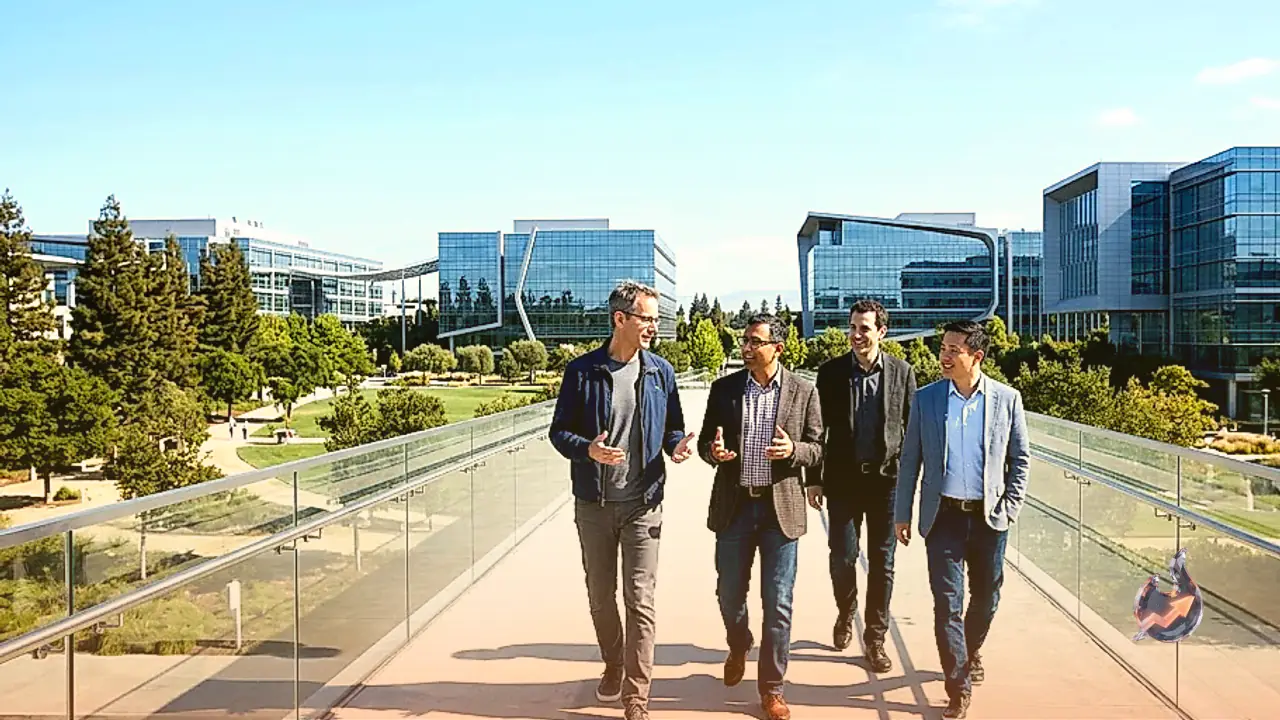
The arrangement runs through A24 Labs, the company's technology startup, which is overseen by cofounder Scott Belsky. Both sides say the goal is to build new filmmaking "tools," and the deal became public on Monday.
Sophia Shin, who handles communications at A24, framed it as exploratory rather than transactional. "This is a research partnership," she said in an email. "We're working side-by-side with DeepMind's researchers to learn, iterate, and build having an active hand in shaping new tools and workflows."
A tense season between Hollywood and Silicon Valley
This is only the latest in a string of awkward, controversial marriages between tech and film. Late last year, Disney took a $1 billion stake in OpenAI's video generation model, Sora, licensing access to characters like Mickey Mouse, Goofy, and C-3PO. A few months later, Sora itself was kaput.
For cinema, and the creative arts more broadly, AI's threat can feel completely existential. It is automating, and killing, entry-level jobs, hanging over writers' rooms, and squatting in multiplexes to showcase AI-generated work that runs the gamut from the boring to the abominable. Some studios have already sued AI companies for copyright infringement.
There is also a growing worry that AI's grip on the film business has a chilling effect. A recent example is the way studios have distanced themselves from Luca Guadagnino's biopic of OpenAI founder Sam Altman, titled Artificial.
Why this one stung
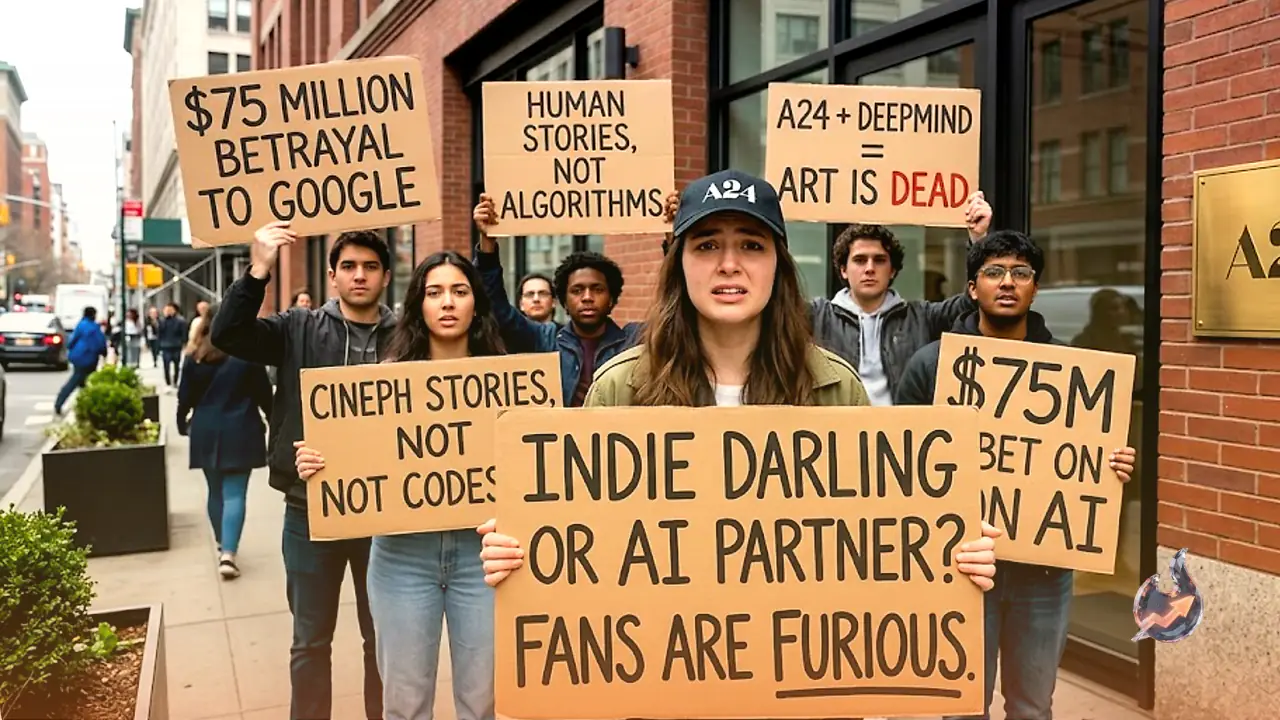
The announcement of the A24 AI partnership was especially puzzling, and contentious, precisely because of A24's place in contemporary film culture. The studio's legion of diehards do not seem to be taking the news of its latest collaboration especially well. Earlier this week, A24 released the trailer for Jesse Eisenberg's new musical drama, The Debut.
On X, the comments under the trailer were littered with criticism aimed at A24. Fans posted tombstones and declared the death of the company, others promised to illegally pirate the movie to eat into A24's profits, and some left snarky remarks like: "Pretty ironic that The Debut is the film that comes out in the mids of a24 ending itself with ai."
"Our relationship with our audience is something we don't take for granted," Shin stressed. "This partnership exists because we want to dictate what tools get built for artists, and so they have a voice in shaping them rather than having tools handed to them. We'd rather have a seat at the table than on the sidelines."
Google DeepMind did not immediately respond to requests for comment.
How A24 became a brand fans defend
A24 is a huge tastemaker in the film space. "In the same way Disney sells nostalgia, A24 has sold the feeling of being very hip, and cutting-edge, for as long as they've been around," says film critic Esther Rosenfield.
Before the box office success of Backrooms, A24 spearheaded canonical American indie films like The Witch, Moonlight, Midsommar, Everything Everywhere All At Once, and the recent Marty Supreme. The studio has launched, and supported, the work and careers of serious filmmakers like Sofia Coppola, Denis Villeneuve, Ari Aster, Jane Schoenbrun, Celine Song, and the brothers Safdie. Since its 2012 founding it has netted dozens of Academy Award nominations. In a moviegoing culture otherwise dominated by tedious franchise IP blockbusters, the distinctive A24 logo before a film trailer is often enough on its own to build hype for a new release.
It is also one of the rare American entertainment companies with its own loyal groupies, who flaunt their cinephile credentials with A24 caps, tote bags, and collectable, limited edition tie-dye t-shirts. You don't really hear about "Paramount fans" or "Touchstone Pictures-heads," but A24, as they say, has shooters. "They have a very powerful and successful marketing department," says Andrew DeWaard, a media studies professor at UC San Diego and author of the 2024 book Derivative Media: How Wall Street Devours Culture. "They've branded their company as edgy, forward-thinking, and appealing to young people. They've created a fandom for their company."
Not as clean a break as it looks
But for a scholar like DeWaard, the DeepMind deal is not some major, sacrilegious break in A24's business practices. In Derivative Media, he notes that A24's cofounder, Daniel Katz, previously led film financing at Guggenheim Partners, the global firm heavily invested in environmentally ruinous resource extraction. In 2024, the company received a significant cash injection from Thrive Capital, which has also invested heavily in OpenAI. And Scott Belsky, the A24 Labs head at the center of the DeepMind deal, was among the recently leaked names linked to Silicon Valley financier Peter Thiel's invite-only club, Dialog.
Making AI feel inevitable
The seat-at-the-table rationale has a familiar ring. The AI takeover of cinema is routinely pitched, often by stakeholders in AI firms themselves, as fated. It is not a matter of if, but when. To rail against it, the argument goes, would be as futile as a man on Wednesday railing against Thursday. "They want to make AI feel inevitable," DeWaard says of AI firms like Google. "They want to make AI feel like it's everywhere. They want it to feel normal. Culture is part of that."
Rosenfield regards the deal as a form of positive PR, at least for Google. "They're saying, 'We want to launder our reputation through you,'" she says. "We want to make it look like serious artists are going to be making things with these tools. Because serious artists, by and large, aren't." Asked whether the Google deal was a form of reputation laundering, A24 offered no comment.
AI's real shortfall is taste
Among its other problems, AI clearly suffers from a deficit of taste. Generative AI images are regularly, and accurately, dismissed with the sticky epithet "slop." Because generative AI clients and large language models are not human, they cannot judge, or tell good from bad, ugly from beautiful, cool from boring.
Lately, it is precisely this subtle, sophisticated, definitionally human element that technologists seem desperate to replicate, whether by hosting AI-"curated" art exhibitions in San Francisco galleries, or by simply partnering with creative companies whose brand is synonymous with taste. Call it taste-leeching. Elsewhere, a new AI startup literally called Taste Labs recently secured $18.5 million in funding for its goal to "eliminate slop" and invest in AI clients with their own tastemaking sensibilities. Good luck with that.
What the deal is not
Shin insists this research partnership is not some kind of franchising or IP play. DeepMind users won't be able to pay to generate their own little movies featuring copyrighted A24 characters like Howie Rainer from Uncut Gems, The Green Knight, Charles Swan III, or the little lamb from Lamb.
"Truth is we don't necessarily love any of the current AI outputs on screen in Hollywood," she says. "I don't even know if ultimately we'd create tech on that front. This partnership is about learning and helping pain points in workflows behind the scenes more than anything else."