





















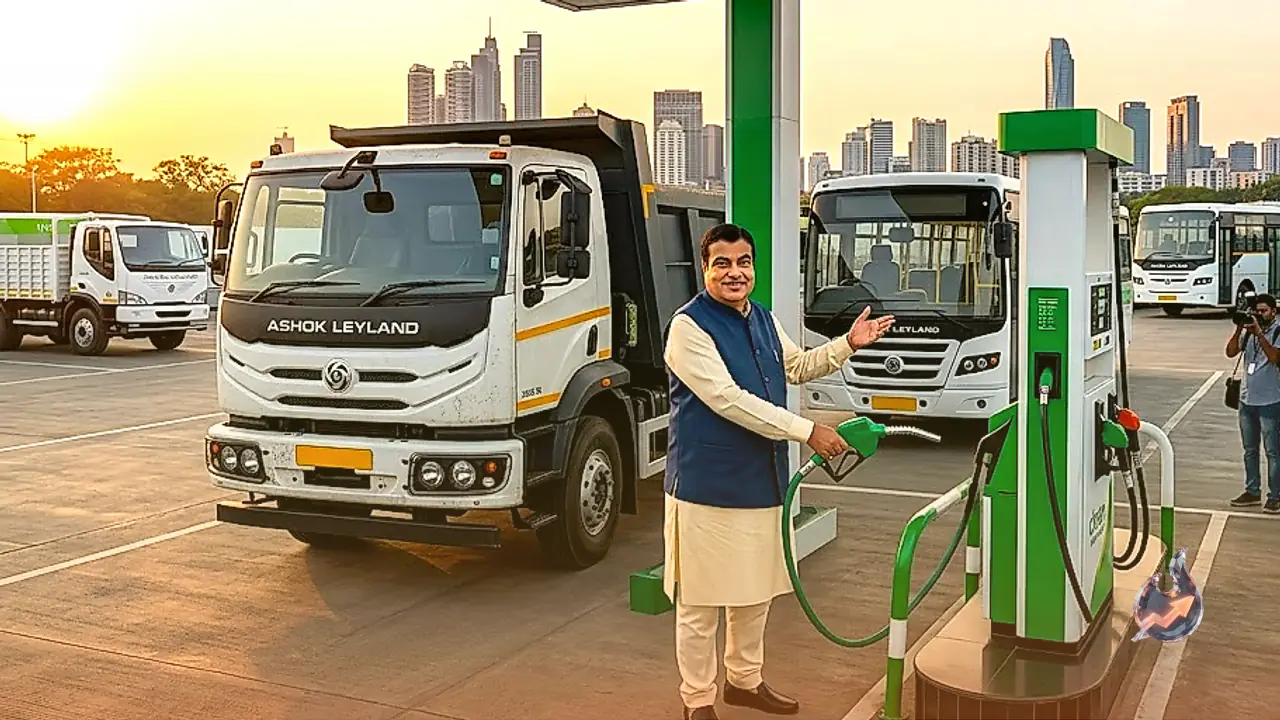

India is charting a path toward drastically reducing its dependency on petrol and diesel through the adoption of alternative fuel sources. Union Minister for Road Transport and Highways Nitin Gadkari has highlighted methanol as a major future alternative for heavy vehicles, including trucks, buses, tractors, and ships. The most compelling advantage of methanol is its price, which stands at approximately ₹20 to ₹22 per litre, offering a massive reduction compared to diesel, which costs well over ₹100 per litre in several Indian states.
Production Potential and Implementation
According to Nitin Gadkari, the infrastructure for domestic methanol production is gaining momentum. Currently, Assam Petro-chemicals is producing around 700 tonnes of methanol daily. If adopted on a large scale, this fuel could lead to a significant decline in operational costs for the transport sector, providing substantial financial relief specifically to truck and bus operators who rely heavily on fuel efficiency for their businesses.
Verified Performance and Engine Technology
Methanol is not merely a theoretical solution; its viability has been proven through real-world trials. In Karnataka, buses were operated for three months using a 15 percent methanol-diesel blend. These trials reported no mechanical issues, and the overall performance of the vehicles remained satisfactory throughout the duration. Building on this success, Ashok Leyland has successfully developed engines capable of running on 100 percent methanol, marking a major leap in vehicle manufacturing technology.
Diversification with Ethanol and Iso-butanol
Nitin Gadkari noted that beyond methanol, there are other promising alternatives such as iso-butanol, which is derived from ethanol. Kirloskar Group has already developed generator sets that operate entirely on 100 percent iso-butanol or ethanol. These innovations are expected to serve the agricultural sector, where they will power tractors, harvesters, and various construction machinery, further reducing the national reliance on fossil fuels.
Economic and Environmental Benefits
The government is actively working on scaling up production through bamboo-based refineries in Northeastern states. This strategy offers three primary benefits: it creates additional income opportunities for farmers through the supply of bamboo and other raw materials; it helps lower India’s substantial fossil fuel import bill; and it promotes a cleaner environment. Since methanol, ethanol, and iso-butanol emit significantly less pollution than conventional diesel, the government intends to promote their usage in both road and water transport. If implemented effectively, these alternatives will provide India with energy security, lower fuel expenditures, and a cleaner, more sustainable energy future.