
The Purpose Is Tradition, Not Trade
For Naveen Kumar, a farmer in Darbhanga, the reason behind planting marua has nothing to do with earnings. He sows it so that his children can see and understand the grain their ancestors once lived on. In his own words, this is not farming for business but an effort to keep a tradition alive.
Naveen recalls a time when marua roti was cooked in nearly every household. As eating habits changed over the years, such old staples quietly slipped out of the kitchen, leaving the grain almost unknown to the present generation.
A Grain Packed With Nutrition
According to Naveen Kumar, marua is extremely good for the body. It is rich in calcium, iron and fibre, which is why it helps strengthen bones and works to fix the deficiency of blood in the body.
Its most striking benefit, however, is for people with diabetes. Naveen says it acts almost like a medicine for sugar patients, because its glycemic index is low. As a result, blood sugar does not spike suddenly after eating it but rises slowly instead.
Cultivated Much Like Paddy
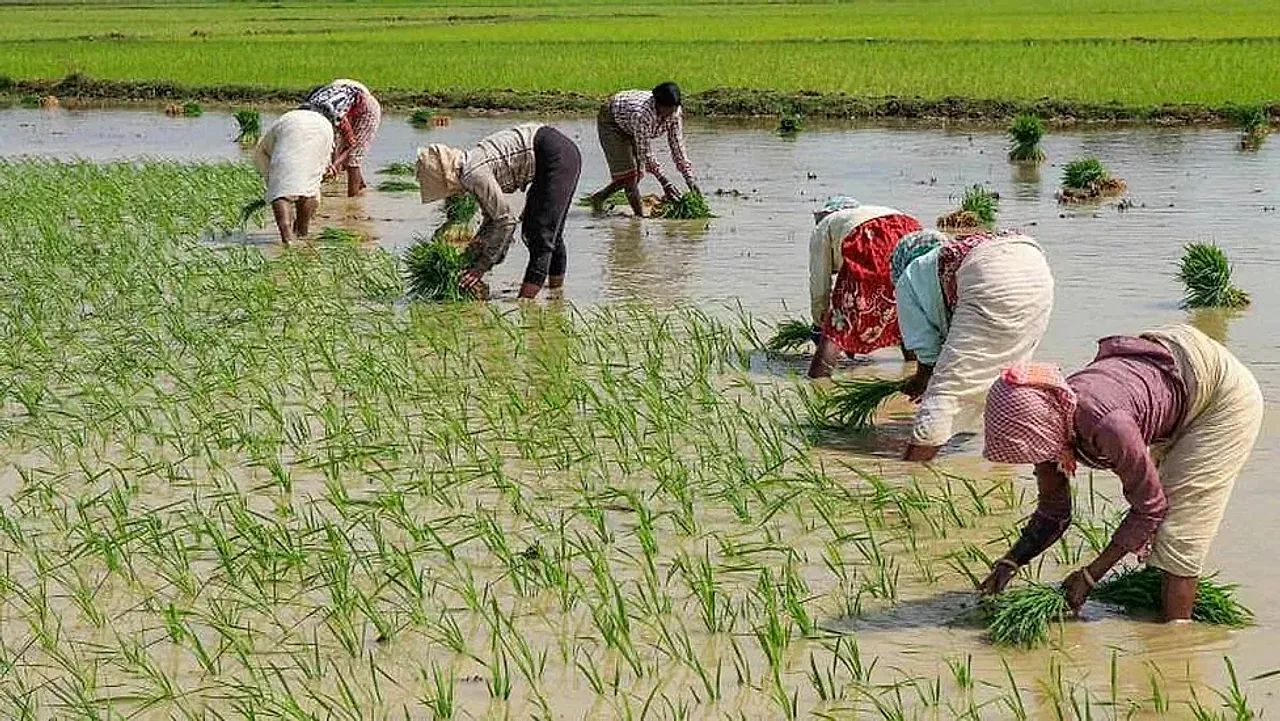
Growing marua follows almost the same routine as paddy. First, a nursery is prepared, meaning the seed is sown to raise seedlings. After about 20-25 days, once the saplings are ready, they are transplanted into the field exactly the way paddy is planted. From there, the crop needs regular weeding, manure and water at the right times.
Once the crop matures, it is harvested, then dried and pounded to separate the grain.
Market Price and Religious Role
At present, marua is selling in the market at 70-80 rupees per kg. In the Mithilanchal region its importance goes beyond the plate; it is also used for religious purposes during the Jitiya festival.