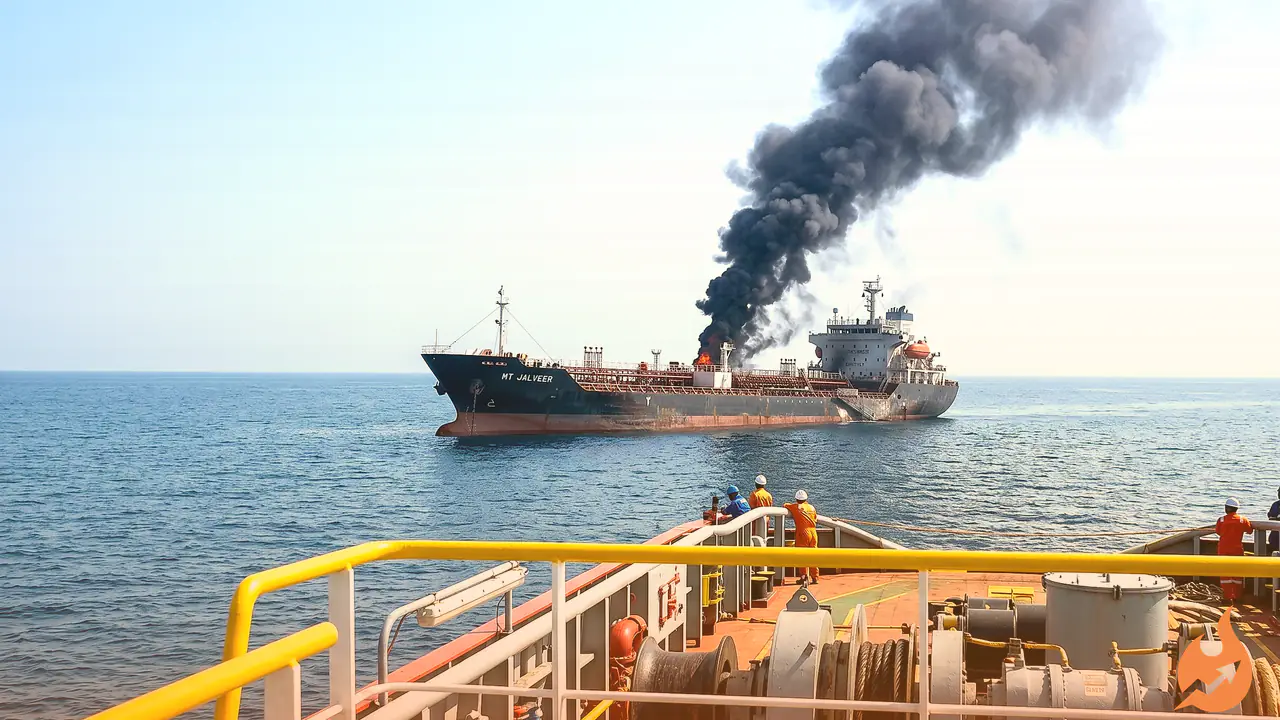

For the analysts who track global energy flows, the central number simply refuses to come into focus. The world's most sensitive oil route — the Strait of Hormuz — has been effectively shut for more than 100 days, and the biggest open question is how much crude has actually managed to slip through during that time.
The 'dark trade' hiding the real figures
“No one's experienced this kind of disruption,” says Matt Stanley, head of market engagement at Kpler, the commodity intelligence and ship-tracking firm. The reason the numbers are so hard to pin down is what the industry calls the dark trade — vessels running with their AIS transponders switched off, moving at night, hugging the Omani border, sometimes under naval escort.
Even so, parts of the outgoing oil can still be detected. Different grades of crude can only come from specific fields. The UAE's Murban crude can be shipped out via Fujairah, which sits outside the strait, while another grade — Upper Zakum — cannot. One oil market analyst noted that their team has spotted Upper Zakum crude turning up in other markets. The sightings are real; the scale behind them is not.
How much oil is actually getting out
Stanley reckons it's possible that 100 million barrels have made it through the Strait of Hormuz since the first of May. “When you put into context, pre-conflict, it was about 20 million barrels a day that was going through, so five days worth of oil, in a normal traffic environment, and it's taken over a month. 100 million barrels, it's a good number, but it's a relative drop in the ocean, literally, compared to previous traffic.”
Why prices haven't exploded
World Trade Organization data shows a 95 percent drop in crude oil shipments from Arabian Gulf ports and a 99 percent drop in liquified natural gas carriers. The International Energy Agency has called it “the largest supply disruption in the history of the global oil market.” And yet Brent crude sits at $87.55 per barrel — lower than at any point since before the conflict began.
The answer lies in the world's buffers. China holds roughly 1.3 billion barrels in storage and is drawing it down at about a million barrels a day, Stanley says. “We see their demand, about 7 million barrels a day from May, June, and July. They were buying 12.5 million barrels a day in December.” The US, Brazil and Canada have also stepped in to plug part of the gap.
All three analysts interviewed agree the market's reaction has been impressively sturdy. “The oil market responded to this outage significantly well in terms of cutting parts of demand,” says Iman Nasseri, managing director, Middle East of FGE NexantECA, an energy and chemical advisory company. “There is also a significant amount of stock that has come to market, but we doubt that they will continue to do that. We expect that by July [if the strait remains closed], things will change.”
The buffers are about to run dry
That cushion won't last. One analyst said stocks are nearing what the industry calls operationally critical levels — the point at which both stored oil and additional supply need to be topped back up. They added that the US, currently playing the role of swing producer, has its own deadline as the end of the year nears, when it will have to prioritise domestic production to keep homes heated.
“People looking at October, you really think that it would be sorted out by the middle of August,” Stanley says. “That's what I think the market is hoping for.”
How long before supply returns
Global oil supply fell 10.1 million barrels per day in March, with OPEC+ output dropping 9.4 million barrels per day month-on-month. The harder question is how much of it comes back, and when.
Analysis by S&P Global CERA estimates restart timelines of 10 weeks to seven months for fields shut down for two months. IEA executive director Fatih Birol has said more than 80 energy facilities have been damaged, and recovery “could take as long as two years.” The UAE's national oil company estimates full Hormuz flows won't resume until 2027.
Stanley adds that basic infrastructure — everything from husbandry services to vessels and even inspection — may have shut down for sheer lack of business. He estimates it could take three months just to get operations running again.
The hidden danger of a quick fix
Counterintuitively, a fast, clean resolution carries its own risk. “If oil isn't at $200 because supply has been sourced from elsewhere, and then the strait reopens and all this oil is now available — prices are in danger of getting to $50,” Stanley says.
Countries like Iraq, starved of revenue for months, could export aggressively the moment they're able to. “OPEC might have to manage what Iraq does, or the Saudis might have to manage. I think there may be another body formed — something like an actual Middle East OPEC — because supply management, second half of the year, is what everyone will talk about.”