






















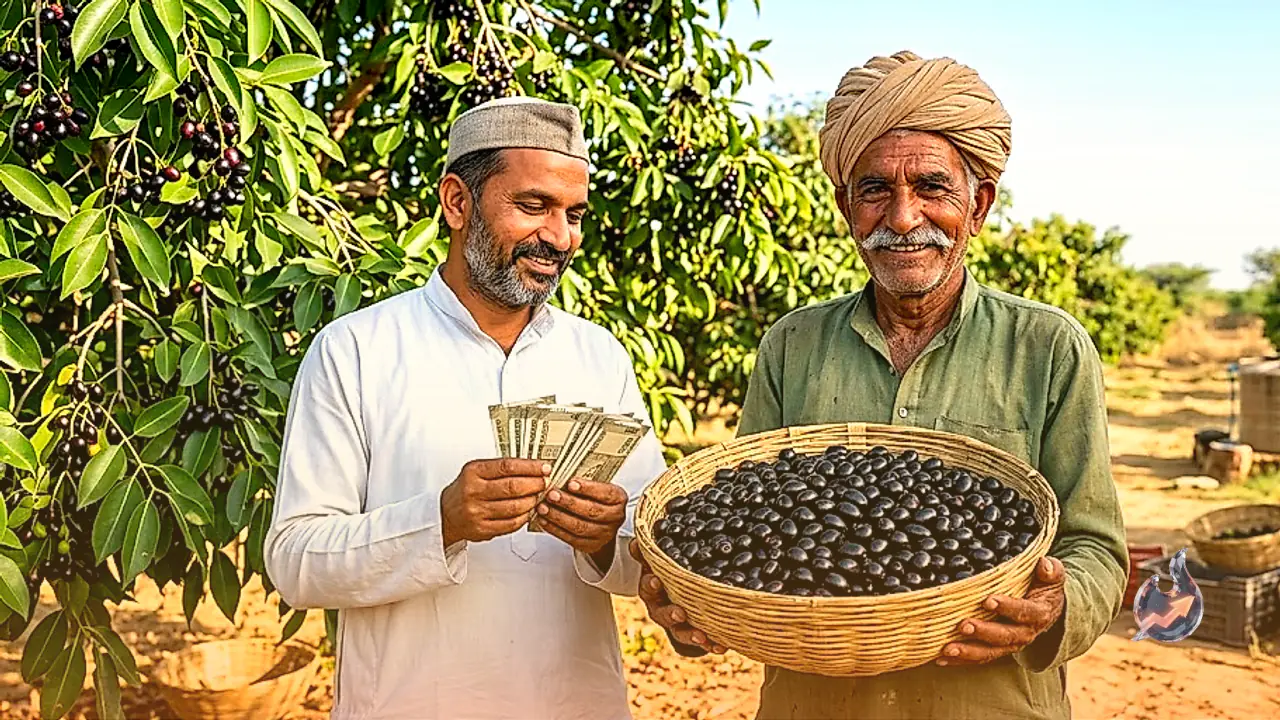

The cultivation of jamun is rapidly changing the financial fortunes of farmers in the Bhusawar region of Bharatpur. Renowned for their notably large size, sweetness, and juiciness, the jamun grown in these orchards has gained immense popularity in the market. The demand for these fruits is no longer confined to local markets; they are now being supplied to neighboring districts and even across state borders, reflecting their widespread appeal.
The Shift Toward Horticulture
The Bhusawar and Weir regions are widely recognized as the primary horticulture belts of the district. Thousands of bighas of land in this area are now dedicated to various fruit orchards. Farmers are increasingly moving away from traditional seasonal crops to embrace horticulture. This strategic shift is proving to be a highly profitable venture, leading to consistent growth in their annual income.
Expert Guidance and Agricultural Efficiency
According to horticulture department official Janak Raj Meena, the quality of jamun produced here is exceptional. Farmers are achieving high yields through a combination of proper crop management, favorable climatic conditions, and the application of advanced agricultural techniques. With strong market prices, many farmers are earning up to lakhs of rupees within a single season. The low initial cost of maintaining these orchards, coupled with the long-term production capability of the trees once they mature, makes jamun farming an attractive and sustainable business model.
Health Benefits Driving Market Demand
Beyond its taste, jamun is highly valued for its medicinal properties, particularly for its benefits to diabetic patients. This reputation as a health-conscious choice ensures that consumer demand remains consistently high throughout the fruiting season. Being a seasonal fruit that hits the markets primarily during the rainy season, it remains a preferred choice for many consumers.
Direct Market Access and Profitability
One of the key advantages for the local farmers is that traders and buyers frequently visit the orchards directly to purchase the harvest. By selling the produce at the farm gate, farmers avoid the logistical costs associated with transportation and middle-man handling, which significantly increases their profit margins. Today, the jamun orchards of Bhusawar are playing a critical role in strengthening the local economy. With continued technical support and steady market demand, this region is poised to become a major hub for jamun production in the near future.