






















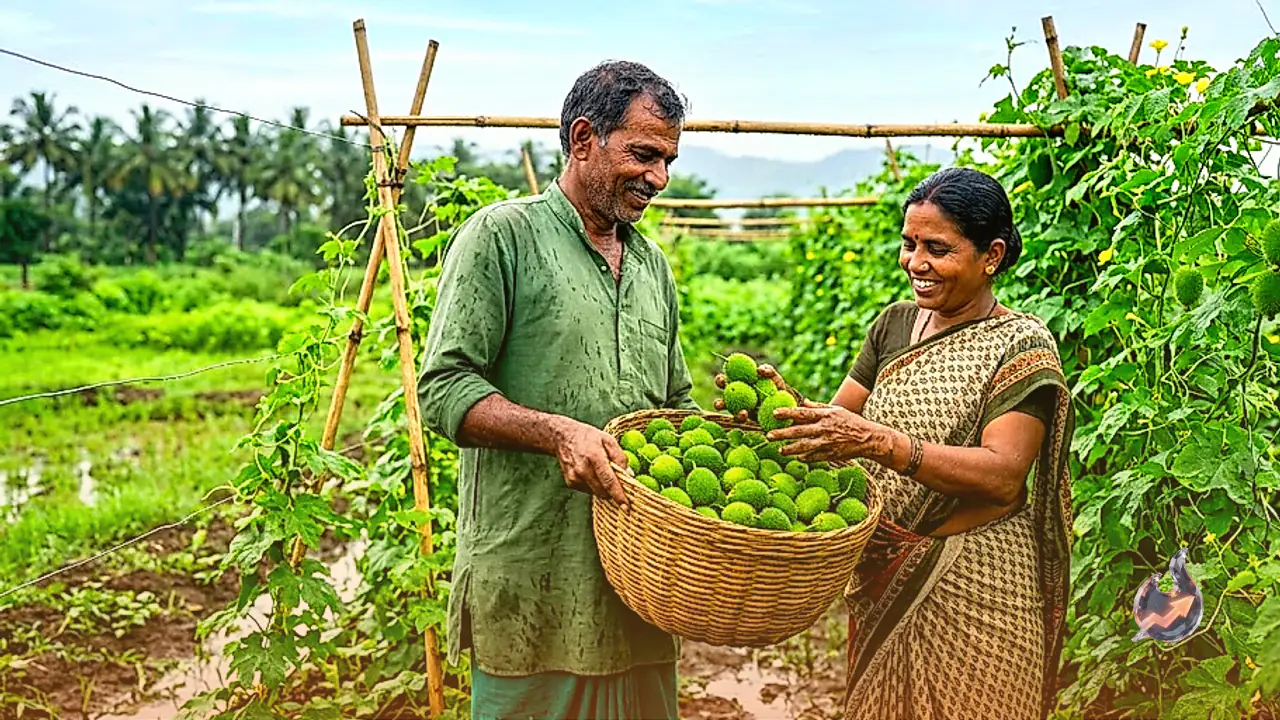

With the arrival of the monsoon season, farmers actively plan for the cultivation of various vegetables. Among these, Kakoda has emerged as a preferred climber vegetable, especially in tribal-dominated and hilly regions. Progressive farmer Genaram highlights that this crop is highly advantageous because it can be easily grown along farm fences, or by creating trellises or using ropes to support the vines. Given that the market supply is often lower than the constant demand, farmers frequently secure premium prices for their produce. A notable feature of this crop is its longevity; once planted, the vines continue to yield fruit for several years.
Soil Requirements and Field Management
While Kakoda can adapt to various soil types, loamy or sandy loam soil is considered ideal for optimal growth. As it is a climbing plant, it is essential to keep the vines raised off the ground. Utilizing trellises or string systems is standard practice. Farmers must pay close attention to field drainage, as stagnant water can cause the crop to rot, ultimately reducing productivity and risking the survival of the entire vine.
Sowing and Fertilization
The sowing season for Kakoda typically falls between June and July. Before planting, deep ploughing of the field is necessary to prepare the soil. Holes are dug at intervals of 1.5 to 2 meters. During sowing, incorporating well-rotted manure along with chemical fertilizers like Urea or NPK provides the young plants with necessary initial nourishment. Adopting this integrated nutrient approach promotes robust plant growth and enhances overall yields.
Planting Techniques and Propagation
Effective Kakoda cultivation requires a specific ratio of male and female plants; generally, one male plant is planted for every 7 to 8 female plants. Beyond using seeds, many farmers prefer to grow plants using old tubers, which significantly speeds up the crop development process. Despite requiring minimal maintenance, the crop provides high returns, primarily driven by strong consumer demand in the market.
Maintenance and Pest Control
Supporting the vines with trellises or wires prevents the fruit from coming into direct contact with the soil, which is vital for preventing spoilage. A significant advantage of monsoon cultivation is the reduced need for irrigation. However, the most prevalent pest affecting Kakoda is the fruit fly, which punctures the fruit from the inside. To mitigate this, farmers can employ pheromone traps or apply appropriate pesticides to protect the harvest.
Harvesting for Profit
Flowers and fruits begin to appear within 1.5 to 2 months of sowing. Timing is crucial for harvesting; the fruit should be picked when it is firm and deep green in color. Once the fruit ripens excessively and begins to turn yellow, its market value drops significantly. Therefore, regular harvesting every two to three days is essential. For farmers looking to maximize profits with low operational costs, this crop serves as a highly sustainable and lucrative option.