























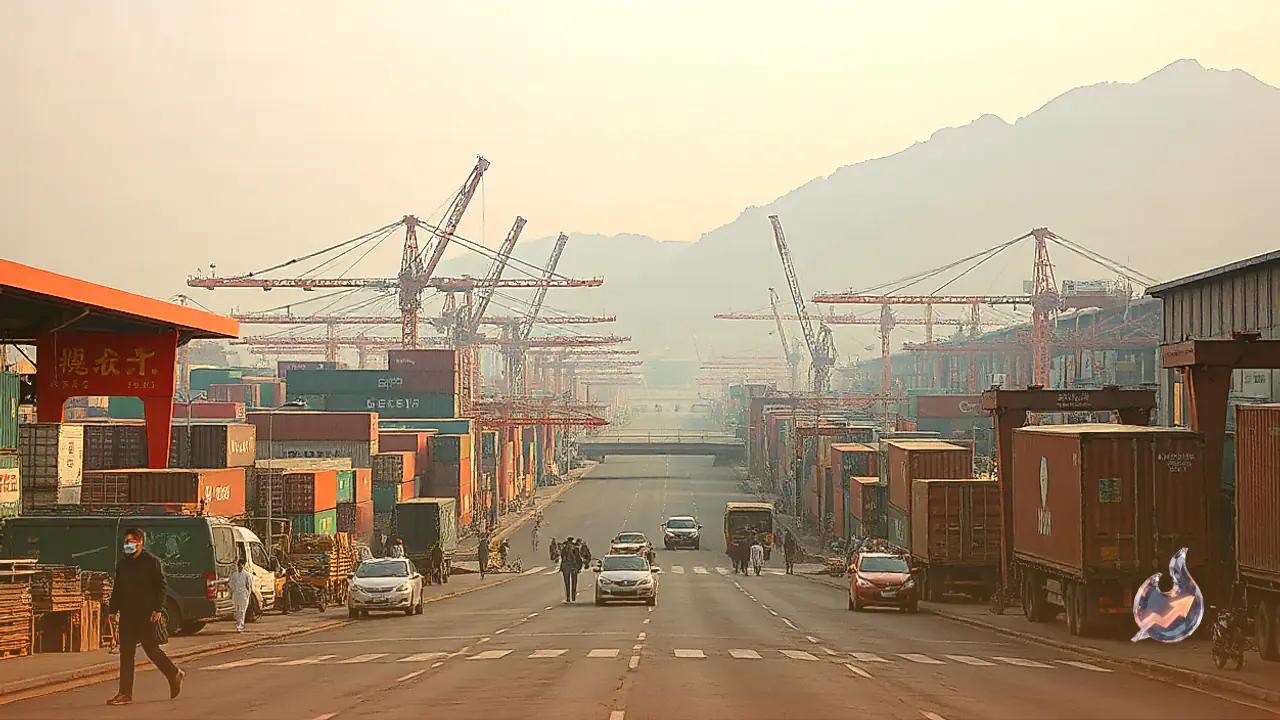

Despite ongoing global trade uncertainties and geopolitical friction, China's export machine has achieved an unprecedented milestone. Over the first ten months of 2026, China accumulated a massive trade surplus of $1.04 trillion. While the country's domestic real estate sector continues to struggle with severe downturns, foreign shipments have emerged as the central driver keeping the economy afloat. Official trade figures highlight a 35.2 percent surge in exports during October, outperforming expectations and widening trade gaps with major global economies.
AI Infrastructure Demand Fuels Export Surge
The worldwide acceleration of artificial intelligence adoption has created an unprecedented surge in demand for hardware infrastructure. Chinese manufacturing facilities supplying AI chips, data servers, and advanced electronics have capitalized heavily on this global wave. In October alone, China's overall exports expanded by 35.2 percent to reach $412.3 billion. Concurrently, imports registered a 41.6 percent jump to hit $307.1 billion. Prominent economists observe that foreign demand has effectively rescued Beijing's broader economic growth trajectory this year amid sluggish domestic activity.
US Trade Deficit Widens Amid Surging Chinese Imports
Tensions between Washington and Beijing have done little to dampen American appetite for Chinese goods. Shipments from China to the United States spiked by 32.9 percent last month, highlighting persistent consumer demand despite trade disputes. While the growing deficit fuels policy debates in Washington, trading partners globally are growing uneasy over the influx of competitively priced Chinese manufactures. Local industry groups across several countries worry that cheap imports could undermine domestic manufacturing competitiveness.
High-Stakes Trump-Xi Summit Scheduled in Shenzhen
These extraordinary trade metrics come just ahead of the Asia-Pacific Economic Cooperation (APEC) summit scheduled for next week in Shenzhen. US President Donald Trump and Chinese President Xi Jinping are set to meet face-to-face during the summit. Investors and global markets are closely monitoring the upcoming dialogue, as Washington's frustration over the persistent bilateral trade gap could trigger fresh tariff discussions or regulatory policy shifts.
European Union Tensions Escalate Over Industrial Deficits
European policymakers share similar concerns over the widening trade imbalance. Between January and October, China's trade surplus with the 27-member European Union expanded to $310.7 billion, up significantly from $241.6 billion recorded during the same timeframe last year. Authorities in Brussels worry that uninhibited export flows threaten European industrial competitiveness. Although both sides negotiated an agreement last month to manage hybrid vehicle export volumes, underlying structural tensions remain unresolved.
Domestic Demand Deficit and Annual GDP Targets
Beneath the impressive export figures lies a fragile domestic environment. Consumer confidence in China remains depressed, keeping overall domestic spending subdued and consumer price inflation well under the government's 2 percent target. Experts emphasize that Beijing is overwhelmingly reliant on foreign exports to meet its official annual GDP growth target of 4.5 percent to 5.0 percent. Any disruption to international trade routes or new tariff barriers could pose a severe threat to China's economic outlook.