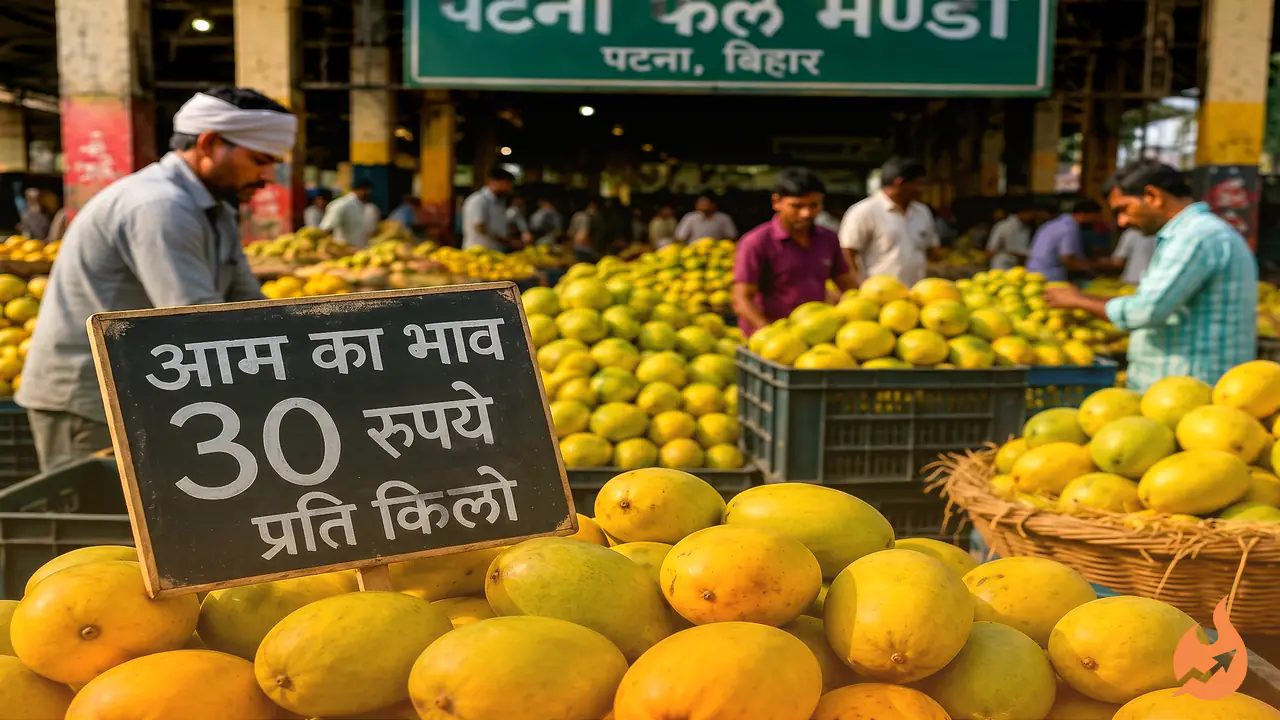

For anyone who loves mangoes, this is a story that lands straight on your plate and in your wallet. If you want to enjoy the season's favourite fruit without thinking twice about the cost, the advice from the market is simple: do it now. Traders believe the window of cheap mangoes is closing fast.
Why mangoes are so cheap right now
At the moment, mangoes that sell easily for 40 to 50 rupees per kilo could climb to as much as 100 rupees per kilo in the days ahead. The reason behind today's low rates is the intense summer heat, which has kept supply heavy and pushed prices down. In Patna's wholesale market, several varieties are going for as little as 30 rupees per kilo. Roughly 50 to 70 tonnes of mangoes priced between 70 and 80 rupees per kilo are arriving in the market every day. With sales happening at such low rates, farmers are currently earning very little profit.
What the market traders are saying
According to Shashikant Prasad, president of the Patna Fruit and Vegetable Association, the real shift will come with the rainy season. He says that the moment the monsoon arrives, mango rates will start rising. That will directly benefit farmers, who will finally get a better price for their crop, but ordinary buyers will have to dig deeper into their pockets. In his view, there is a strong chance of prices picking up after the middle of June.
From 30 to 200 rupees in a single market
Jay Prakash Verma, the association's vice-president, explains that the Bazaar Samiti at Musallahpur Haat currently stocks several kinds of mangoes — including organically grown fruit, the Dudhiya from Digha, and the Maldah variety. Prices here begin at 30 rupees per kilo and go all the way up to 200 rupees depending on quality. In short, the rate of a mango depends entirely on its variety and grade.
How UP's crop will change the equation
Verma adds that the capital's Bazaar Samiti is receiving 150 to 200 truckloads of mangoes daily. He expects prices to rise by 10 to 20 rupees per kilo in the coming days. After 20 June, the inflow of mangoes from Uttar Pradesh will also increase, and that will have a knock-on effect on the price of local mangoes here.
Why the rains make mangoes costlier
The reason prices climb is itself tied to the weather. As soon as the rains begin, the harvesting of mangoes is directly affected. Heavy downpours and storms damage the fruit, which cuts down the number of good-quality mangoes available. When the supply of premium-grade fruit drops in the market, prices naturally shoot up. That is exactly why grabbing your mangoes before the season turns is the smart move.