























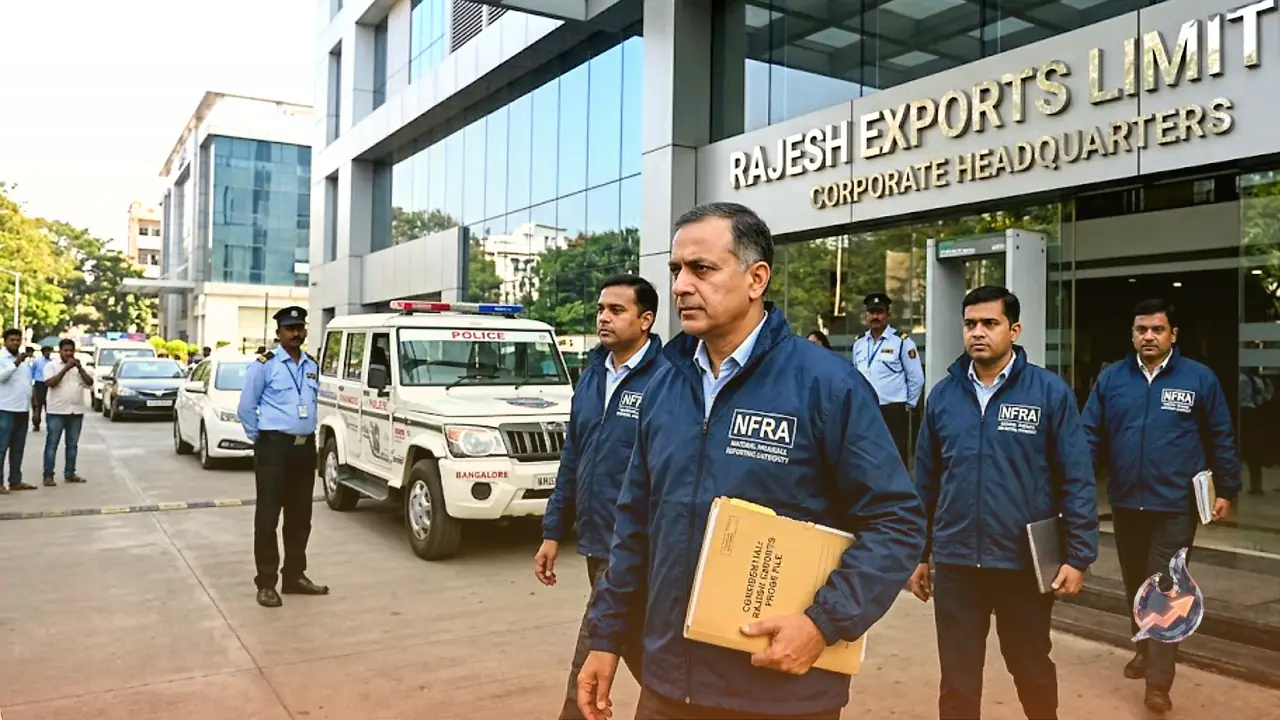

The Bengaluru-based gold refiner and jewellery manufacturer, Rajesh Exports, has come under the scrutiny of dual regulatory bodies. The National Financial Reporting Authority (NFRA) has officially commenced an examination into the company following allegations of significant financial irregularities involving a sum of Rs 15.15 lakh crore in revenue. This regulatory action follows an interim order issued by the Securities and Exchange Board of India (SEBI), which cited massive misrepresentation of figures across multiple financial years.
The Scope of the NFRA Inquiry
NFRA Chairperson Nitin Gupta confirmed that the authority has officially begun the investigative process into the matter. While speaking at a governance conference organized by FICCI, Gupta stated that the authority had commenced its work, though he refrained from providing a specific timeline for completion or sharing any preliminary findings. The involvement of NFRA is particularly significant as it holds the mandate to oversee the conduct of statutory auditors and ensure strict adherence to financial reporting standards in entities of public interest.
Allegations Detailed in the SEBI Order
In its interim order dated June 3, SEBI alleged that Rajesh Exports prima facie misrepresented approximately Rs 15.15 lakh crore in revenue. The market regulator claims that this amount accounts for nearly 99.80 per cent of the revenues attributed to the company's subsidiaries between the financial years 2020-21 and 2024-25. These allegations strike at the core of fundamental financial practices, including revenue recognition, consolidation methodologies, and the integrity of audit oversight. Consequently, SEBI has barred Rajesh Exports and its promoter, Rajesh Mehta, from accessing securities markets until the investigation is concluded.
Corporate Defense and Financial Implications
Rajesh Exports has categorically denied any wrongdoing. In response to the SEBI order, the firm maintained that its reported revenue figures are accurate, suggesting that the entire issue stems from a communication gap and internal misunderstandings. The company's assertions will now undergo rigorous examination through separate yet interconnected regulatory tracks: SEBI's ongoing probe and NFRA's review of financial statements and audit conduct. For stakeholders, this case is being closely monitored because revenue is a critical metric influencing debt ratios, profit margins, creditworthiness, and overall market valuation.
Focus on Governance and AI in Auditing
During the FICCI conference, Nitin Gupta emphasized the necessity of board independence, particularly within promoter-driven enterprises. He noted that healthy corporate environments must empower even junior-level staff to pose difficult questions without fear. Gupta also addressed the role of artificial intelligence in modern governance, cautioning that while AI tools can identify anomalies, they cannot replace human judgment, skepticism, or accountability. Rajesh Dangeti, Chief General Manager at SEBI's Corporate Finance Department, echoed these sentiments, noting that while technology serves as a tool for decision-making, it does not alleviate the fiduciary responsibilities of audit committees and management teams.