
For farmers squeezed by rising costs and falling yields, dhaincha is a crop that gives the soil a fresh lease of life by being ploughed straight back into the field. It is raised purely as green manure and buried in the soil the moment it flowers, loading the land with so much natural nourishment that even barren fields begin to produce gold.
The Chemical Fertiliser Problem — And a Natural Fix
Years of heavy, indiscriminate chemical fertiliser use have steadily drained the fertility out of farmland, and that decline has become a major worry for farmers. Dhaincha works like a booster dose for tired soil, adding large amounts of natural nitrogen and restoring the land's productivity. Once the crop has grown, a tractor is run through the field to flip it over, mixing the entire green crop back into the earth. It is this simple but unusual method that brings soil health back to full strength.
A Gaya Farmer's Five-Year Experience
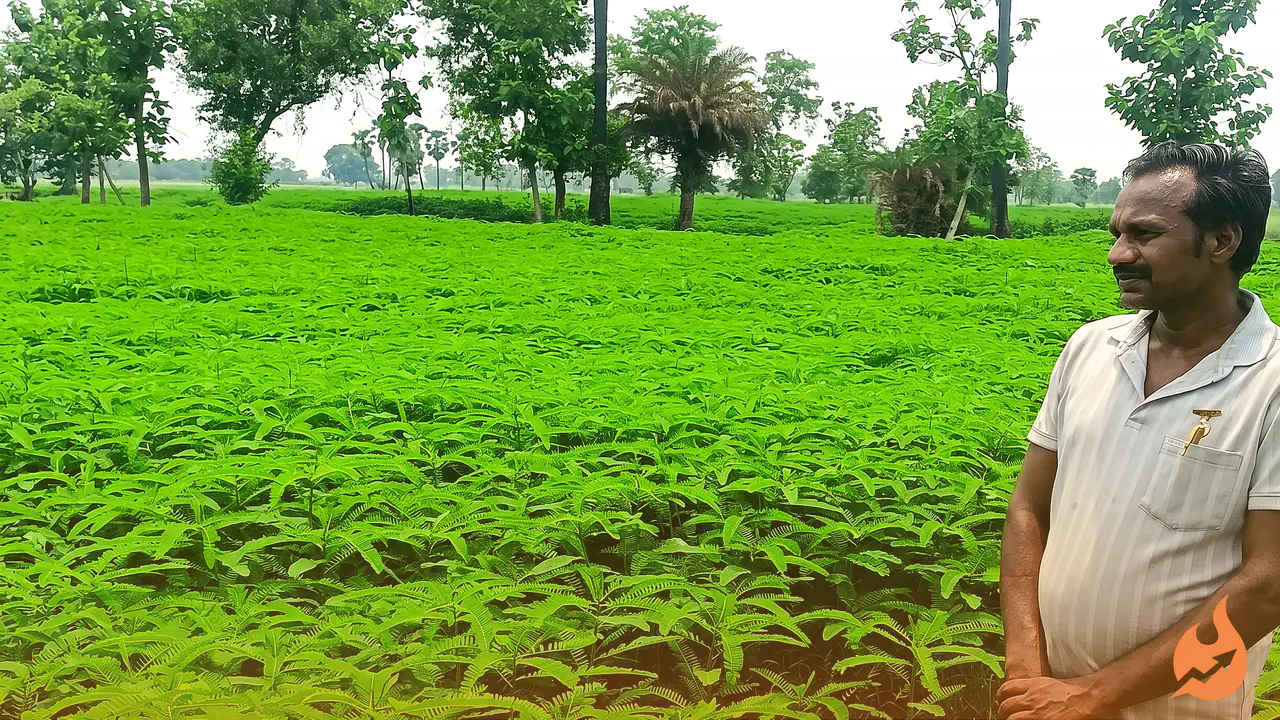
Shrinivas Kumar, a progressive farmer from Bagdaha village in the Gaya district of Bihar, has planted dhaincha across roughly 4 acres. He has been growing it for the past five years and draws a double benefit from it — seed production on one hand and green manure on the other. According to Shrinivas, dhaincha is a green-manure crop that fixes atmospheric nitrogen into the soil through its roots. This sharpens the activity of beneficial micro-organisms already present in the field, making nutrients far more available to plants. It also improves the structure of the soil and boosts its water-holding capacity.
Rotting in the Field to Become Natural Compost
When the green crop is left to decompose right where it grew, the soil receives heavy doses of nitrogen and organic carbon. As a result, the land's ability to soak up moisture rises sharply and the soil turns soft and crumbly. The moment it meets water, the buried green crop breaks down inside the field and turns into excellent compost.
How and When to Grow Dhaincha
The best part about dhaincha is that it needs neither much water nor any special effort. It is usually sown in empty fields between April and June and reaches a good height in just 40 to 50 days. As soon as flowers begin to appear on the crop, a rotavator is run through the field to bury it in the soil at exactly that stage.
Farming Costs Cut in Half
The biggest payoff shows up with the next main crop. When sowing paddy or wheat, the farmer no longer needs to buy expensive urea and DAP from the market, because the essential nutrients have already been delivered to the field. The upshot is that the cost of farming is cut straight in half while the soil's health stays intact.