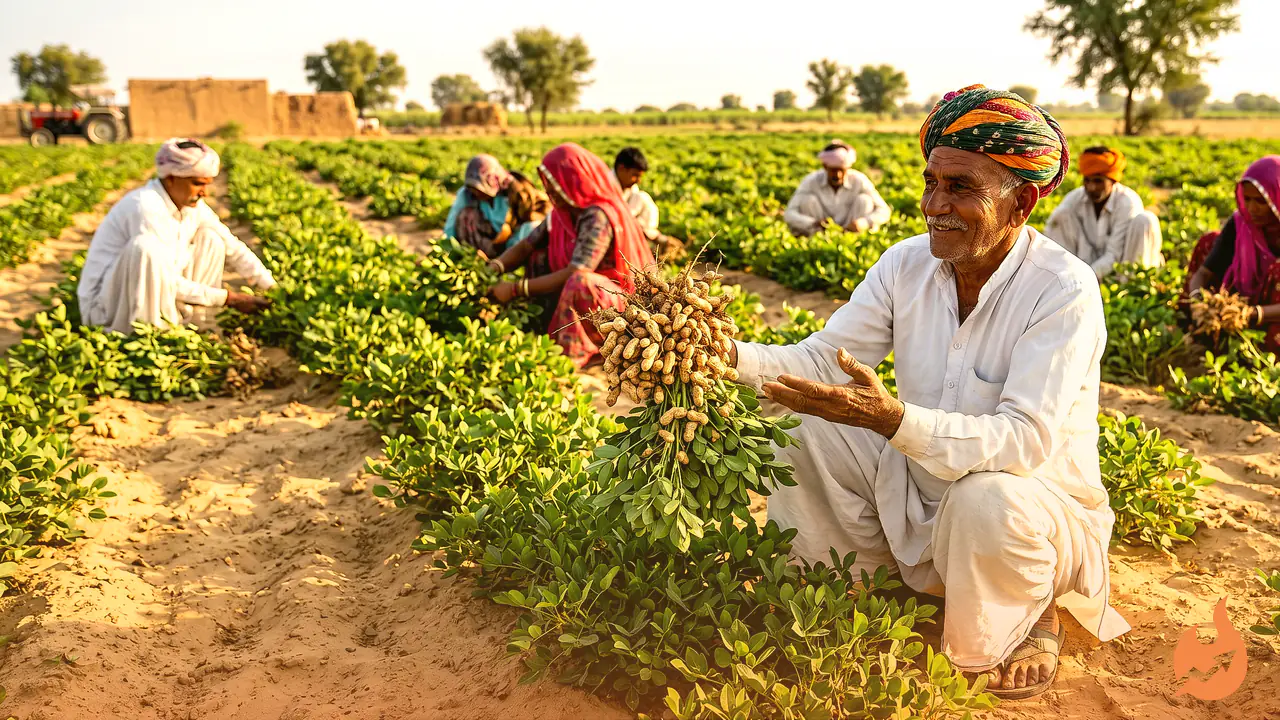

For farmers in Nagaur grappling with scanty rainfall and unpredictable weather, one particular variety of groundnut has emerged as a dependable lifeline. Groundnut already earns more than most traditional crops, but the Spanish bunch variety has proven especially well suited to the district's climate and soil. That is why a growing number of farmers here are now turning to it for their sowing.
Built for Low-Rainfall Areas
The biggest advantage of Spanish bunch is its ability to deliver solid output even in regions that receive little rain. In an era of uncertain monsoons, that single quality is making it the first choice for farmers. Hari Ram, a progressive farmer from Nagaur, says that given the shifting weather and an increasingly unreliable monsoon, this variety is a safe bet.
He explained that most parts of Nagaur district have light sandy soil with good drainage, conditions considered highly favourable for groundnut cultivation. The crop matures in roughly 100 to 120 days. Being a short-duration crop, it carries a direct benefit — farmers face far less weather-related risk.
Easy to Manage, Needs Less Water
According to Hari Ram, the plants are upright, small and bushy, which makes tending to them and managing the overall crop much simpler. On top of that, the variety gets by on less water while still returning a higher yield.
Grains Carry 45 to 50 Percent Oil
Agriculture expert Bajrang Choudhary points out that the grains of Spanish bunch groundnut contain 45 to 50 percent oil. It is this high oil content that keeps demand for the variety steady in the oil industry and the wider market. There is another plus: its pods are uniform in size, which makes harvesting, cleaning and grading easier and improves the chances of farmers fetching a better price when they sell.
The Right Sowing Method and Spacing
Choudhary advises preparing the field well before sowing and using only certified seeds. Around 80 to 100 kilograms of seed per hectare is considered sufficient. At the time of sowing, keeping 30 to 45 centimetres between rows and 10 to 15 centimetres between individual plants gives the best results. Balanced fertiliser management and timely weed control further push up the yield.
20 to 30 Quintals Per Hectare
In Nagaur, the ideal window for sowing runs from the last week of June to mid-July, after the first good monsoon shower. If the crop gets enough moisture in its early stage and disease and pest management is done on time, a yield of 20 to 30 quintals per hectare is achievable. That is precisely why, in the low-rainfall district of Nagaur, Spanish bunch groundnut is rapidly establishing itself as a profitable and reliable crop.