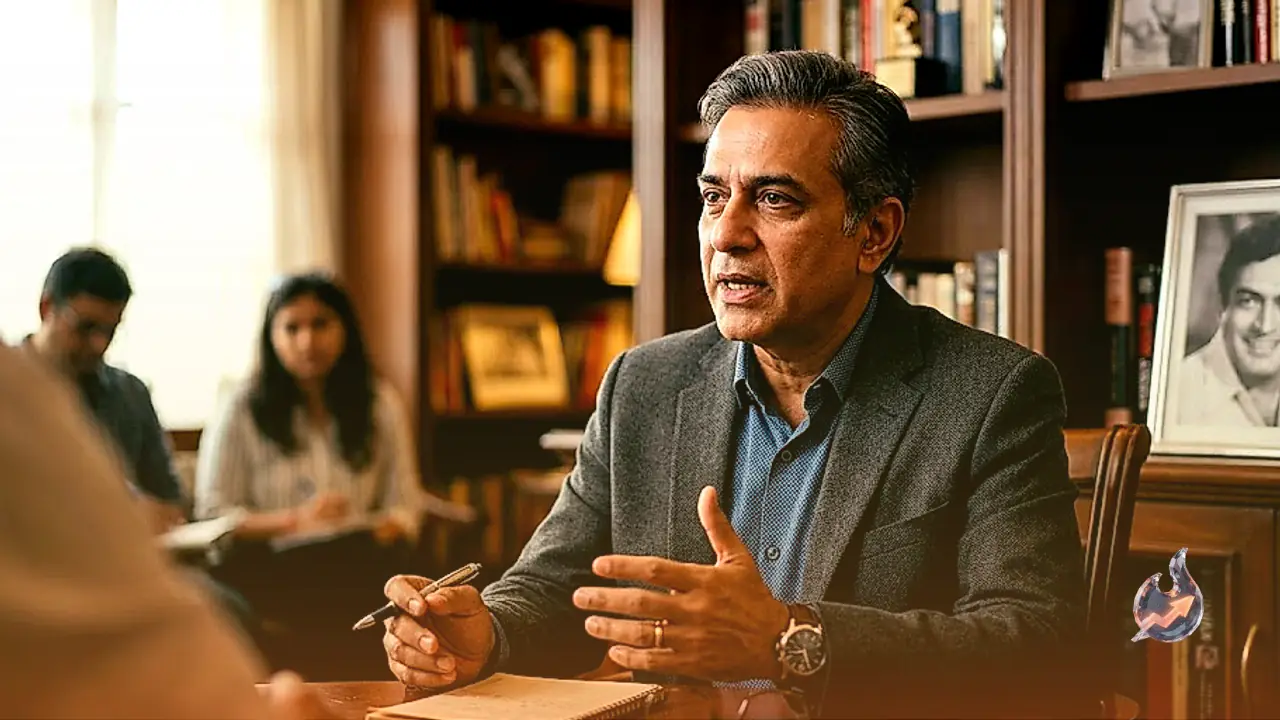

























Renowned for her commanding screen presence and versatile performances across television, films, and digital platforms, acclaimed actress Sudha Chandran is returning to screens in an entirely fresh storytelling space. Venturing into the rapidly expanding universe of micro-dramas, she takes the lead in a new production titled Hisaab Barabar. In this project, she portrays Asha, a simple, resilient, and deeply dignified mother whose relentless sacrifices for her son are met with unexpected social friction and family estrangement.
The narrative of the micro-drama centers around a mother who dedicates her entire existence to ensuring her son receives the best possible upbringing and education. Her years of ceaseless struggle bear fruit when her son rises to become one of the wealthiest and most prominent corporate business leaders in the country. However, this staggering financial ascent comes at a painful cost. The son and the high-society circles he now inhabits begin judging and dismissing Asha because of her humble appearance and modest financial standing. Despite facing sharp disrespect within her own family environment, Asha refuses to surrender her self-respect. The production delivers an emotional exploration of parental devotion, painful estrangement, and the unbreakable pride of a mother.
The Operational Shift from Television and Cinema to Micro-Drama
Having worked extensively across daily television serials, mainstream cinema, and episodic web formats, Sudha Chandran noted that stepping into micro-dramas requires a fundamentally different artistic discipline. In her view, the most pronounced difference between conventional entertainment mediums and micro-dramas lies in pacing and precision. Television series allow an actor to inhabit a character over long arcs stretching across months or even years, gently unwinding nuanced personality traits over dozens of episodes. Mainstream films also afford directors and performers generous running times to establish atmosphere, construct character arcs, and stage gradual emotional transitions.
In sharp contrast, the compressed architecture of a micro-drama demands total precision from the very opening beat. Performers operate under severe time constraints, where delivering emotional depth, advancing the narrative, and establishing an immediate audience connection must occur simultaneously. Every dialogue, facial expression, and reaction shot carries structural weight, leaving no room for superfluous moments or sluggish storytelling. This strict limitation transforms the format into both a demanding technical challenge and an invigorating creative exercise.
Drawing Emotional Truth from Personal Bonds
In Hisaab Barabar, Asha sacrifices every personal comfort to secure an empowered future for her son. To capture the psychological reality of such immense selflessness, Sudha Chandran leaned heavily on her real-life relationship with her own mother. She observed that whenever an actor attempts to reach the raw emotional core of a character, personal memories and lived experiences naturally seep into the performance.
Her mother played a foundational and enduring role throughout her personal life, instilling core values such as unconditional affection, sacrifice, and the mental grit required to stand firm during the darkest phases. These lessons provided her with sustained inner strength. Asha embodies that exact archetype of maternal dedication, willingly enduring hardships so her child can thrive. Sudha Chandran highlighted that revisiting those deeply felt personal memories and the unbreakable bond she shared with her mother provided the emotional bedrock needed to portray Asha's silent grief, fierce affection, and unwavering self-esteem on screen.
Confronting External Judgments and Social Biases
A core conflict in the micro-drama stems from how peripheral characters dismiss Asha solely based on her plain clothing and simple socioeconomic standing. Sudha Chandran revealed that this dynamic reflects real-world experiences she encountered repeatedly throughout her career. Society frequently attempts to define, evaluate, and restrict individuals based entirely on surface-level appearances and present situations.
Looking back to the era of her landmark film Mayuri, she learned early on that temporary setbacks do not dictate one's ultimate future. Despite securing a National Award for her remarkable performance, her career later entered an extended dry spell during which industry offers vanished for years. During such plateaus, observers routinely write off artists, boxing them into rigid categories defined by age, physical limitations, or previous screen roles. She strongly maintains that neither a creative career nor a woman's ambition should ever be constrained by age or difficult circumstances. It was only when she boldly accepted the iconic negative character of Ramola Sikand that industry gatekeepers and viewers radically revised their perceptions of her artistic range.
Traversing the Spectrum from Fierce Antagonist to Vulnerable Matriarch
Television viewers widely associate Sudha Chandran with the commanding, cold-blooded authority of Ramola Sikand, making her transition into a humble, victimized, yet fiercely proud mother in Hisaab Barabar a sharp tonal departure. When addressing how she navigates such diametrically opposed roles with ease, she stated that she has consistently refused to trap herself within comfortable creative boundaries.
Had she decided to exclusively pursue roles mirroring Mayuri following its historic reception, her longevity in the entertainment industry would have been severely curtailed. Instead, she actively sought out varied performance textures across positive, dark, tragic, and comedic spectrums. Moving from Mayuri into the ruthless realm of Ramola Sikand defied all prevailing expectations. Later, portraying the theatrical and scheming Yamini in Naagin introduced yet another distinct stylistic register. In Hisaab Barabar, stepping into the shoes of Asha allows her to bring forward a quiet, vulnerable, yet morally resolute maternal portrait. She emphasized that genuine artistic reinvention feels natural only when an actor remains committed to continuous learning and constant creative transformation.
The Imperative for Established Stars to Adopt New Formats
On the necessity of veteran performers embracing emerging storytelling channels such as micro-dramas, Sudha Chandran underscored that evolving alongside shifting media consumption habits is essential for artistic survival. Audiences today are presented with countless entertainment options across diverse screens, requiring narrative delivery to become tighter, sharper, and far more engaging.
She stressed that the moment any artist assumes they have mastered their craft entirely, their artistic growth halts permanently. Collaborating with newer generations of creators and exploring condensed modern storytelling forms ensures that an experienced performer remains creatively dynamic, relevant, and connected to contemporary viewers.