
The dosa may be the pride of every South Indian kitchen, but turning out one that tastes just like the ones you get at a restaurant takes real skill. A truly perfect dosa is crisp on the outside while staying soft within — and there is no magic behind it, only three things working in harmony: the right ratio of ingredients, the right soaking time, and a properly fermented batter. Get those three right, and even your home tawa can deliver hotel-quality dosas.
How to Soak the Rice and Dal
It all begins with soaking. Wash the rice thoroughly and leave it in water for 4–5 hours. Meanwhile, in a separate vessel, soak the urad dal along with a little fenugreek (methi) seed for the same length of time. The methi is not just for flavour — it lends the dosa a light colour and a gentle aroma, and it improves the fermentation of the batter too.
What to Watch For While Grinding
Once everything has soaked, grind the urad dal first. Run it through a mixer or wet grinder, adding water a little at a time, until you have a smooth, light and fluffy paste. Next, grind the rice — but here is a small trick: do not grind it too fine, keep it slightly coarse. That grittiness is what gives the dosa its crunch. Now combine both pastes in a large vessel and mix them well by hand.
Fermentation: The Heart of the Dosa
Cover the mixed batter and leave it in a warm spot for 8–10 hours. In cold weather the process slows down, so the winter months may call for a little extra time. When fermentation has done its job, the batter rises, turns light, and develops a mild sourness. That tang is essential to the dosa's true taste.
Getting the Batter Ready
Add salt to the fermented batter to taste. If it feels too thick, loosen it with a little water. The right consistency is one that spreads easily the moment it hits the tawa.
The Right Way to Cook a Dosa
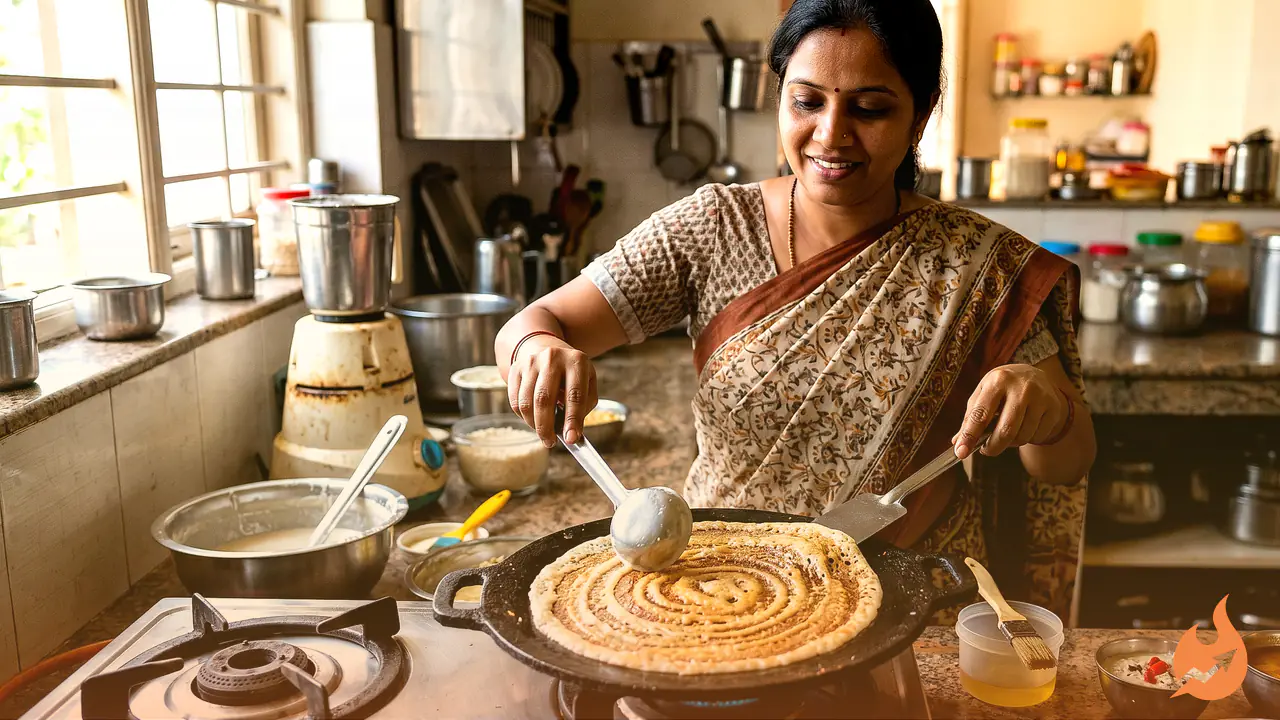
Heat the tawa — non-stick or cast iron — on medium flame. Test the temperature by sprinkling a little water on it. Pour a ladleful of batter in the centre and spread it thin in a circular motion. Drizzle a little oil or ghee around the edges. Cook until the underside turns golden and crisp. If you want a paper dosa, there is no need to flip it; otherwise you can gently turn it over and cook the other side too.
A Few Essential Tips
- The tawa should always be properly hot, but never overheated.
- Keep the batter neither too thick nor too thin.
- Wipe the tawa lightly before each dosa so the next one doesn't stick.
- A cast iron tawa gives a crispier dosa.
How and What to Serve It With
Serve the dosa piping hot with coconut chutney, sambar and tomato chutney. Stuff it with a spiced potato filling and the same dosa becomes a masala dosa.