





















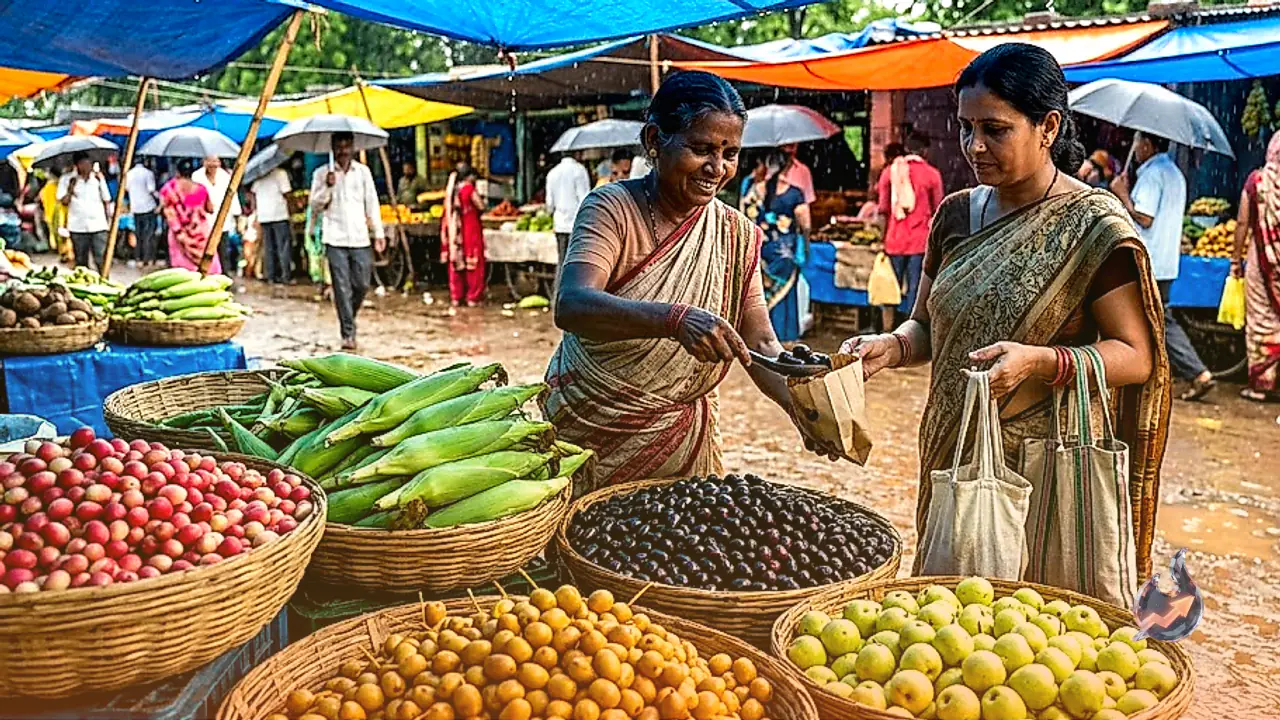

The moment the first monsoon showers hit Chhatarpur district, the local markets change character almost overnight. Fruits that vanish for most of the year suddenly reappear, and shoppers rush to grab them before the short season ends. Some of these fruits are available only for a few weeks, making them all the more prized. Here is a look at the seasonal fruits taking over Chhatarpur's markets this monsoon, each one packed with both flavour and health benefits.
Karonda: A Taste of Childhood
The first fruit that comes up whenever the rains begin is karonda. This sour fruit is loved by people of every age, from children to the elderly. Despite its tartness, people eat it with salt and thoroughly enjoy it. Karonda is eaten in large quantities through the monsoon, and its pickle is also prepared and stored, which tastes absolutely delicious.
In Chhatarpur, children are still served roti spread with nenu, or butter, along with karonda pickle. The combination is so tasty that kids end up eating several rotis without needing any vegetable side dish at all. The karonda pickle alone becomes a complete meal for them. The tradition continues to be followed in the district with the same enthusiasm as it was in the past.
Bhutta: The Corn That Owns the Rainy Season
Another fruit, or rather a grain, that has carved out its own identity during the monsoon is bhutta, or corn on the cob. The smell of corn roasting by the roadside has become synonymous with the rainy season. Eaten with lemon and salt, bhutta is not just delicious but also extremely good for health. It is rich in vitamins, minerals and antioxidants, which help strengthen immunity and provide relief from constipation.
Jamun: Available Only for a Few Days
As soon as summer ends and the first or second rain falls, another fruit makes its entry into the market, and that is jamun. Its demand in the market remains huge, but the catch is that it stays available for only a limited number of days. For anyone conscious about their health, jamun is nothing short of a blessing. Eating jamun is considered extremely beneficial for problems related to fatty liver, sugar and gas.
Khajuri: The Wild Fruit That Turns Sweet in the Rain
After jamun comes khajuri, also known simply as the khajuri fruit. It is a completely wild fruit, and its trees are mostly found on farm edges, wastelands and in forests. Interestingly, this tree starts bearing fruit as early as February-March and continues to carry fruit through the entire summer. The fruit endures the harsh summer heat while still attached to the tree, and the moment the rains begin, it starts ripening.
This is why khajuri is available to eat for only about 1 month during the monsoon. It is considered extremely beneficial for health. In taste, it is just as sweet as dates, though its nature is considered heaty, so people keep that in mind while eating it.
Chhatarpur's Desi Pear Takes Centre Stage
Another fruit that gets talked about a lot in Chhatarpur district's markets during the monsoon is the desi pear. The pear sold here is different from the ordinary pears found elsewhere, since it is a completely indigenous variety. It looks small and somewhat firm, but tastes just as sweet and nutritious. This is why people in the district eat it with great enthusiasm, and it reaches almost every household during the rainy season.
These Desi Fruits Are a Health Treasure
During the monsoon, the markets of Chhatarpur district come alive with seasonal fruits like jamun, karonda, khajuri, bhutta and the desi pear. All of these fruits are not only delicious but are also considered highly beneficial for health. These indigenous fruits available during the rains can help make the body's immunity super strong, which is exactly why crowds rush to buy them in the markets every year.