








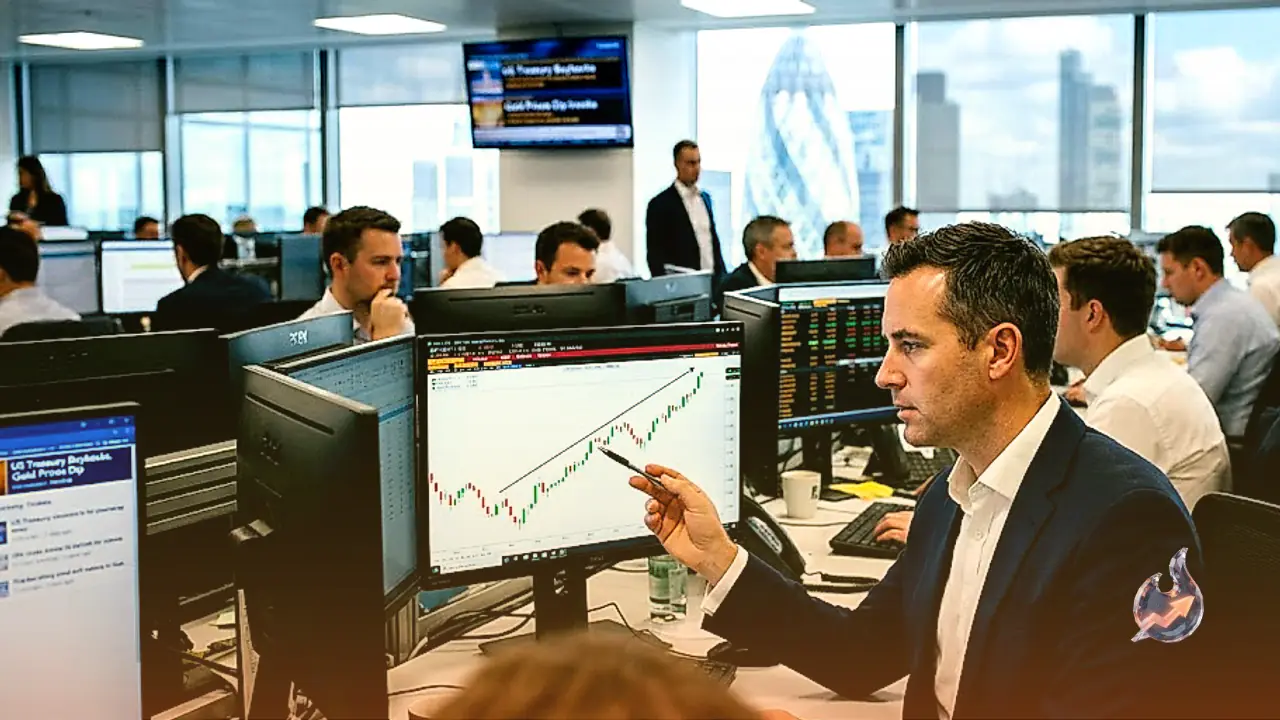














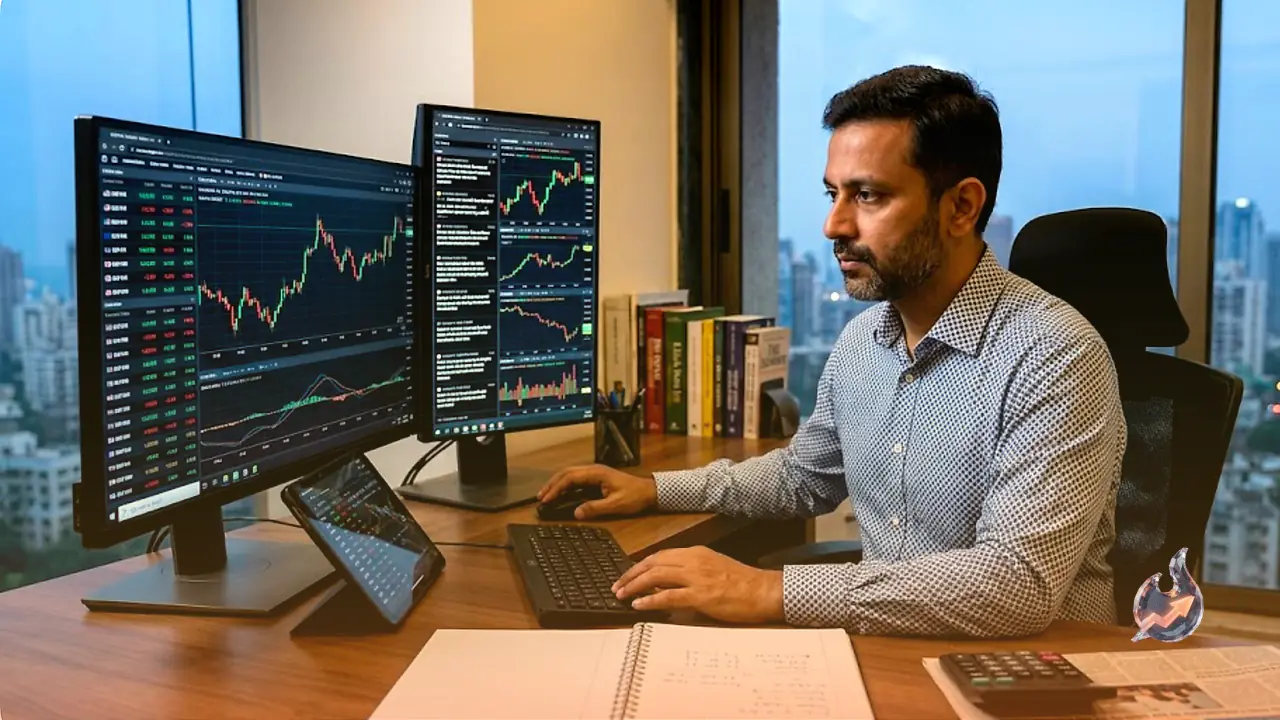

Investors today have more ways to grow their money than any earlier generation, stretching from stocks and mutual funds all the way to cryptocurrencies. Among all of these, forex trading, the business of buying and selling the world's currencies, has picked up a serious following. Yet even though foreign exchange is the largest financial market on the planet, it is also intensely volatile and far more complex than it first appears. That is exactly why, before putting any money into it, it pays to understand how it works, whether it is legal in India, the kind of returns it can offer and the risks that come baked in.
What forex trading actually means
Forex trading, also called foreign exchange or simply FX trading, involves buying one currency while at the same time selling another. The whole aim is to profit from the constant swings in exchange rates. In practice, a trader is betting on whether one currency will strengthen or weaken against another.
The major currency pairs
Most of the action in this market happens in a handful of major currency pairs:
- EUR/USD, the Euro and the US Dollar
- USD/JPY, the US Dollar and the Japanese Yen
- GBP/USD, the British Pound and the US Dollar
- USD/CHF, the US Dollar and the Swiss Franc
- AUD/USD, the Australian Dollar and the US Dollar
- USD/CAD, the US Dollar and the Canadian Dollar
Of these, AUD/USD and USD/CAD carry a special label, they are known as commodity currency pairs. The reason is straightforward. Australia and Canada are major exporters of commodities such as oil, gold and other natural resources. As a result, whenever global commodity prices shift, the value of these two currencies tends to move along with them.
A market that never sleeps
Unlike the stock market, the forex market stays open 24 hours a day, five days a week. That around the clock nature is what makes it one of the most liquid financial markets in the world. According to the Bank of International Settlements (BIS), daily trading volumes here run past 7 trillion dollars.
How trades happen and what moves rates
Forex trading mostly takes place through brokers or regulated exchanges, where traders speculate on whether the value of one currency will rise or fall relative to another. Those exchange rate movements are driven by a mix of forces, including:
- Interest rate decisions taken by central banks
- Inflation levels
- Economic growth and GDP data
- Employment figures
- Political developments
- Global trade and geopolitical events
Many forex traders also rely on leverage, which lets them control a much larger position with a relatively small amount of money. This is where caution matters most. Leverage can magnify profits, but it can just as easily magnify losses on the same scale.
How Indians can trade forex legally
The way you invest in forex changes from one country to the next. In India, residents can legally trade only in currency derivatives that the Reserve Bank of India (RBI) permits and that the Securities and Exchange Board of India (SEBI) regulates, all of it routed through recognised stock exchanges such as:
- National Stock Exchange (NSE)
- Bombay Stock Exchange (BSE)
- Metropolitan Stock Exchange (MSE)
To get started, you first open a trading account with a SEBI-registered broker such as Groww, Zerodha, Upstox or Angel One. Next, you complete your KYC and add funds to the account. After that, you can trade RBI-approved currency pairs like USD/INR, EUR/INR, GBP/INR and JPY/INR on the NSE, BSE or MSE. From there it is a matter of watching the market and buying or selling in line with your strategy, then closing the trade to lock in profits or cap your losses.
Is it safe
Forex trading on its own is a legitimate financial activity. How safe it turns out to be, though, depends largely on where and how you trade. Going through regulated exchanges and licensed brokers gives investors far more protection than using unregulated offshore platforms. Even so, market risk is something you can never fully escape.
Financial experts generally suggest that beginners first get a firm grip on market fundamentals, practise on demo accounts and steer clear of excessive leverage before ever committing real money.