























Every few weeks the internet's youngest users invent a new code that leaves everyone over thirty completely lost, and this time the mystery term is a five-letter acronym: TLPUR. Alongside it, a fresh wave of angry, incel-coded slang, a viral German pop song, and a sunbathing trend that ignores decades of skin damage warnings are all sweeping through the comment sections where teenagers gather. Making sense of any of it requires accepting one simple rule: not everything younger people post online is meant to mean anything at all.
The Real Story Behind "TLPUR"
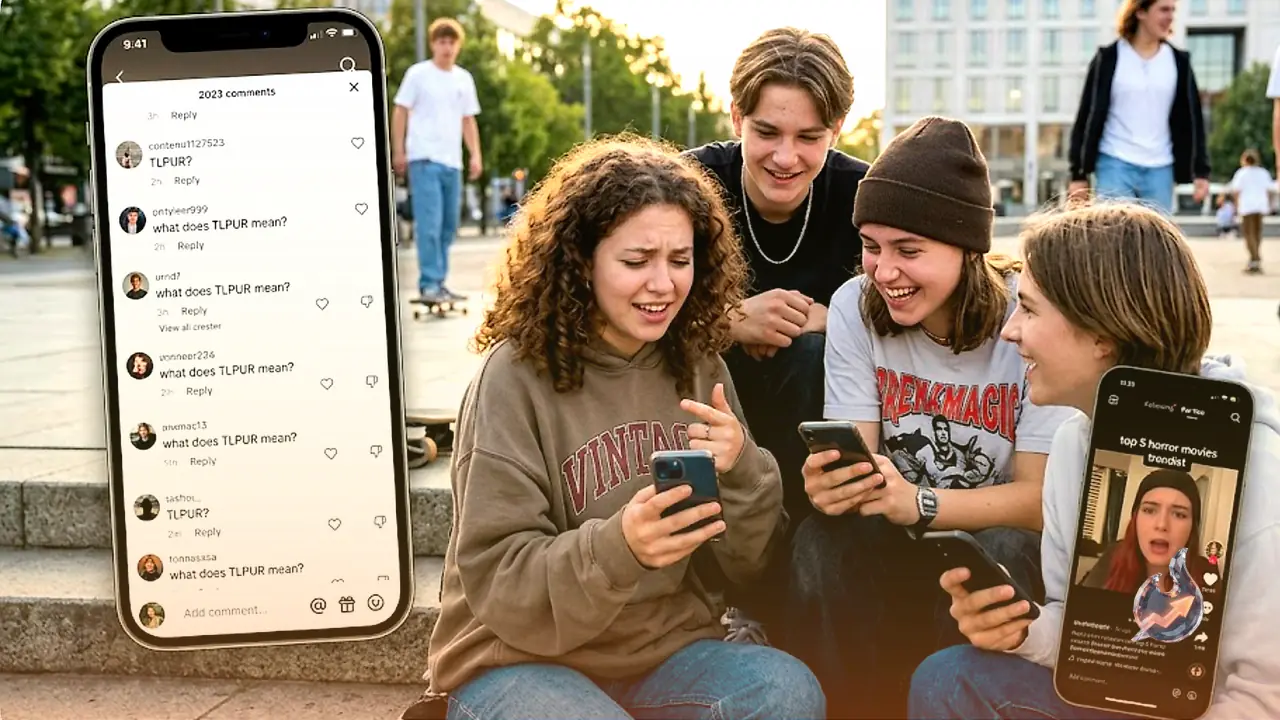
The tag #tlpur began appearing recently under posts wherever younger users hang out online, and nobody agrees on where it came from or what it stands for. Ask five different people and you will get five different answers. Some claim TLPUR stands for "True Love Pills Until Rope." Others insist it means "The Lookspill Proves Us Right." Still others swear it is short for "Too Late for Puberty." None of these explanations is the real one, because the acronym was never built to carry a fixed meaning in the first place. The entire point of TLPUR is that anyone who asks gets handed a different, made-up definition on the spot. It works as a kind of membership badge: if you already understand the joke, you do not need an explanation, and if you have to ask, you are being let in on very little.
As the acronym spread, a second layer formed around it. Users started posting repetitive, almost hypnotic videos about TLPUR set to an old Weezer song, feeding the joke further. Comment sections filled up with definitions that grew progressively more abstract and nonsensical, such as calling TLPUR "essentially when belle delphine hand sticker" or claiming "Tlpur is essentially 808." None of it is meant to be decoded logically; the absurdity is the content.
What Counts as a "D1 Crashout"
Separately, a term called "crashout" has already been circulating to describe an intense, angry, emotional outburst. The newer version, "D1 crashout," borrows language from top-tier college sports recruiting, where "D1" designates the highest division of college athletics. Attaching it to "crashout" is a way of saying someone did not just have a meltdown, they had an elite, next-level meltdown worthy of a championship-caliber performance.
Why "Top 5 Horror Movies" Videos Are Going Viral
A different trend uses the phrase "top 5 horror movies" to mean something that has nothing to do with actual films. Instead of naming genuine horror titles, teenagers list out small real-life anxieties and everyday inconveniences, set them to a melancholy clip of Katy Perry's "The One That Got Away," and post the result under the hashtag #top5horrormovies. The results offer an unusually candid look into what is actually stressing out Generation Z and the even younger Generation A. Mundane situations such as "not knowing what's for dinner" or "having to make a decision" get cast as the worst horrors imaginable, sitting right alongside genuinely serious sources of fear such as cancer, or, more absurdly, werewolf attacks. The trend works precisely because of that gap between real dread and manufactured drama, and it says a lot about how younger users choose to frame ordinary stress as catastrophe before they have encountered any actual catastrophe.
The Uncomfortable Origin of "Hiplet"
A large share of the "top 5 horror movies" videos simply list the word "men" five times in a row, and a separate, newer slang term explains exactly why. "Hiplet" describes women who have "hip dips," meaning a natural inward curve along the outer thigh just below the hip bone. According to a narrative pushed almost entirely by angry, incel-adjacent corners of the internet, women with this completely normal body shape are being labeled as undesirable dating partners.
The real motivation behind the term is fairly transparent: some men are frustrated that certain women have said they prefer dating taller partners, so they are attempting to invent an equivalent category to use against women. Unlike genuinely organic internet slang, "hiplet" was manufactured and pushed deliberately, with videos designed both to spread the term and to make sure women are aware they are being viewed this way.
So far, the campaign does not appear to be landing. The response from young women online has largely been sarcastic dismissal rather than genuine hurt or agreement. In the end, there are two clear losers in this exchange: the angry men behind the term, and the completely unrelated Hiplet Ballerinas, a dance group whose name now gets dragged into a controversy that has nothing to do with them.
"Tanmaxxing" Brings Back Reckless Sunbathing
Despite decades of dermatological warnings about skin damage, a growing number of teenagers are abandoning sunscreen routines altogether for the summer under a new label: "tanmaxxing." Practitioners track peak UV index times specifically so they can lie out during the most intense sunlight, skip sunscreen entirely, and sometimes use heavy tanning oils to darken their skin as quickly as possible. Most of the content is simply footage of people lying motionless in direct sun, but a smaller subset of videos goes further, actually questioning whether sun exposure is harmful at all, despite the settled medical consensus against that claim.
Anyone chasing that trend would benefit from spending time around older residents of places like Florida and San Diego, many of whom show decades of visible sun damage as a direct result of exactly this kind of exposure. Beyond the health risks, building an entire online identity around "I lie in the sun a lot" is a fairly thin premise for content. On a lighter note, there is at least no sign yet of a return to those old reflective mirrors people once angled at their own faces to intensify sun exposure even further, though that revival would not be surprising if the trend keeps growing.
This Week's Viral Song: "Gut Genug"
Unlike TLPUR, the phrase making the rounds this week actually has a real, fixed meaning. "Du bist gut genug" is German for "You are good enough," and it should not be confused with the similar-sounding slang term "dah bih gah." The German duo Blumengarten released a song called "Gut Genug" a few weeks ago, and it carries a genuinely uplifting message.
Younger audiences largely did not notice the song until TikTok user @justlove_161 stripped out just the chorus and posted it as a standalone clip. That version has since been watched by millions of people, spawning a wave of comedic remix videos built around the same clip. The phrase and melody are also quickly turning into a reaction meme, showing up attached to all kinds of unrelated videos simply because the sound has become instantly recognizable.