
















DigiYatra was rolled out to spare passengers long airport queues, but for twin siblings it has turned into a recurring headache. The facial recognition technology behind the system still cannot reliably tell apart two very similar looking faces, and the latest example of this comes from Ahmedabad airport, where twin brothers ended up back in the old manual line simply because the system could not spot any difference between them.
Why the facial recognition step keeps tripping up
The Ministry of Civil Aviation launched DigiYatra a few years ago to make air travel smoother, allowing passengers to enter the airport and reach the boarding gate purely on the basis of a facial scan instead of repeatedly showing a boarding pass and identity card. Under this drive, almost all major airports across the country have now been equipped with the facility, and lakhs of passengers use it every day for a paperless journey. But the moment twin siblings are involved, the system runs into trouble. When twins try to enter the airport together through DigiYatra, the facial recognition system treats one of them as a duplicate of the other and rejects that person. Whoever gets rejected is then forced to go through the entire old process, from entry to check-in to boarding, standing in the regular line. What makes this worse is that even though the problem keeps recurring, those running the DigiYatra system have not yet put in place any concrete fix for twin siblings.
What happened to the Chhajer brothers on July 10
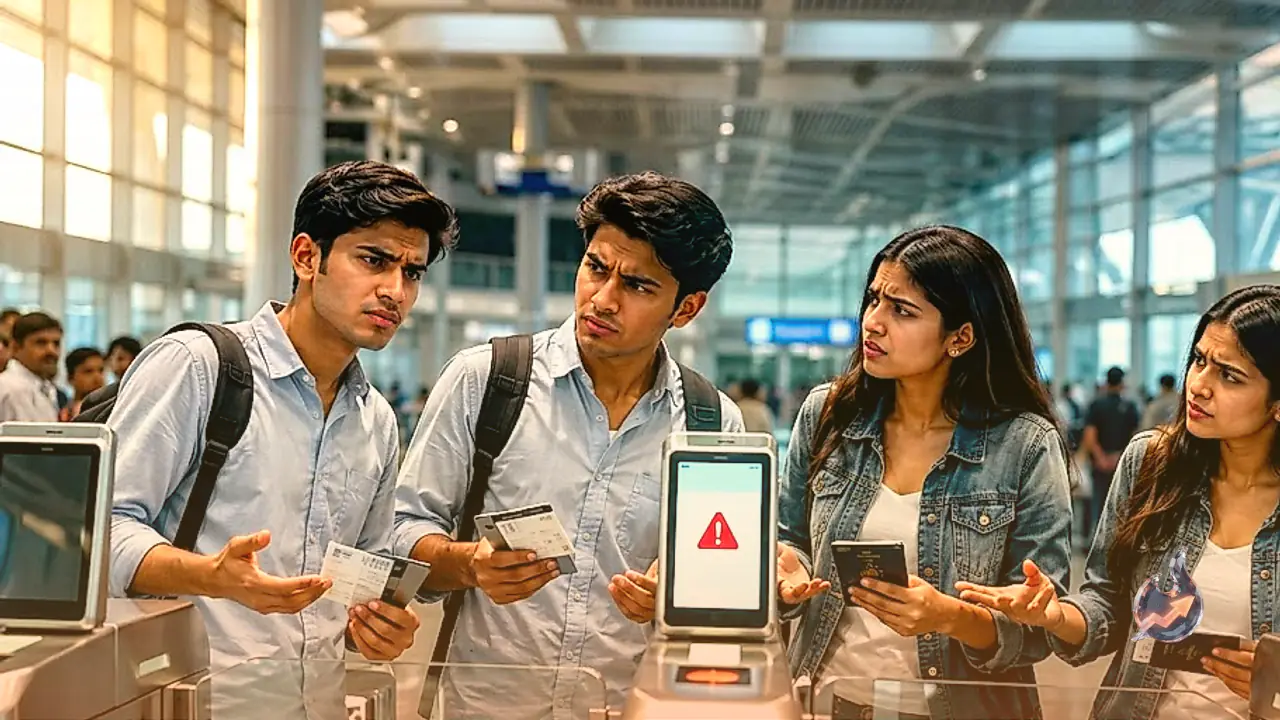
Ahmedabad's Sanjeev and Rajeev Chhajer are the latest people to run into this exact problem. The two are twin brothers, and whenever they fly together, DigiYatra becomes a source of trouble for them. The system's facial authentication is unable to distinguish between the two brothers' faces, and it ends up pushing one of them out of the fast track process. Whoever gets excluded then has to complete entry, check-in, security and boarding entirely through manual verification. On July 10, Sanjeev and Rajeev arrived at Ahmedabad airport to catch an IndiGo flight to Delhi. As soon as they tried to check in through DigiYatra, they were shown a message reading 'Too Many Access', which signals an attempt to access the system more than once. What made this instance particularly frustrating was that the system did not reject just one of the brothers, it rejected both Sanjeev and Rajeev at the same time. After completing check-in manually, the two brothers reached the security checkpoint, only to be shown the same 'Too Many Access' message again. Airport staff eventually sent one of the brothers off to complete the manual process separately. Speaking about the ordeal, Sanjeev said the whole point of registering on DigiYatra is to get a paperless entry and skip long queues so that time is saved, but when one brother has to use DigiYatra while the other is stuck doing everything manually during the same trip, the entire purpose of the facility is defeated.
The Chhajer brothers are not alone, Keya and Hiya Patel face it too
This DigiYatra glitch is not limited to Sanjeev and Rajeev alone. Ahmedabad's 24 year old twin sisters Keya and Hiya Patel have gone through the exact same ordeal. The sisters say that when they travel alone, DigiYatra works fine and causes no issues at all. But the moment the two travel together, one of them gets stopped at the facial recognition gate. Keya and Hiya said they have tried multiple times, through different platforms, to flag this problem to the people who run the DigiYatra system, but so far nothing has come of it. Because of this, the sisters say they have stopped expecting any fix from DigiYatra altogether. Their mother, Trupti Patel, said that during air travel her two daughters mostly avoid using DigiYatra altogether, because every single time, the system stops one of the two girls. As a result, both daughters are left with no option but to join the manual line to complete their security verification, security check and boarding process.
Ahmedabad businessmen write to the ministry
Given the trouble faced by twin siblings such as Sanjeev-Rajeev and Keya-Hiya, a group of businessmen from Ahmedabad has written a letter to the Ministry of Civil Aviation flagging this flaw in DigiYatra. In their letter, the businessmen acknowledge that the system may be treating two very similar looking faces as duplicates of each other. But they also point out that no set of twins is ever a hundred percent identical, there is always some subtle difference between them. Their demand is that the agency managing DigiYatra should not just modify the system, but make it capable of picking up on even the smallest of differences between faces. Only then, they argue, can the original purpose of DigiYatra, giving every passenger the same fast and paperless experience, actually be fulfilled.