



















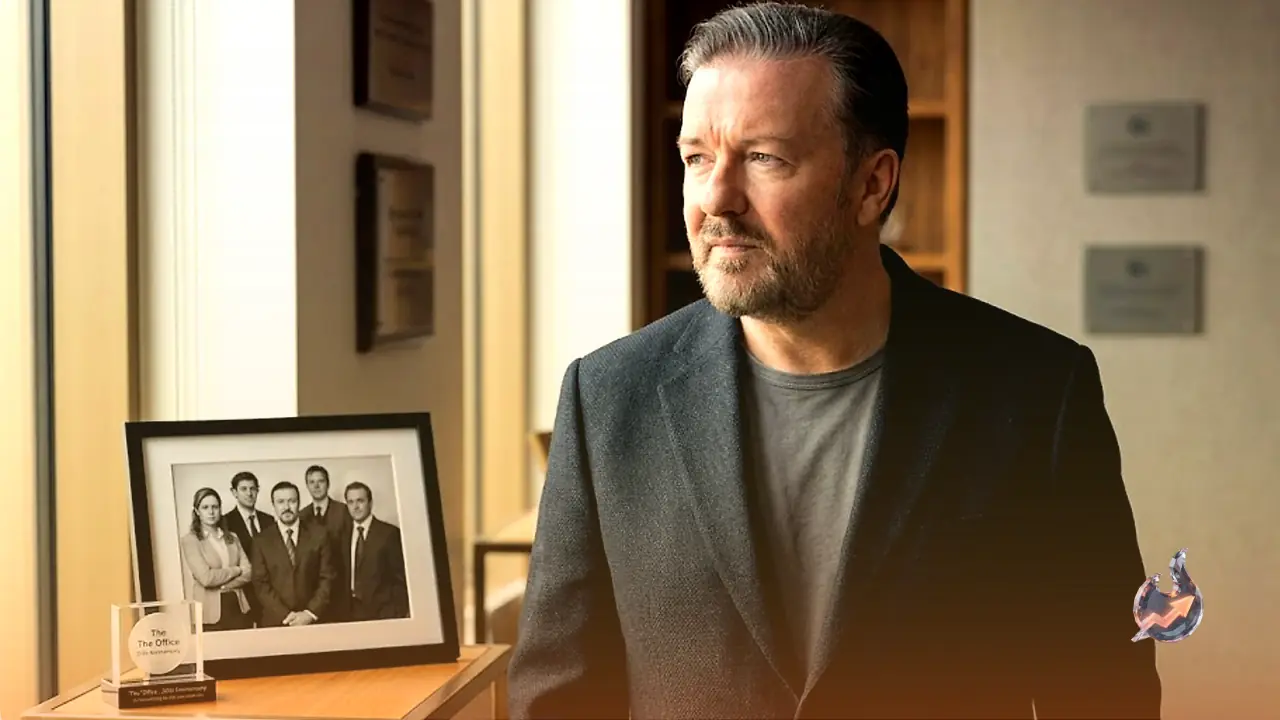

Comedy without David Brent or the employees of Wernham Hogg is almost unthinkable today. 'The Office' remains a television masterpiece that perfectly balanced sharp wit with heartfelt emotion. To mark the show's 25th anniversary, Ricky Gervais sat down to reflect on the legacy of the series and the unique journey that brought it to life.
Modest Ambitions
Reflecting on the early days, Gervais admitted he never set out to create a massive cultural phenomenon. He simply hoped that fans of British classics like 'Fawlty Towers' or 'Monty Python' might appreciate what they were doing. The show premiered on BBC Two on July 9, 2001. Gervais famously insisted on moving the timeslot from 10:00 PM to 9:30 PM to avoid a direct clash with 'Big Brother,' recognizing that their target audience was the same office-going demographic.
The Power of Realism
The decision to employ a faux-documentary style was central to the show's impact. Gervais enforced strict rules to maintain the illusion of reality, often acting more like a real documentarian than the actual crews he had observed. Having worked in an office for nine years, he had an intuitive grasp of the environment. He didn't want the show to feel like a traditional sitcom; he wanted it to feel like real life.
Casting the Characters
Finding the right actors was a process of trial and error. Gervais noted that while characters were loosely based on people he had known, he prioritized finding the best actor for the job over finding a perfect lookalike. He credited the cast, including Martin Freeman, Mackenzie Crook, and Lucy Davis, for their ability to deliver naturalistic performances that convinced many viewers the show was improvised.
A Low-Pressure Start
Gervais felt there was little pressure during production because the stakes were low. The series had a standard budget for the time and was scheduled during the summer doldrums. However, as the episodes repeated, viewership grew, and even tough critics like Garry Bushell began to acknowledge the show's genius. Gervais noted that this is typical of art that pushes boundaries; it often takes time for audiences to catch up.
Building the Narrative
The show functioned as a stealth rom-com, grounded by the relationship between Tim and Dawn. Gervais borrowed from the structure of the Marx Brothers and Laurel and Hardy, ensuring that amidst the absurdity of David Brent, there were relatable, human characters. He emphasized that comedy is an intellectual pursuit, but without an emotional core, it fails to resonate.
Leaving on a High
There was never a grand plan for a long-running series. Gervais wrote each series as if it might be the last. He believed in the 'Fawlty Towers' model—fewer episodes, higher quality. He chose to end the show after two series and a Christmas special, resisting the urge to overstay their welcome. He remains proud that the show made a connection with people, proving that even a fictional office setting could touch the lives of real viewers globally.