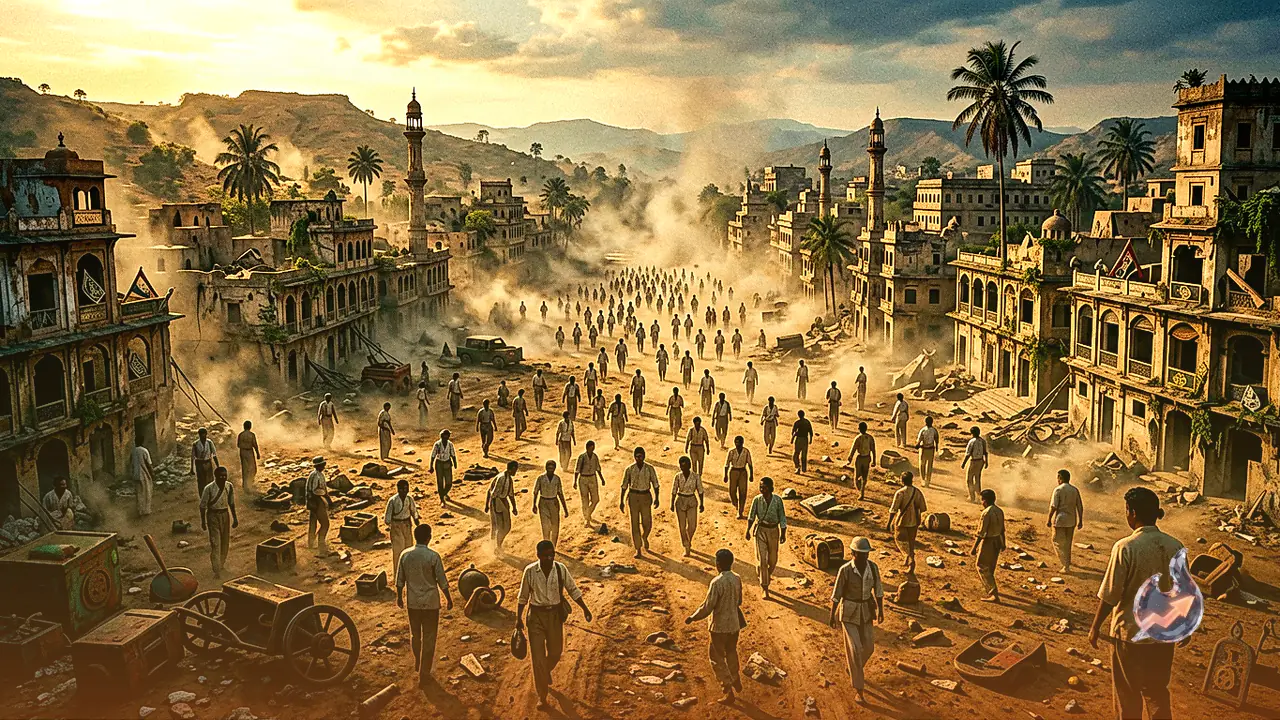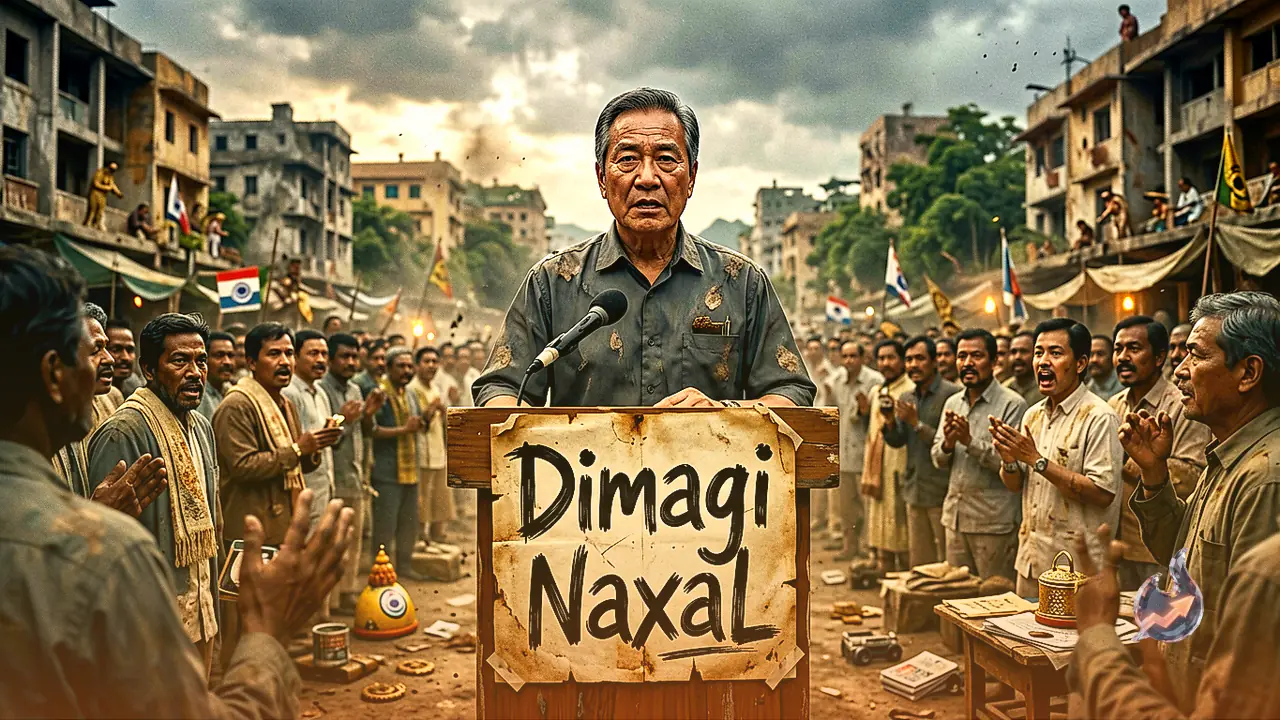


















As part of the Spy Files series, this is the second part of Operation Ganga. The story traces back to 1956, within a clandestine military camp nestled in the hills of Chittagong in East Pakistan. Officers from Pakistan's intelligence agency, the ISI, were meticulously charting maps. One officer, puffing on a cigar, commanded, Mr. Phizo, ignite a fire in Assam and Nagaland that the government in Delhi can never extinguish. Angami Zapu Phizo, a Naga insurgent seeking a separate Nagaland, smiled and boasted that Delhi was too distant and the forests too dense for anyone to stop his havoc. The ISI provided him with shelter, guerrilla warfare training, and financial support. By 1960, Pakistan initiated a similar strategy in Mizoram, using the Mizo National Front as a proxy, while China joined the efforts by supplying weapons through Chittagong.
The Critical Chicken's Neck
India faced its gravest threat at the Siliguri Corridor, known as the Chicken's Neck. This 22-km-wide stretch of land in West Bengal served as the only route connecting the North-East to the rest of India. Former RAW officer R.K. Yadav records in his book, Mission RAW, that Prime Minister Indira Gandhi questioned RAW chief R.N. Kao about why they shouldn't partition the very territory Pakistan was using to destabilize India's North-East. Kao replied firmly that they would initiate such an operation.
Election Unrest and Airspace Strategy
In December 1970, Pakistan held its first general election. Sheikh Mujib-ur-Rahman’s Awami League secured 160 out of 300 seats, while Zulfikar Ali Bhutto’s party obtained only 81. President Yahya Khan refused to transfer power to a Bengali leader, triggering the Joy Bangla movement. RAW intelligence from London revealed that Pakistan was secretly mobilizing troops and supplies for a major operation in its eastern wing. Kao suggested to the Prime Minister that closing Indian airspace would force Pakistan to take a much longer route via Sri Lanka, weakening its grip on the East. Indira Gandhi demanded a solid international justification, which RAW set out to manufacture.
The Brainwashing of Hashim Qureshi
In 1969, at a bungalow in Peshawar, separatist leader Maqbool Bhat and 19-year-old Hashim Qureshi discussed the lack of global attention toward Kashmir. Inspired by reports of aircraft hijackings, Maqbool recruited Hashim to hijack an Indian plane. In 1970, Hashim was apprehended by the Border Security Force (BSF) near the border. After intense interrogation, he revealed his mission to BSF Director General K.F. Rustamji, who alerted R.N. Kao. A secret meeting between the Prime Minister, Kao, and Rustamji led to the decision to turn Hashim into a double agent.
The Double Agent Operation
RAW offered Hashim a choice: prison for life or cooperation as a double agent. Hashim agreed and was placed in a safe house. He recruited his cousin, Ashraf Qureshi, to assist him. They prepared for the mission using a toy pistol ordered through a newspaper advertisement and a wooden grenade crafted by Ashraf. RAW designated the Ganga, a decommissioned Fokker Friendship aircraft, as the vessel for this operation.
The Hijacking and Its Geopolitical Aftermath
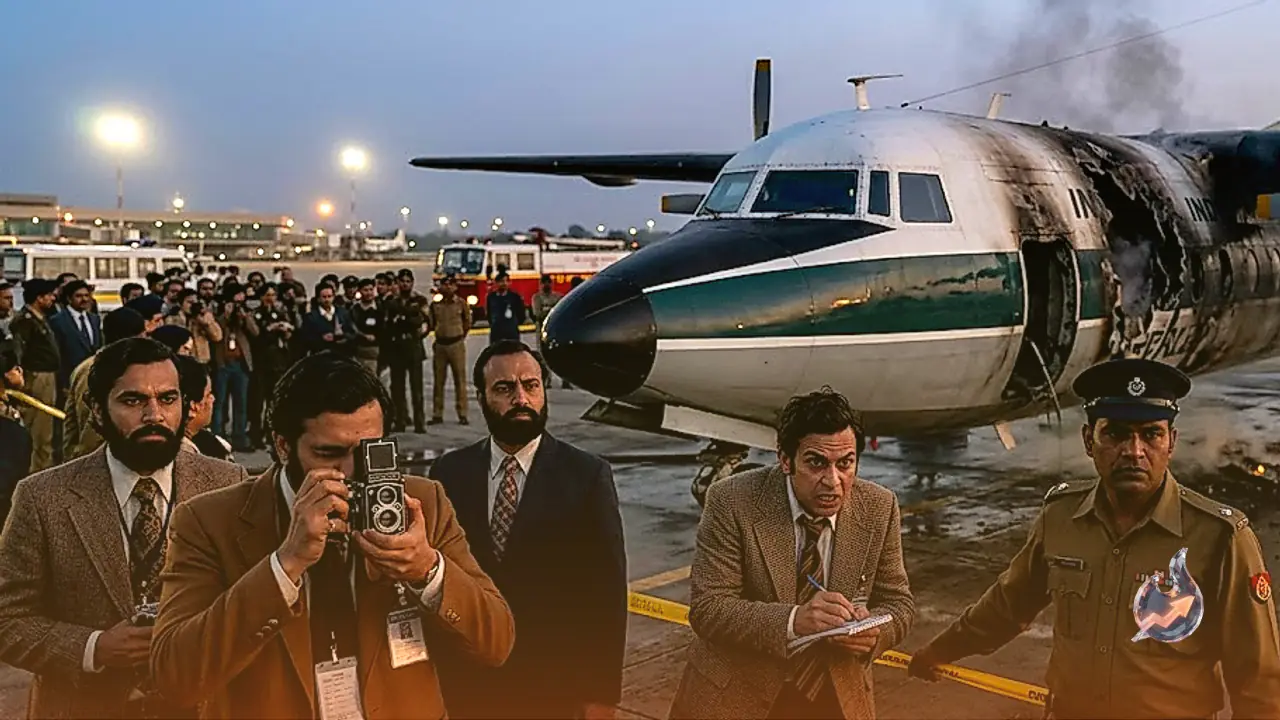
On 30 January 1971, amidst heavy fog at Srinagar Airport, the Ganga took off with 28 passengers. Mid-flight, Hashim and Ashraf seized control using their fake weapons, forcing Captain M.K. Kachroo to divert to Lahore. Following the hijacking and the subsequent burning of the aircraft on the tarmac in Lahore, India invoked international aviation regulations to close its airspace to Pakistan. This logistical blow crippled Pakistan's ability to reinforce its eastern wing. The resulting conflict led to the surrender of 93,000 Pakistani troops on 16 December 1971, marking the birth of Bangladesh. To this day, the Indian government and RAW have never officially confirmed their involvement in the intentional hijacking of the Ganga.