
















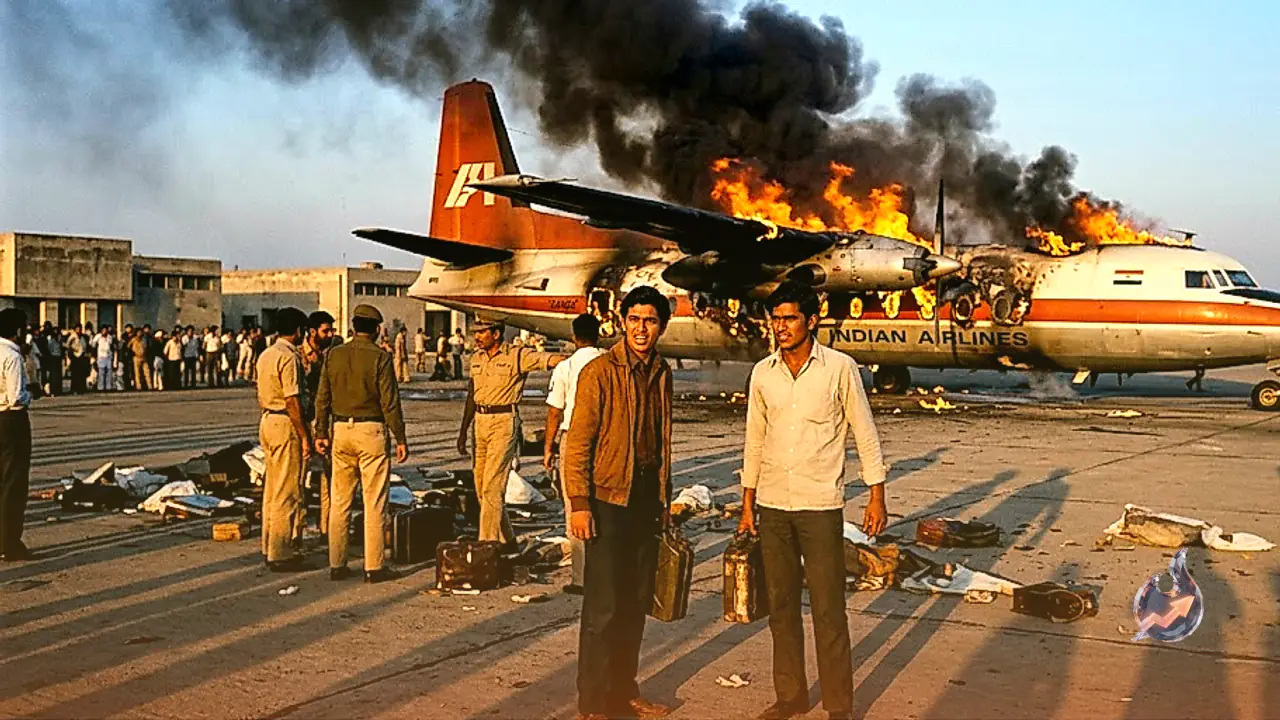

On January 30, 1971, Srinagar was gripped by a bitter winter. Thick snow coated the banks of Dal Lake, yet two cousins, Hashim Qureshi and Ashraf Qureshi, stood outside Srinagar Airport with sweat on their brows. Dressed in expensive overcoats, they waited for a specific flight. They had hoped to hijack a plane piloted by Rajiv Gandhi, who worked for Indian Airlines at the time. However, due to a change in the schedule, the cousins boarded the flight anyway, taking the last two remaining seats on the Fokker F-27 aircraft named 'Ganga'.
The Hijack unfolds
With 28 passengers and four crew members on board, the aircraft took off toward Jammu. Once the flight reached cruising altitude, the atmosphere inside changed instantly. Hashim and Ashraf rose from their seats, with Hashim brandishing a pistol and Ashraf wielding a hand grenade. They declared the aircraft under their control and forced their way into the cockpit. Hashim threatened the pilot at gunpoint, demanding to be flown to Rawalpindi. The pilot warned that the flight lacked sufficient fuel for such a journey, leading to a heated confrontation before they settled on diverting to Lahore.
The Standoff at Lahore
As the plane diverted, Amritsar ATC received a distress signal. Meanwhile, Pakistani authorities were stunned by the unexpected arrival. Fearing a crash over the densely populated city of Lahore, the request for an emergency landing reached General Yahya Khan, the President of Pakistan. Seeing a chance to humiliate India and stir the Kashmir issue, Yahya Khan ordered the runway cleared. The plane landed at 1:30 p.m., where the hijackers demanded the release of 36 of their associates from Indian prisons.
India’s Firm Stance
Back in New Delhi, Prime Minister Indira Gandhi and RAW chief R. N. Kao held an emergency meeting. They resolved that India would not succumb to blackmail or release any terrorists. While Zulfikar Ali Bhutto met the hijackers in Lahore, hailing them as heroes to gain political mileage, the standoff continued. On February 1, the passengers were allowed to disembark and were housed in a luxury hotel to maintain Pakistan's image as a gracious host, but the aircraft remained in Pakistani hands.
The Destruction of Ganga
On February 2, 1971, the hijackers poured petrol over the Ganga and set it ablaze. The sight of the burning Indian aircraft sparked celebrations in Lahore. In New Delhi, when R. N. Kao informed Prime Minister Indira Gandhi of the aircraft's destruction, she did not react with anger. Instead, she offered congratulations to the RAW chief, signaling that the incident had provided the strategic opening India needed for the next phase of their covert mission.