


















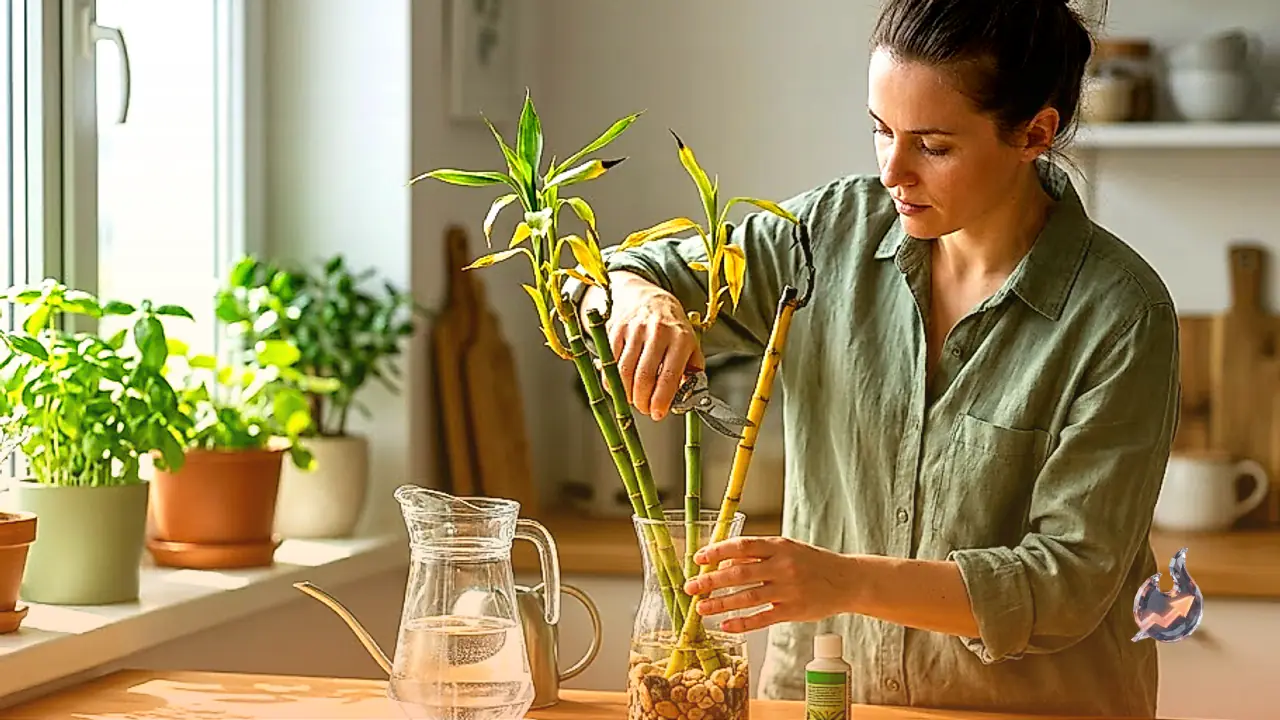

If your indoor Lucky Bamboo is losing its charm and showing signs of yellowing or blackening on its leaves and stems, there is no need to worry, as simple adjustments to your care routine can easily fix it. This plant is known for its resilience, but minor oversights can lead to decline. The most common reasons for a struggling plant include exposure to direct sunlight, contaminated water, and poor maintenance. To keep your bamboo healthy, avoid placing it in direct sunlight; the plant thrives much better in bright, indirect light. Prolonged exposure to intense sun will cause its foliage to lose its vibrant color and turn pale.
Managing Water Levels Properly
For those growing Lucky Bamboo in water, controlling the water level is critical. The water should only reach up to the root system of the plant. Submerging a large portion of the stalks in water can lead to decay, causing the stems to rot and turn black. Additionally, maintaining hygiene is essential. Make it a point to change the water every 7 to 15 days, and ensure the container is scrubbed clean during each refresh to prevent algae buildup.
Using High-Quality Water
The type of water you use plays a significant role in the plant's long-term health. Tap water often contains chlorine and fluoride, which can be harsh and damaging to delicate bamboo stalks. To ensure your Lucky Bamboo stays lush and green, it is recommended to use filtered water, RO water, or water that has been left sitting in an open container for a few hours. Following these simple steps will ensure your plant stays healthy and vibrant for a long time.