























In an era where health-conscious individuals are increasingly incorporating nutrient-dense superfoods into their daily diets, black rice has emerged as a highly popular choice. Renowned for its unique flavor and exceptional health benefits, this ancient grain is now a pantry staple for many. However, the rising demand has also brought a shadow of food adulteration. Concerns intensified recently following a viral social media video originating from Assam, which depicted black rice releasing a heavy, dark dye during washing. While definitive validation of food purity can only be obtained through professional laboratory testing, consumers do not have to remain entirely in the dark. There are several straightforward, practical home methods to distinguish between authentic black rice and cheap, artificially colored counterfeits.
The Science Behind the Color of Real Black Rice
The deep, characteristic color of genuine black rice is not the result of artificial pigments, but rather a naturally occurring compound known as anthocyanin. This is the very same antioxidant pigment that gives blueberries, blackberries, and purple grapes their rich, dark hues. Anthocyanin is highly prized for its immense health benefits. When authentic black rice is soaked or washed, this natural pigment dissolves into the water gradually, turning it a light purple or deep reddish-purple. In stark contrast, counterfeit black rice is often created by coating regular white or low-grade rice with synthetic black chemical dyes. These artificial dyes behave very differently when they come into contact with moisture, bleeding rapidly and turning the water an unnaturally dark black almost instantly.
Simple Home Tests to Verify the Purity of Black Rice
To ensure that the superfood you are serving your family is completely pure and free from hazardous chemical dyes, you can perform these simple diagnostic tests right in your kitchen:
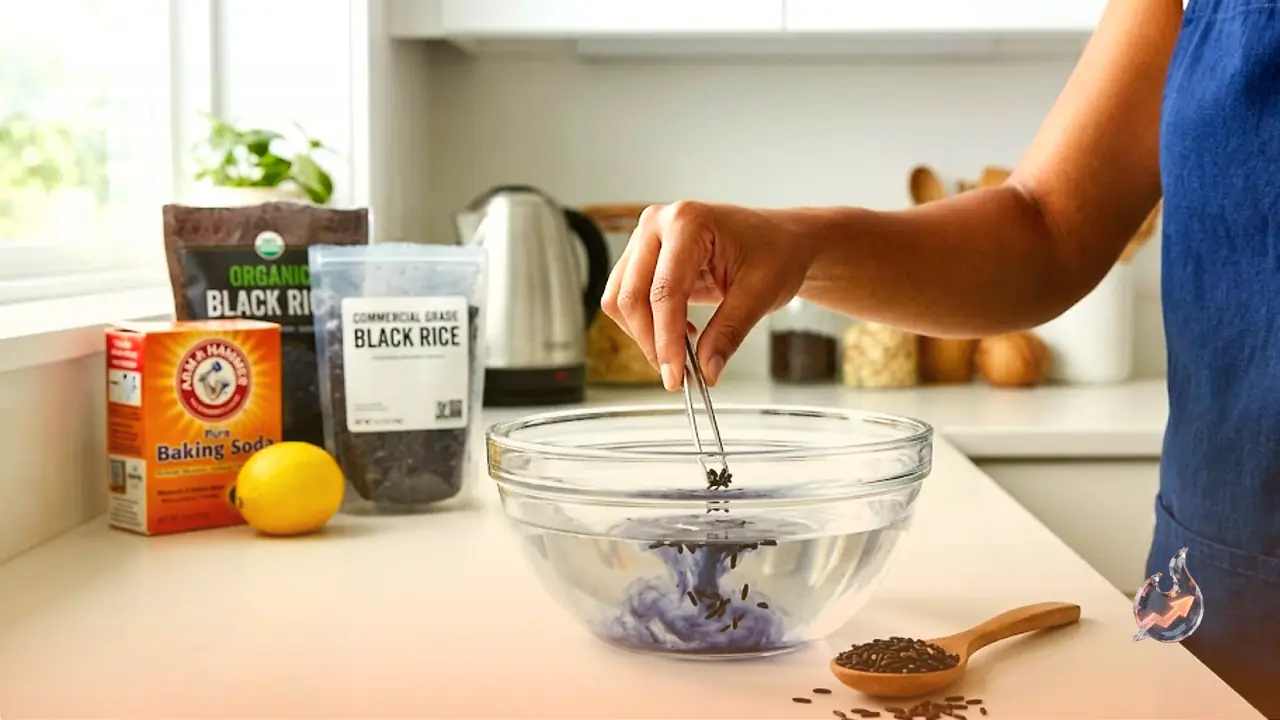
1. The Water Soaking Test: This is one of the most reliable and immediate ways to check for dye. Place a handful of black rice into a bowl of clean, room-temperature water and let it sit undisturbed for about 15 minutes. Observe the coloration process closely. If the water turns an incredibly dark black or very muddy purple within just a couple of minutes, it is a strong indicator of artificial coloring. Genuine black rice will slowly release its natural anthocyanin pigment, gently tinting the water a translucent reddish-purple over time rather than making it instantly opaque.
2. The Wet White Cloth Rub: Take a small piece of clean, white cotton cloth and dampen it slightly with water. Place a few grains of black rice inside the fold of the wet cloth and rub them together firmly. Inspect the fabric immediately afterward. If the cloth shows instant, dark black or chemical ink stains, the grains have likely been artificially dyed. The natural pigments of real black rice do not bleed onto a surface so easily through simple physical friction.
3. The Palm Rubbing Method: Take a small portion of dry black rice and place it between your palms. Rub your hands together vigorously for several seconds. If you notice a dark residue or powdery black substance transferred onto your skin, something is amiss. Authentic black rice features a stable, natural outer layer that does not shed its color onto dry or slightly warm skin through simple rubbing.
4. The Grain Breakage Test: Try breaking a few raw grains of the black rice in half. In authentic black rice, only the outermost bran layer is deeply colored. The core of the grain should remain white or slightly off-white. If you break a grain and discover that the interior is also completely black or dark grey, it suggests that the grain has been thoroughly saturated with artificial dye or is entirely synthetic.
5. Post-Cooking Color Inspection: Pay close attention to how the rice behaves during and after the cooking process. Genuine black rice retains its characteristic deep purple-black hue even after being cooked, as the natural anthocyanin is bound within the grain. Conversely, artificially colored rice will lose its synthetic dye entirely to the boiling water, leaving the cooked grains looking washed out, pale, or practically identical to ordinary white rice.
Key Precautions to Take While Purchasing Black Rice
Protecting yourself from adulterated grains starts at the point of purchase. Keeping these guidelines in mind can help you make safer buying decisions:
- Source from Trusted Vendors: Always buy your grains from reputable grocery stores, certified organic supermarkets, or directly from trusted agricultural co-ops. Loose grains sold in unbranded bags at local, unregulated markets carry a much higher risk of containing adulterated batches.
- Verify Quality Certifications: Before purchasing a packet of black rice, inspect the packaging carefully for food safety certifications, such as those from the FSSAI or recognized organic certifying bodies. Reputable brands undergo stringent quality checks to maintain their certifications.
- Be Wary of Suspiciously Low Prices: Black rice is a premium grain that requires specific growing conditions, making it significantly more expensive than standard white or brown rice. If a seller is offering black rice at an unbelievably low price, it should immediately raise a red flag. Drastically low prices are often a sign of sub-standard, dyed, or counterfeit products.
The Severe Health Risks of Consuming Artificially Colored Rice
Consuming rice treated with unauthorized chemical dyes can lead to various adverse health outcomes. Synthetic food colorings that are not approved for human consumption can severely irritate the gastrointestinal tract. Eating such adulterated rice can cause sudden abdominal pain, severe stomach cramps, gas, and bloating. Additionally, individuals may experience symptoms of food poisoning, including nausea, vomiting, and acute diarrhea. Prolonged exposure or sensitivity to these artificial dyes can also trigger allergic reactions, skin rashes, and respiratory discomfort. To safeguard your health, it is vital to immediately discard any batch of rice that exhibits suspicious color bleeding and prioritize food safety.