
In Jamshedpur, there is hardly a home today without pots lined up on a terrace, balcony or in a courtyard. Some people prefer flowers, others grow vegetables or decorative plants. Yet almost everyone runs into the same complaint. A plant looks lush and green for a few days, then the leaves slowly turn yellow and eventually the whole plant dries up. Most people blame a weak plant, but the truth is that the problem usually lies not in the plant itself but in how it was potted and looked after.
The real culprit is the method, not the plant
Plant expert Raja says that if the right method is followed from the very start, plants can stay healthy and green for a long stretch rather than just a few weeks. According to him, the first and most important step is cleaning the pot, something people often skip. Fungus, tiny insects or spoiled soil left behind in an old pot directly affect the growth of a new plant. So before planting, the pot should be properly washed, dried and made ready. A clean pot gives the roots a healthy environment, which helps the plant thrive.
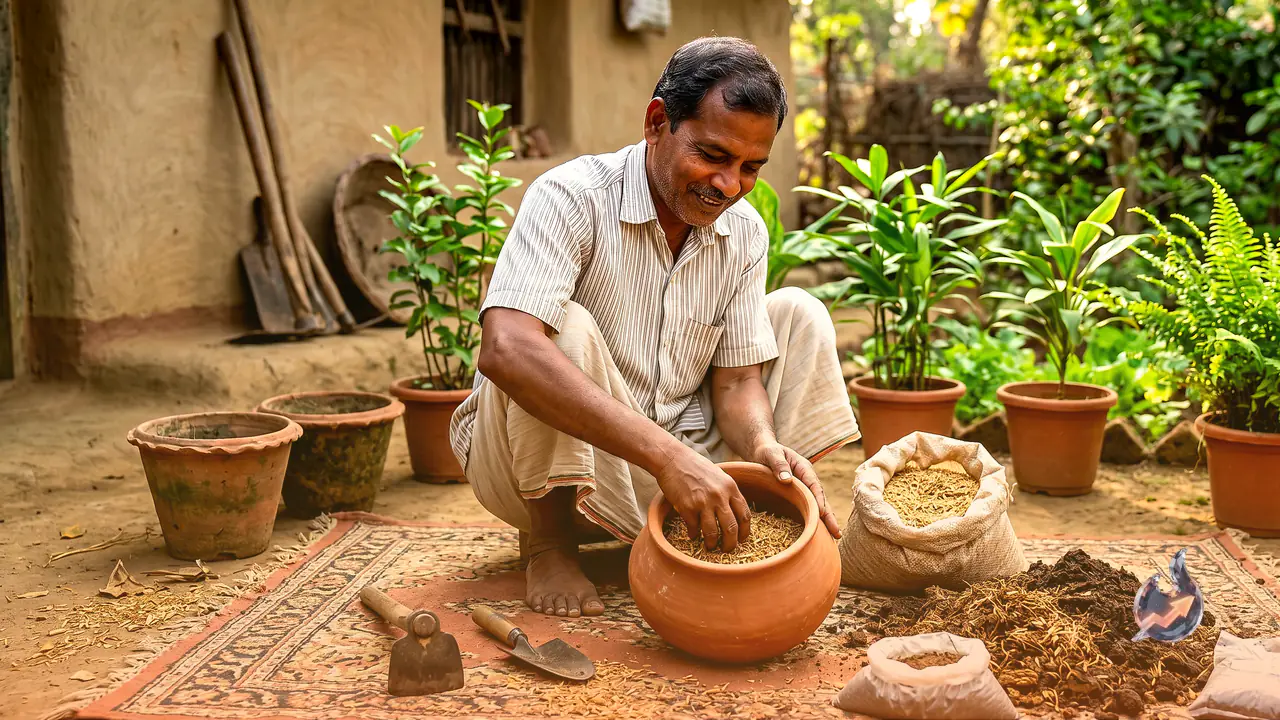
A layer of rice husk at the very bottom
Raja explains that in Jharkhand, rice husk has traditionally been used for planting. The idea is to first spread a layer of rice husk at the very bottom of the pot. This small layer does a big job. It manages excess water and keeps moisture locked in the soil. The benefit is that enough air keeps reaching the roots, and the common problem of water pooling and rotting the roots is greatly reduced.
The nutrition layer that truly feeds the plant
On top of the rice husk, a mixed layer is prepared by combining vermicompost, fertile soil and cow dung manure. This is the layer that becomes the plant's main source of nutrition. The natural nutrients in vermicompost speed up the plant's growth, while cow dung manure improves the fertility of the soil. The plant should then be placed in the pot very carefully so that its roots are not damaged in any way. Once the plant settles in, a light layer of soil, cow dung manure and compost should be added on top again. This keeps the roots well covered and ensures they keep receiving the nutrition they need.
Balancing water and the right spot
According to Raja, balance in watering is extremely important. A plant should be watered regularly, but only as much as it actually needs. Both too much and too little water can harm it. As for location, his advice is to keep the plant somewhere it gets both gentle sunlight and shade. A plant left in constant harsh sun or in a fully shaded spot does not develop properly.
The secret to greenery lies in balance
In short, a plant set up with the right soil, organic manure, a balanced mix of sun and shade and a little care stays green and healthy for a long time. This traditional Jharkhand approach not only extends the life of plants but also helps keep a home's greenery alive for years.