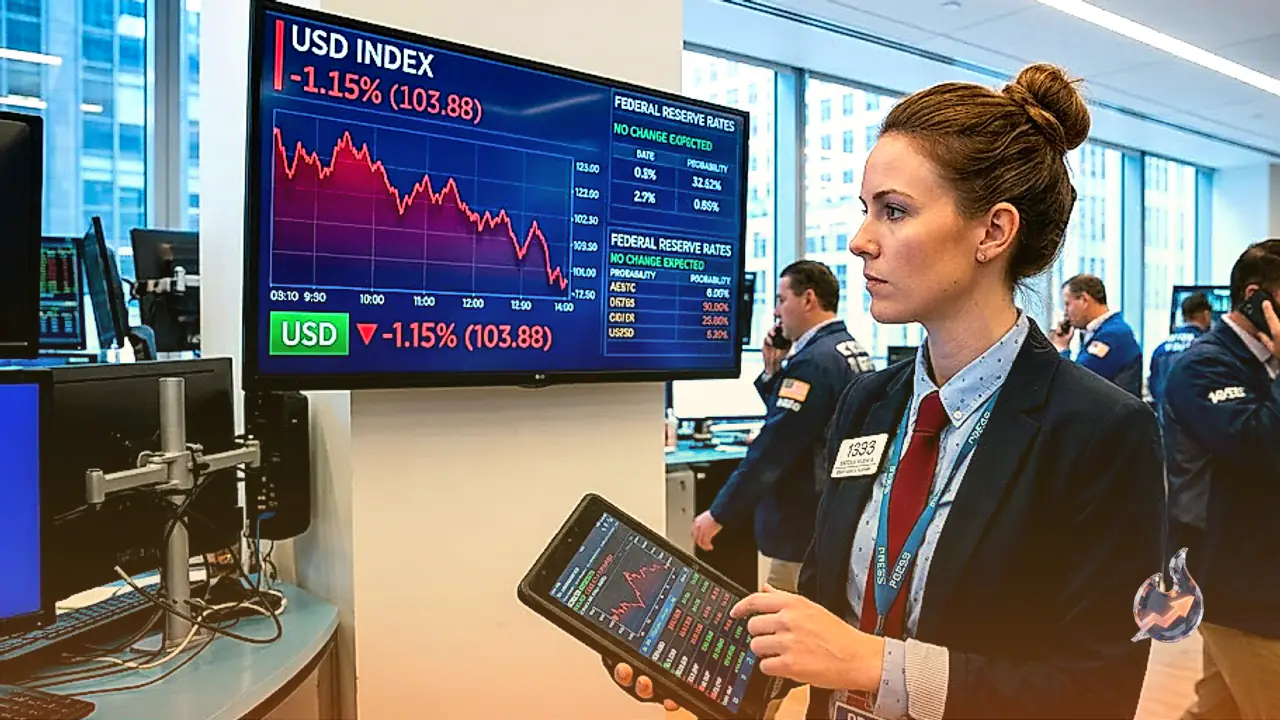

























The Australian Dollar experienced a downward movement on Tuesday, sliding 0.29 percent despite the release of stronger-than-expected manufacturing activity figures from China for the month of August. While regional trade signals showed improvement, mounting pressure from rising US Treasury yields and persistent geopolitical tensions in the Middle East kept the greenback dominant, limiting risk-linked currencies. According to live market data, the AUD/USD pair currently trades at 0.7152, down 0.15 percent from its previous close of 0.7163. The pair has maintained a 52-week trading range between a high of 0.7277 and a low of 0.6422.
Positive Manufacturing Activity Out of China
China, which remains Australia's single largest trading partner, delivered encouraging economic indicators for the manufacturing sector. The RatingDog Manufacturing Purchasing Managers Index (PMI) for China climbed to 51.5 in August, improving from 50.9 in July and surpassing market expectations that had pinned the reading at 50.9. In economic terms, any reading positioned above the 50 threshold indicates an expansion in sector activity. Given the close economic and trade interdependence between the two nations, such upbeat readings are traditionally viewed as supportive of the Australian Dollar, though broader global factors tempered the impact this session.
Domestic Building Permits Show Resilience
On the domestic front, Australian economic data offered figures that came in slightly ahead of market forecasts. Building permits in Australia declined by 3.6 percent month-on-month in July, marking a contraction that was notably smaller than the 4.8 percent drop anticipated by market analysts, following a 7.2 percent increase in the preceding month. On an annualized basis, total dwelling units approved posted a 9 percent increase, advancing from the 8.9 percent growth recorded previously. While these domestic indicators signal underlying economic resilience, they ultimately proved insufficient to keep the AUD/USD currency pair in positive territory.
US Treasury Yields and Geopolitical Pressures
These regional developments were counterbalanced by renewed strength in the US Dollar, driven by rising US Treasury yields amid firmer oil prices and ongoing geopolitical friction in the Middle East. The benchmark 10-year US Treasury yield climbed to 4.78 percent, moving closer toward its recent peak of 4.81 percent. Against this evolving backdrop, the US Dollar Index (DXY), which measures the greenback against a basket of six major global currencies, hovered around 99.60 on Tuesday. Higher US yields continue to enhance the relative yield appeal of the US dollar, capping the upside potential for the Australian currency.
Technical Outlook and Upcoming Gross Domestic Product Data
Reviewing the technical structure of the AUD/USD pair based on live indicators, the 14-period RSI reads at 60, reflecting moderate momentum. The MACD indicator reads 0.00 against a signal line of 0.00, with the histogram showing 0.00 and a bullish bias. Moving averages indicate that the EMA20 sits at 0.7113, EMA50 at 0.7068, and EMA200 at 0.6920, while the SMA50 is at 0.7017 and SMA200 at 0.6970. The price action remains within a long-term uptrend characterized by a golden cross where the EMA50 rests above the EMA200. Bollinger Bands (20,2) span from 0.7006 to 0.7209 with a midpoint at 0.7108, keeping price action comfortably inside the bands. The ADX(14) registers at 20, denoting a weak or range-bound market condition, while the Stochastic oscillator records a fast line of 66 and a signal line of 77. Daily volatility measured via ATR(14) stands at 0.00, with 20-day support estimated around 0.7023 and resistance near 0.7207. Key pivot levels for traders include a pivot point of 0.7159, resistance levels at R1 0.7176 and R2 0.7200, alongside support levels at S1 0.7135 and S2 0.7118. Looking ahead, market participants in Australia are turning their attention toward the release of second-quarter Gross Domestic Product (GDP) data on Wednesday, which will offer clearer insights into economic growth momentum and potentially shape future policy expectations surrounding the Reserve Bank of Australia (RBA).
Broader Forex Market Movements
Across other major currency pairs in the foreign exchange market, GBP/USD traded with mild losses below the 1.3550 threshold during the second half of Tuesday's session. The US dollar managed to recover lost ground supported by Middle East developments and hawkish expectations regarding the Federal Reserve's interest rate trajectory, weighing on the pair ahead of domestic data releases. Similarly, EUR/USD struggled to maintain momentum from its overnight bounce, trading below 1.1600 on Tuesday. Data from the Eurozone indicated that annual HICP inflation rose to 3.3 percent in August from 2.9 percent in July, matching market forecasts, whereas core HICP inflation edged down to 2.4 percent from 2.5 percent. Later in the US session, economic focus shifted to the JOLTS Job Openings and ISM Manufacturing PMI figures.
Precious Metals, Cryptocurrencies, and Energy Markets
In precious metals, XAU/USD extended its downward correction below the $4,400 mark, posting a retreat of nearly 7 percent from highs reached the previous week as financial markets re-evaluated expectations for a Federal Reserve rate hike in September. In the digital asset space, Bitcoin held its ground above the $78,000 support level as exchange-traded fund inflows resumed, while Ethereum consolidated near $2,450 amid steady institutional backing, and XRP remained under pressure near the 200-day EMA. The US Bureau of Labor Statistics maintained a busy calendar with employment data releases, starting with the July Job Openings and Labor Turnover Survey (JOLTS) expected to indicate 7.3 million job openings. Meanwhile, energy markets witnessed unusual strength in diesel prices as the US diesel crack spread, reflecting the premium of ultra-low sulfur diesel futures over WTI crude, surged past $100 per barrel for the first time to touch an intraday record high just above $102.00.