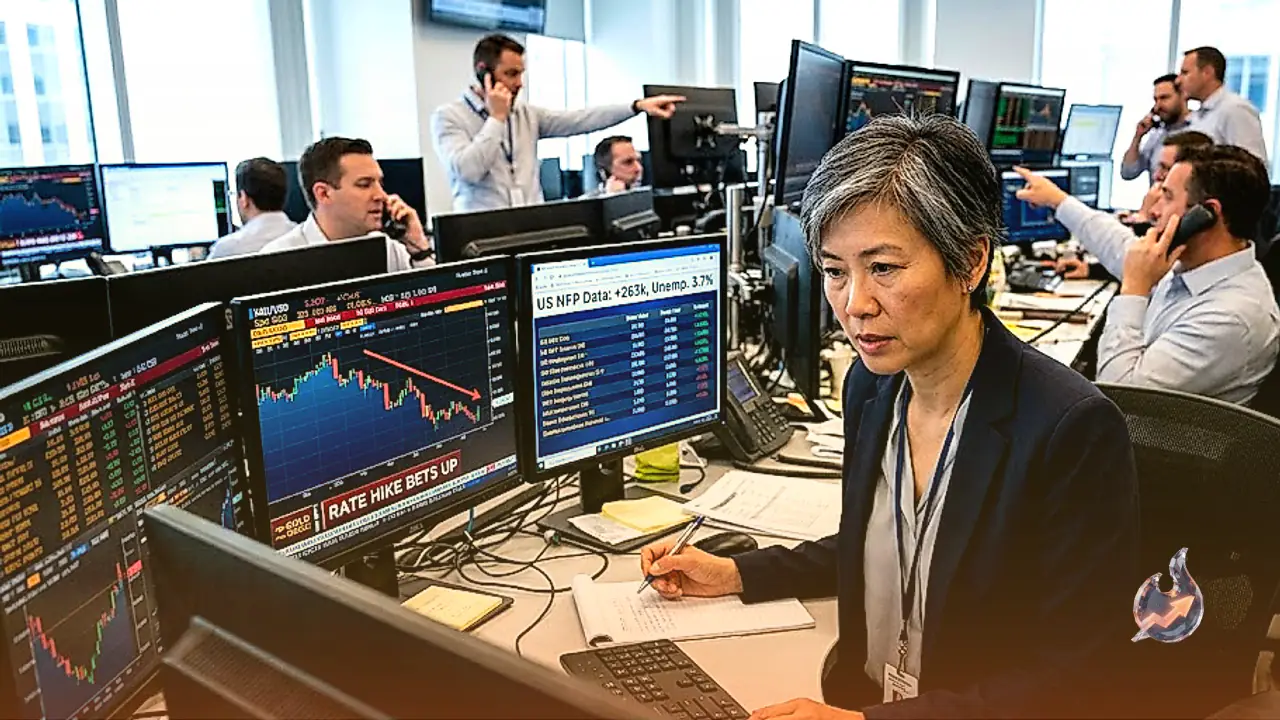



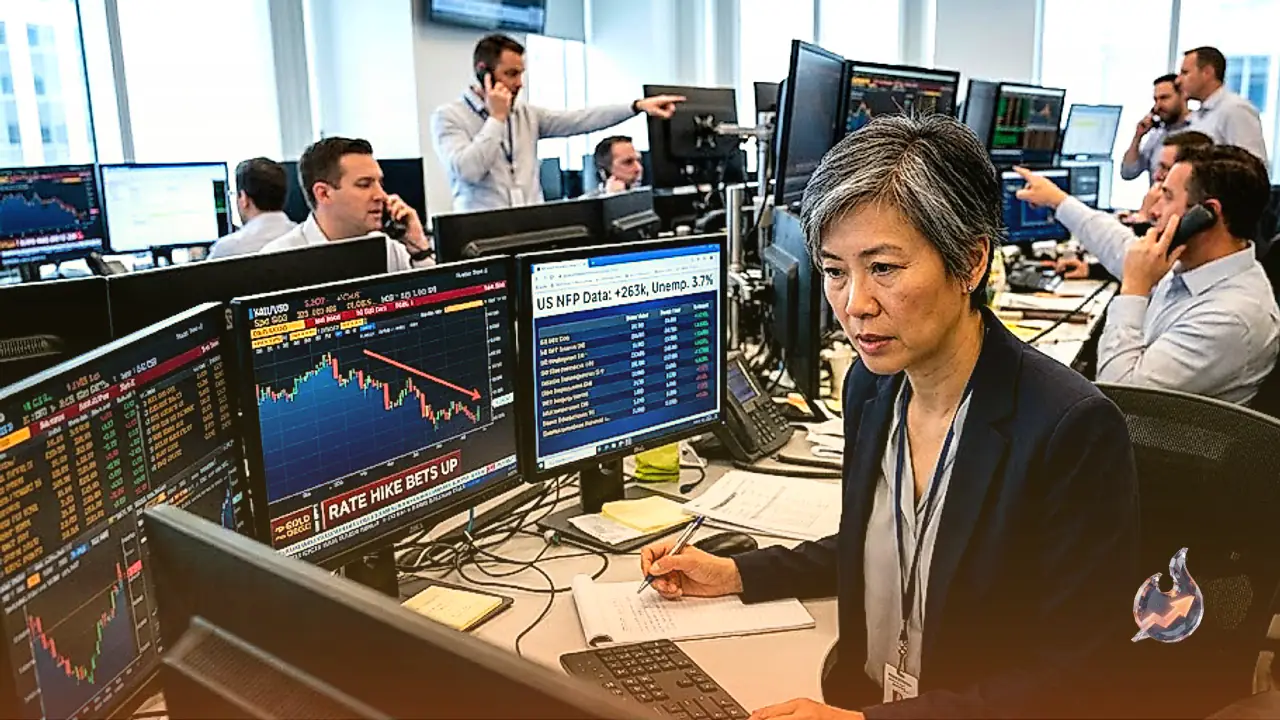




















A renewed bout of doubt about the artificial intelligence trade collided with intensifying geopolitical tension last week, and the combination knocked equities lower across most of the globe. Strategists at Deutsche Bank point to three overlapping pressures working at once. The first was climbing oil and gas prices. The second was the sharpening standoff between the United States and Iran. And the third was fresh skepticism over whether the AI boom can keep justifying its stretched valuations. Chipmakers took the heaviest damage, dragging the Philadelphia semiconductor index into a bear market, while benchmarks from Wall Street to Tokyo also closed in the red. European shares proved sturdier than most, and stock futures pointed modestly higher on Monday morning even with the geopolitical risks still hanging over the market.
Chip stocks absorb the worst of it
The pain was deepest in semiconductors. The Philly semiconductor index tumbled 9.97% over the week, a figure that includes a 1.63% drop on Friday alone. That marked its steepest weekly slide since the week the Liberation Day tariffs were announced a year ago. The fall was severe enough to push the gauge formally into bear-market territory, leaving it 20.23% below its record closing high set on June 22. This is where investor confidence wobbled fastest, since chip companies have been the very heart of the AI narrative.
Wall Street and Tokyo follow lower
That weakness in chips rippled through the rest of the market. The S&P 500 lost 1.55% on the week, including a 1.01% decline on Friday. Japan's Nikkei fell 6.44%, its worst week since the Liberation Day period. In other words, investors pulled back from risk in both Asia and the United States.
Europe holds its ground
Against that backdrop, European equities looked the most resilient of the lot. The STOXX 600 finished the week up 0.07% despite slipping 0.34% on Friday. That steadiness is why strategists describe the region as comparatively durable through this stretch.
Oil jumps as US strikes Iran
The geopolitical tension fed straight into energy prices. On Monday morning, Brent crude climbed 2.45% to $90.26 a barrel, a move that followed a ninth consecutive night of US strikes against Iran. What stood out was that, even amid the escalation, US futures held firm, with S&P contracts up 0.15% and Nasdaq contracts up 0.47%.
Ethereum leads crypto, but the rally looks fragile
In the crypto market, Ethereum outshone its peers last week, posting double-digit gains and outrunning heavyweights such as Bitcoin, XRP and Solana. That strength ran from the prior week through Wednesday, after which the broader market slipped into a correction on Thursday. Under the surface, though, the key metrics suggest Ethereum's advance remains fragile, and calling it durable would be premature.
Cardano steadies after its upgrade
Cardano (ADA) stalled at around $0.165 after a modest rebound. The pause came just after the Van Rossem hard fork went live on Saturday, Cardano's first protocol upgrade approved entirely through onchain governance. The upgrade introduced Protocol Version 11, whose improvements are aimed at reducing smart contract costs. According to live market data, ADA is now changing hands near $0.1714, up 3.26% from its previous close of $0.1660. Its 14-day RSI sits at 53, neither overbought nor oversold, and the price is trading inside its Bollinger bands. Over the past 52 weeks the token has ranged between $0.1387 and $0.6052.
Cooling inflation offers some relief
One reassuring signal for markets came from the inflation front. June CPI fell 0.4% on the month, the largest one-month drop since April 2020. That pulled the annual rate down to 3.5% from 4.2% in May and snapped a three-month streak of acceleration. Core prices went nowhere on the month and eased to 2.6% year over year. Notably, both readings landed below consensus, keeping hopes of further relief alive.