






















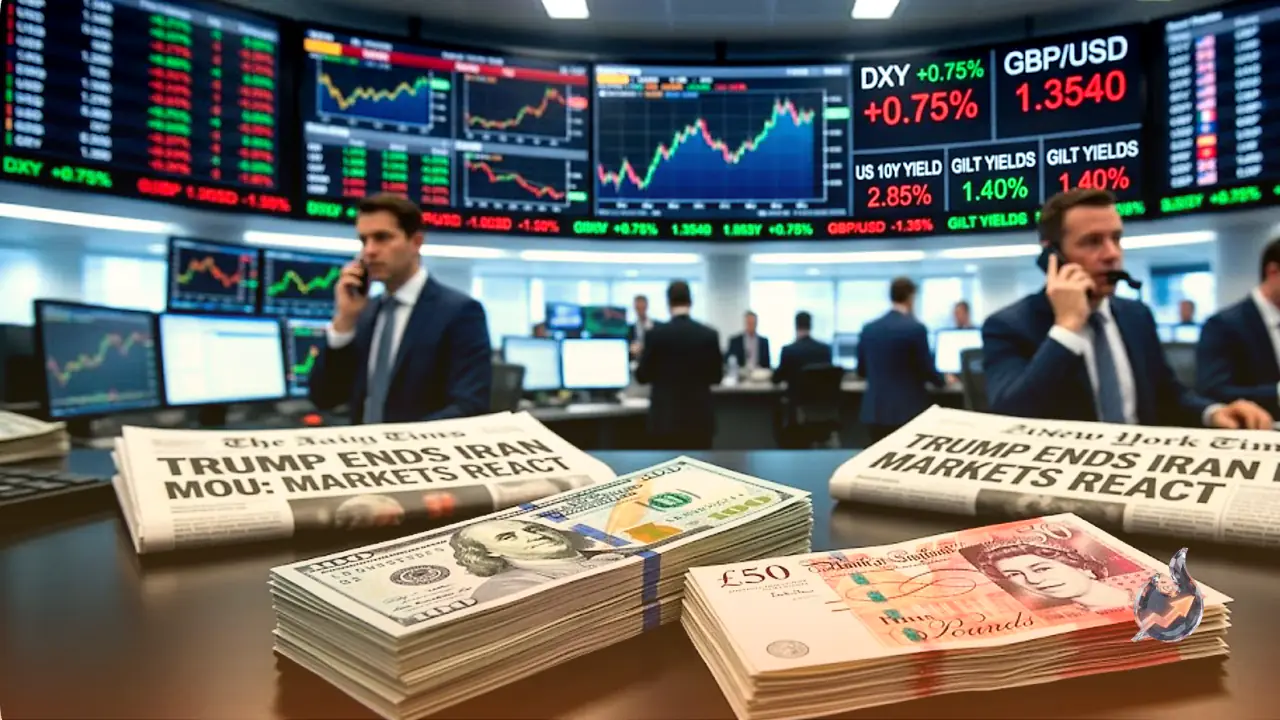

The global foreign exchange and financial markets are currently experiencing a striking contrast between domestic European stability and heightened geopolitical turbulence. The British Pound is demonstrating remarkable resilience, supported by a significant pullback in Gilt yields and a steadying of fiscal concerns within the United Kingdom. This stability comes despite a storm in broader global markets, triggered primarily by US President Donald Trump's dramatic announcement during the NATO summit. Trump declared that the Memorandum of Understanding (MoU) signed with Iran to end their conflict is officially "over" and stated his refusal to engage further with Tehran. This unilateral move has sparked a massive flight-to-safety among global investors, driving capital into the US Dollar and leaving major assets from currencies to commodities highly vulnerable.
UK Political Developments and Sterling's Volatility Profile
Within the United Kingdom, political developments continue to unfold, but their direct impact on the volatility of the British Pound remains surprisingly subdued. Market participants are closely watching Nigel Farage's resignation and his subsequent decision to recontest his seat in Clacton. Highlighting this situation, MUFG's Derek Halpenny pointed out that implied volatility in the GBP/USD pair has barely moved following this political announcement. Halpenny described the upcoming by-election as a sham, noting that none of the other major political parties are planning to contest the seat. This lack of opposition simplifies the electoral dynamic but raises structural questions. He added that while the ongoing investigation into Farage would be suspended during the election period, it is bound to restart once the process is complete, regardless of whether he wins or loses the seat, should he face any eventual sanctions.
Instead of being driven by this localized political drama, British Pound volatility is much more closely aligned with the expected economic policies of the incoming Prime Minister Andy Burnham. For the time being, international investors find comfort in the fact that fiscal concerns in the UK remain well-contained. This fiscal stability has acted as a protective shield for the currency, preventing any panic selling in the sovereign debt or foreign exchange markets.
Yield Retracements and Inflation Dynamics Bolster the Pound
The fundamental driver behind the Pound's robust performance is the behavior of the UK's 10-year Gilt yields. These yields have retraced notably lower from their recent peak recorded on May 15th. This downward movement is far more pronounced than the yield retracements observed in other major global economies, including the United States, Germany, and Japan. This decline in yields has been heavily supported by the UK's weaker-than-expected inflation pick-up. While weaker inflation can sometimes signal economic sluggishness, in the current market environment, it has actually served to improve investor confidence by easing fears of aggressive monetary tightening, thereby supporting the Pound.
This dynamic has positioned the Pound uniquely among its peers. In the G10 currency space, yield spreads are playing a decreasingly significant role in driving exchange rate fluctuations, and this is particularly true for Sterling. Since the onset of the Middle East conflict at the end of February, the British Pound has established itself as the top-performing G10 currency, highlighting its defensive qualities and the underlying strength of UK investor sentiment.
Trump's Iran Declaration Triggers Global Flight to Safety
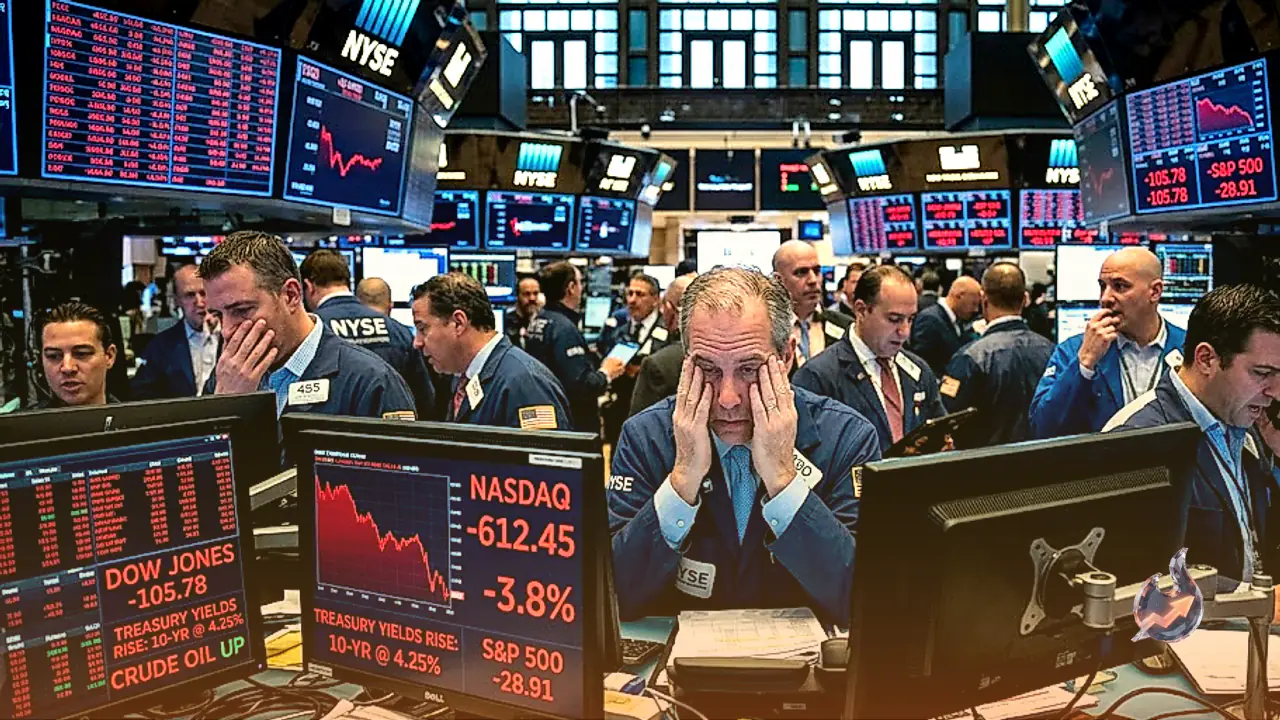
In sharp contrast to the quiet strength of the Pound, the wider global market has been thrown into disarray by geopolitical headlines. Speaking at the NATO summit, US President Donald Trump confirmed that the MoU signed with Iran to resolve their conflict was over, adding that he had no intention of engaging with Tehran moving forward. This strong stance immediately revived geopolitical risks, triggering an immediate flight-to-safety among global investors. Consequently, the US Dollar (USD) gathered significant strength as investors liquidated riskier assets in favor of the world's primary reserve currency.
This renewed USD strength has placed immense bearish pressure on major currency pairs. The GBP/USD pair has struggled to find its footing, trading deep in negative territory below the 1.3350 level as the strong greenback dominates market action. Similarly, the EUR/USD pair has come under heavy bearish pressure, declining toward 1.1400 on Wednesday. Market participants are also looking ahead to the American trading session, where the Federal Reserve is scheduled to publish the minutes of its June policy meeting, an event that is expected to keep investors highly cautious.
Commodities Diverge as Oil Surges and Gold Slides
The geopolitical shockwaves have created a divergence in the commodities market. Despite gold's historical status as a safe haven, the metal turned south on Wednesday, trading deep in negative territory near $4,050. This drop is attributed to the overwhelming strength of the US Dollar, which has drawn liquidity away from precious metals as investors adopt a highly cautious stance following Trump's NATO comments. Conversely, the energy market has reacted with a sharp upward surge. West Texas Intermediate (WTI) crude oil soared by 3.2% to trade near $74.30 during the European session, marking its highest level in two weeks. Trump's confirmation that the Iran agreement is dead has immediately revived fears of severe global energy supply disruptions, driving up petroleum prices rapidly.
In the digital asset space, alternative assets like the Pi Network (PI) are also experiencing severe downward momentum. The price of PI has edged closer to the $0.1000 level, marking its fifth consecutive day of losses. Retail sentiment toward the asset remains highly bearish, as reflected in the steady decline of both Open Interest and funding rates. From a technical perspective, the outlook for PI remains firmly bearish as selling pressure continues to mount, despite the asset trading in deeply oversold conditions.
Central Banks Push Back Against Forward Guidance
Beyond immediate geopolitical and market reactions, a broader structural shift is taking place in how global monetary policy is communicated. For several years, major central banks, including the Federal Reserve, the European Central Bank, and the Bank of England, have heavily relied on telegraphing their future policy steps to guide market expectations. However, policymakers are now actively pushing back against this practice of providing forward guidance. Traders are now facing a new reality where central banks are likely to say much less about their next interest rate moves, introducing a higher degree of uncertainty and requiring market participants to become far more dependent on real-time economic data.