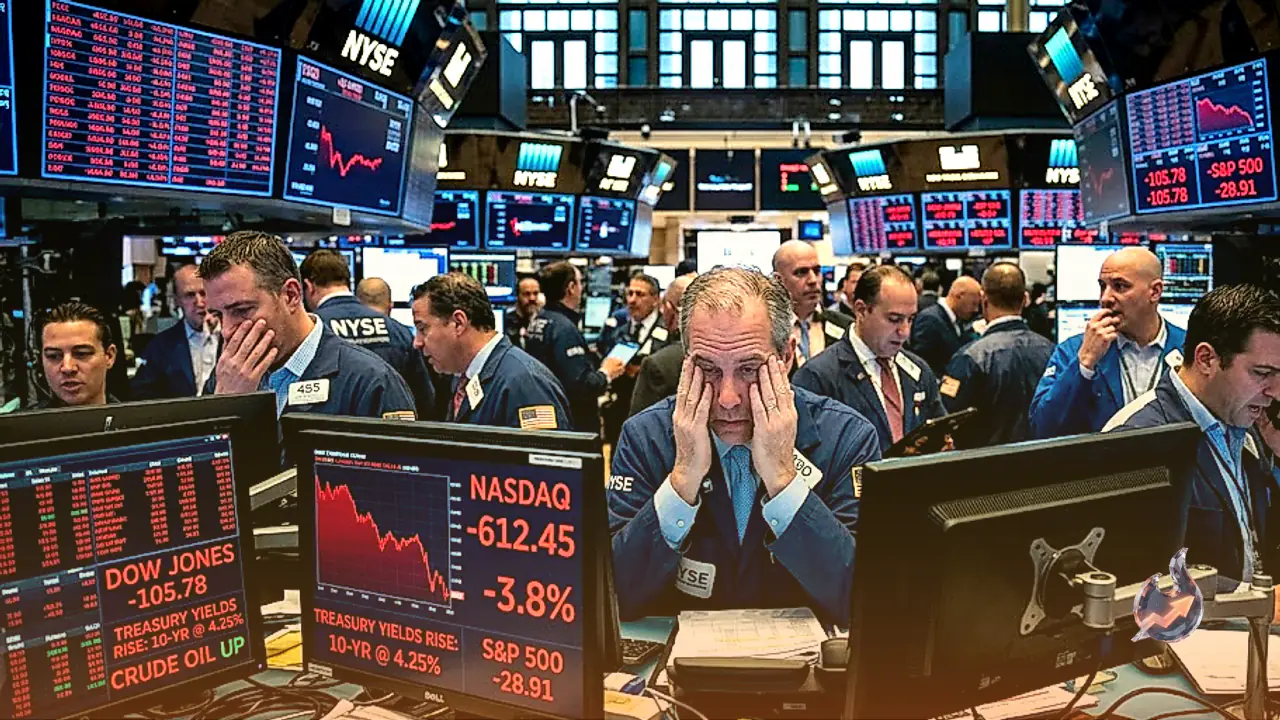

























The Indian Rupee (INR) is experiencing a sharp downward trend against the US Dollar (USD) during Wednesday afternoon trading hours, heavily pressured by a significant recovery in global crude oil prices. This sudden shift in market dynamics comes on the heels of renewed Middle East geopolitical risks, which have re-emerged as a major catalyst for energy market volatility. Simultaneously, currency investors are treading cautiously as they await the release of the Federal Open Market Committee (FOMC) minutes from the June policy meeting, looking for fresh clues regarding the future path of US interest rates.
Crude Oil Spikes and Live Market Performance
The immediate trigger for the currency sell-off was the collapse of the memorandum of understanding (MoU) between the United States and Iran, an event that instantly sent shockwaves through energy corridors. The USD/INR pair surged rapidly, trading near the 95.65 level during local market hours. Historically, economies like India that rely heavily on crude oil imports to sustain their energy requirements tend to experience currency depreciation whenever oil prices spike, as the country must spend more of its foreign exchange reserves to purchase fuel.
According to live market data, West Texas Intermediate (WTI) Crude Oil (CL=F) closed at $74.54, marking an impressive 5.82% surge from its previous close of $70.44. The session's trading volume was recorded at 0.60x the 20-day moving average. A closer look at the technical setup reveals that the 14-day Relative Strength Index (RSI) is currently hovering at 43, while the MACD stands at -5.47 against its signal line of -5.97, yielding a bullish histogram of 0.50. Although moving averages show that the commodity remains in a long-term downtrend, the 50-day EMA ($83.14) relative to the 200-day EMA ($75.81) indicates a golden cross. WTI crude is currently trading inside the Bollinger Bands ($61.78 to $89.38) with a pivot point established at $73.86.
Geopolitical Tensions in the Strait of Hormuz
The geopolitical situation escalated further on Tuesday after US President Donald Trump criticized Iran for targeted attacks against commercial vessels navigating the Strait of Hormuz. This narrow strip of water is a critical maritime chokepoint responsible for transporting nearly 20% of the world's daily energy supplies. In response to these attacks, President Trump stated that Washington retaliated by launching targeted airstrikes against Iranian military infrastructure. Tehran, however, defended its actions by claiming that the commercial vessels were stopped because they entered the sensitive waterway without proper authorization.
Meanwhile, the US Dollar Index (DXY), which tracks the greenback against a basket of six major global currencies, remained relatively subdued near 101.10. Market players are keeping a close eye on the upcoming FOMC minutes scheduled for publication at 18:00 GMT, which traditionally offer crucial insights into the voting patterns and policy debates among US central bankers. A hawkish tone in the minutes could give the US Dollar another boost, whereas a dovish stance might exert downward pressure on the greenback.
Technical Outlook for USD/INR
From a technical standpoint, the USD/INR currency pair has found strong buying interest near its recent lows. The 14-period RSI is hovering at 56.8, remaining in comfortable positive territory without entering overbought conditions. This suggest that while there is strong upward momentum, the gains are currently capped by a longer-term descending resistance trendline projected from the 96.9932 level.
On the downside, immediate support is established at the 20-day EMA near 95.00. A clean break below this moving average would expose the currency pair to the May 7 swing low of 94.03. On the upside, major overhead resistance is anticipated around the descending trendline's starting point near 97.00. A sustained break above 97.00 would open the floodgates for a stronger bullish continuation.
Impact on Major Currencies and Safe-Haven Assets
The sudden strength of the US Dollar has pushed other major global currencies into defensive positions. The British Pound (GBP/USD) is struggling to find a solid floor, trading in negative territory below the 1.3350 level as safe-haven flows dominate the broader financial landscape. These flows were accelerated by President Trump's comments at the NATO summit, where he declared that the MoU signed with Iran to resolve the conflict was effectively over, adding that he had no intention of engaging further with Tehran.
Similarly, the Euro (EUR/USD) faced intense bearish pressure on Wednesday, sliding toward the 1.1400 handle as global capital moved rapidly into safe-haven liquid assets. Interestingly, even Gold turned south, trading in negative territory near $4,050 on Wednesday, as investors prioritized cash holdings over metal. In the cryptocurrency segment, the Pi Network (PI) token extended its decline for a fifth consecutive day, trading near $0.1000. Bearish retail sentiment remains highly visible, as evidenced by falling Open Interest and negative funding rates despite oversold technical conditions.
Central Banks Moving Away from Forward Guidance
Behind these immediate market swings lies a broader shift in how major central banks communicate with the public. For years, policymakers at the Federal Reserve, the European Central Bank, and the Bank of England rely on forward guidance to prepare markets for future interest rate actions. However, central banks are now pushing back against this practice, leaving traders with far less explicit information. This policy shift means that investors must rely more on incoming macroeconomic data and geopolitical developments to navigate the volatile landscape.