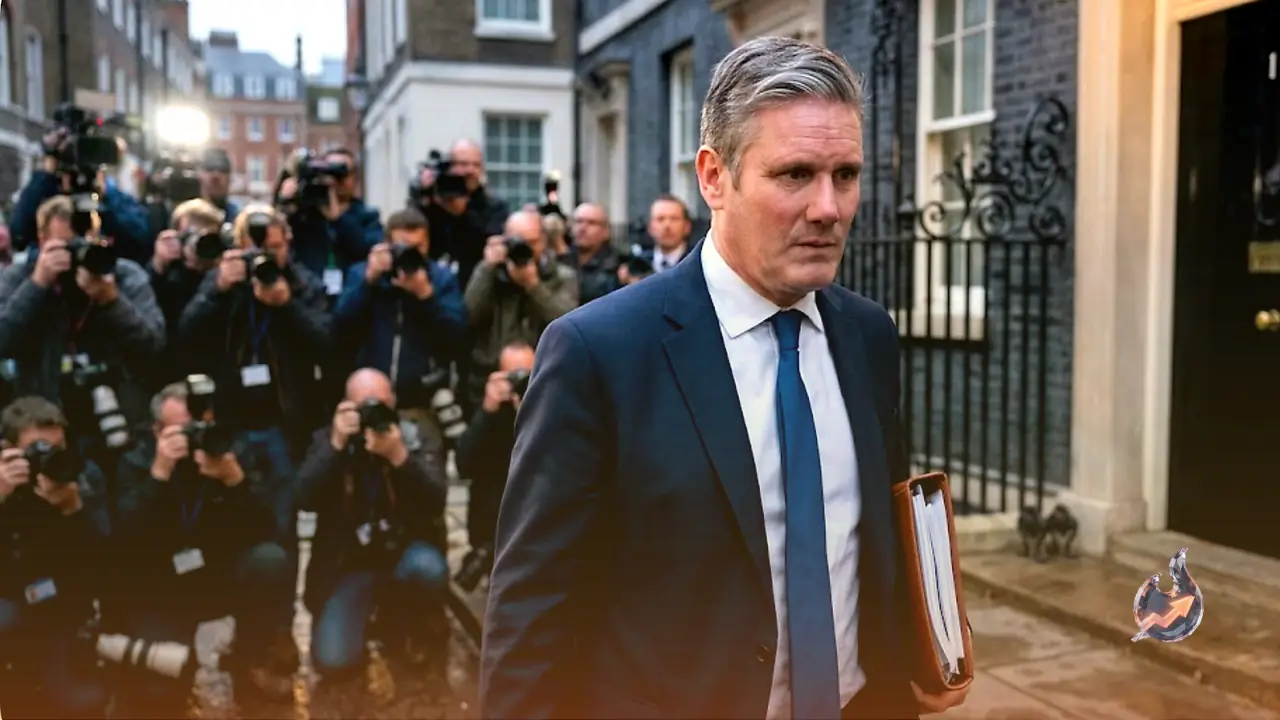

The British Pound experienced a downturn, sliding toward the 1.3200 mark, as political instability in the United Kingdom intensified following reports that Prime Minister Keir Starmer may soon step down. TrendKia reported on Sunday that Starmer's close associates expect him to announce a timeline for his departure in the coming days, a move that would set the stage for Andy Burnham to take over and mark the country's seventh prime minister in just ten years.
US Commentary and the British Currency Reaction
Adding to the speculation, US President Donald Trump shared a post on Truth Social on Sunday declaring that Starmer was preparing to resign. Meanwhile, UK Business Minister Peter Kyle remarked that the prime minister is currently reflecting on the immediate political challenges before him. This political turbulence has prompted selling pressure on the Cable (GBP/USD trading pair).
Despite the headwinds, the British currency managed a slight recovery at the end of the week, reclaiming the 1.3200 threshold after bottoming out near 1.3160. This recovery was bolstered by better-than-expected UK Retail Sales figures, though the ongoing political uncertainty continues to cap any significant bullish momentum.
The Global Importance of Pound Sterling
Dating back to 886 AD, the Pound Sterling (GBP) holds the distinction of being the oldest currency still in active use. Issued by the Bank of England (BoE), it stands as the world's fourth most actively traded currency. According to 2022 statistics, GBP accounts for 12% of all foreign exchange transactions, generating an average daily volume of $630 billion.
In the currency markets, its primary trading combinations include the GBP/USD pair (commonly referred to as 'Cable'), which comprises 11% of total FX transactions. It is followed by GBP/JPY (known to traders as the 'Dragon') at 3%, and EUR/GBP at 2%.
BoE Monetary Decisions and Economic Indicators
The monetary policy decisions of the Bank of England remain the primary driver of the Pound's valuation. The BoE maintains a core mandate of price stability, targeting a consistent inflation rate of approximately 2%. Its primary mechanism to regulate this is adjusting interest rates.
High inflation typically prompts the central bank to elevate interest rates, increasing borrowing costs for consumers and corporations. Such hikes generally support the GBP, as higher yields draw global investors looking to allocate capital. Conversely, when inflation falls below target levels, indicating a cooling economy, the BoE is inclined to lower interest rates to encourage borrowing and stimulate growth.
Economic indicators such as GDP, Manufacturing and Services PMIs, and employment statistics also play crucial roles. Strong economic growth invites foreign capital and raises the likelihood of interest rate hikes, strengthening the GBP, while soft data exerts downward pressure on the currency. Additionally, the Trade Balance, which evaluates the gap between export earnings and import spending, influences demand. High demand for a nation's exports boosts its currency, whereas a trade deficit can weaken it.
Global Financial Updates: Gold, EUR/USD, and the Fed
In other financial markets, the EUR/USD pair managed a minor recovery, stabilizing just above 1.1460 after hitting a three-month low below 1.1420. This rebound occurred amid persisting uncertainty surrounding US-Iran negotiations, which helped cap the US Dollar's decline.
Meanwhile, Gold fell for a fourth consecutive session on Monday, moving toward the $4,100 per troy ounce milestone. The metal faced resistance due to the hawkish stance of the Federal Reserve and renewed doubts over the US-Iran diplomatic talks. Interestingly, nearly four months after the outbreak of the Iran war, the US economy continues to show resilience. Initial energy disruptions and spikes in oil prices have eased lately, thanks to diplomatic headway between Washington and Tehran.
On the central bank front, the Federal Open Market Committee (FOMC) maintained its benchmark interest rate at 3.50% to 3.75% for the fourth consecutive meeting. This rate decision marked the first meeting led by Kevin Warsh, who used his debut press conference to signal a shift in the central bank's long-standing communication machinery.