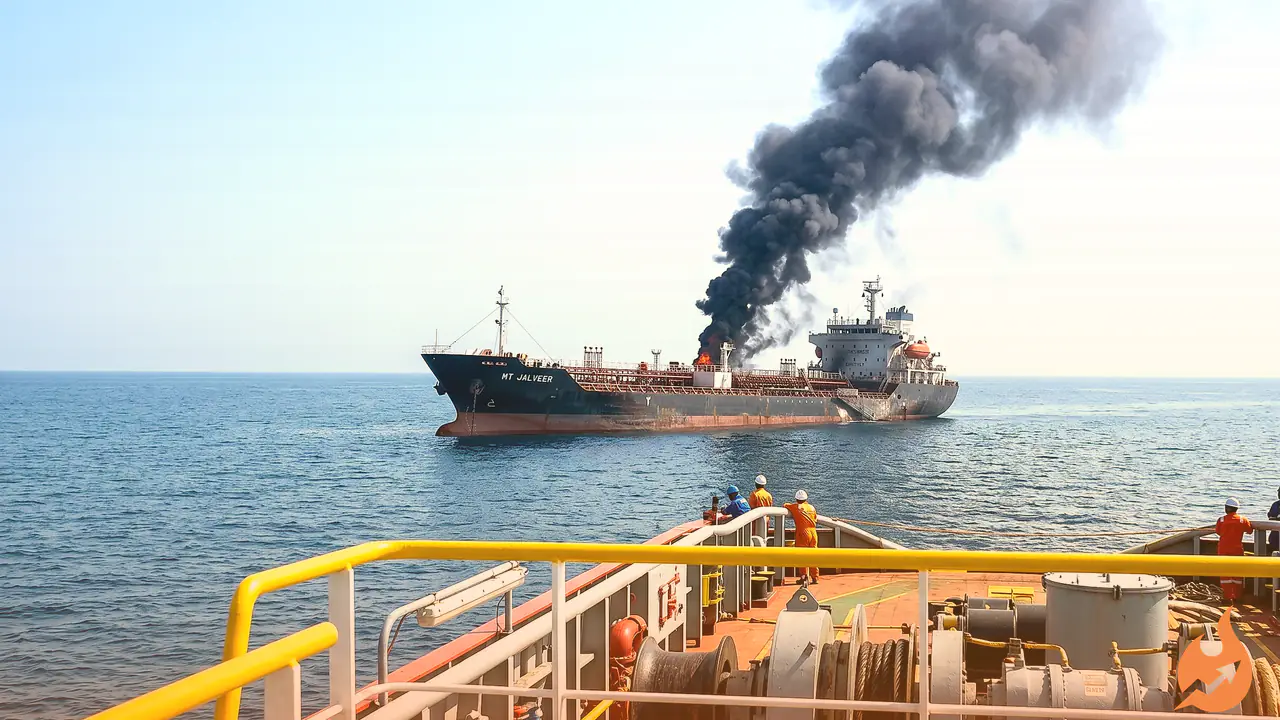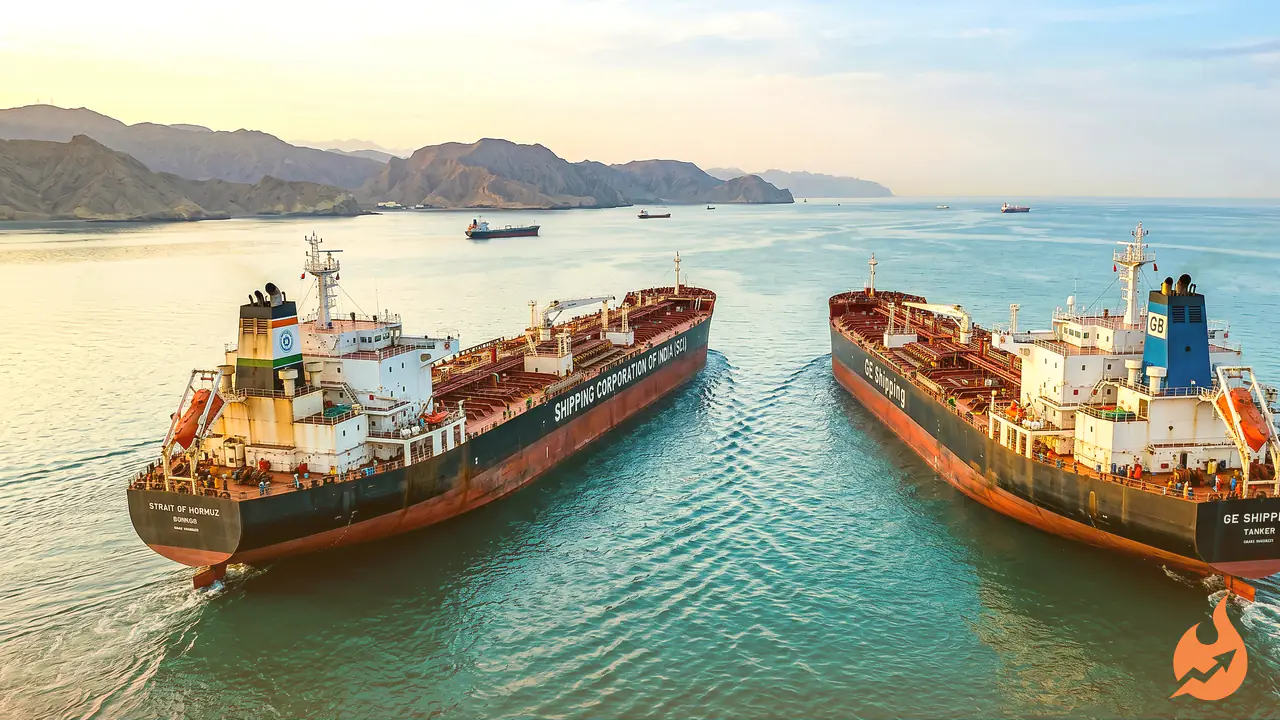

One piece of news flipped the mood across global markets — an agreement on a peace deal between the United States and Iran. The most immediate winners look set to be the companies that haul crude oil across the seas. The logic is simple: the Strait of Hormuz, through which roughly a third of the world's seaborne oil passes, is now expected to fully reopen. That expectation is exactly what drove a powerful rally in shipping stocks the moment markets opened on Monday.
Which Indian shipping stocks jumped how much
Shipping Corporation of India (SCI) led the charge, climbing about 4.61% to 310.75 rupees. The Great Eastern Shipping (GE Shipping), a major name in oil and gas transportation, traded 3.95% higher at 1,444 rupees. Joining the move were Sadhav Shipping, up 3.65%, Essar Shipping, up 2.36%, and the subsea services player Seamec, up 1.67%. Investors' calculation is straightforward — a reopened route means more business and a sharp lift in profits for these firms.
What really lit up the shares
At the heart of all this is US President Donald Trump's statement announcing an end to hostilities with Iran and an agreement on a peace deal. The historic deal is to be officially signed on June 19. It is worth understanding why the Hormuz Strait is regarded as the world's most sensitive and important sea route — more than 2 crore barrels of crude oil pass through it every single day. When tensions flared earlier this year, Iran imposed restrictions on this route, and global trade nearly ground to a halt.
Hundreds of ships stranded in the Persian Gulf
The scale of that disruption shows up in the numbers. According to data intelligence firm Kpler, around 600 cargo ships were stuck in the Persian Gulf, while hundreds more waited for a chance to enter. With the route now expected to clear, the movement of these vessels should pick up speed again.
Impact on oil prices and Asian markets
The ripple effect of the peace deal reached well beyond shipping stocks. It hit crude oil prices directly — Brent Crude fell more than 4% to settle around 80 dollars a barrel. Cheaper oil on one side and easing geopolitical tension on the other handed the market a double benefit. The result was a return of cheer not just for shipping companies but across Asian markets as a whole.