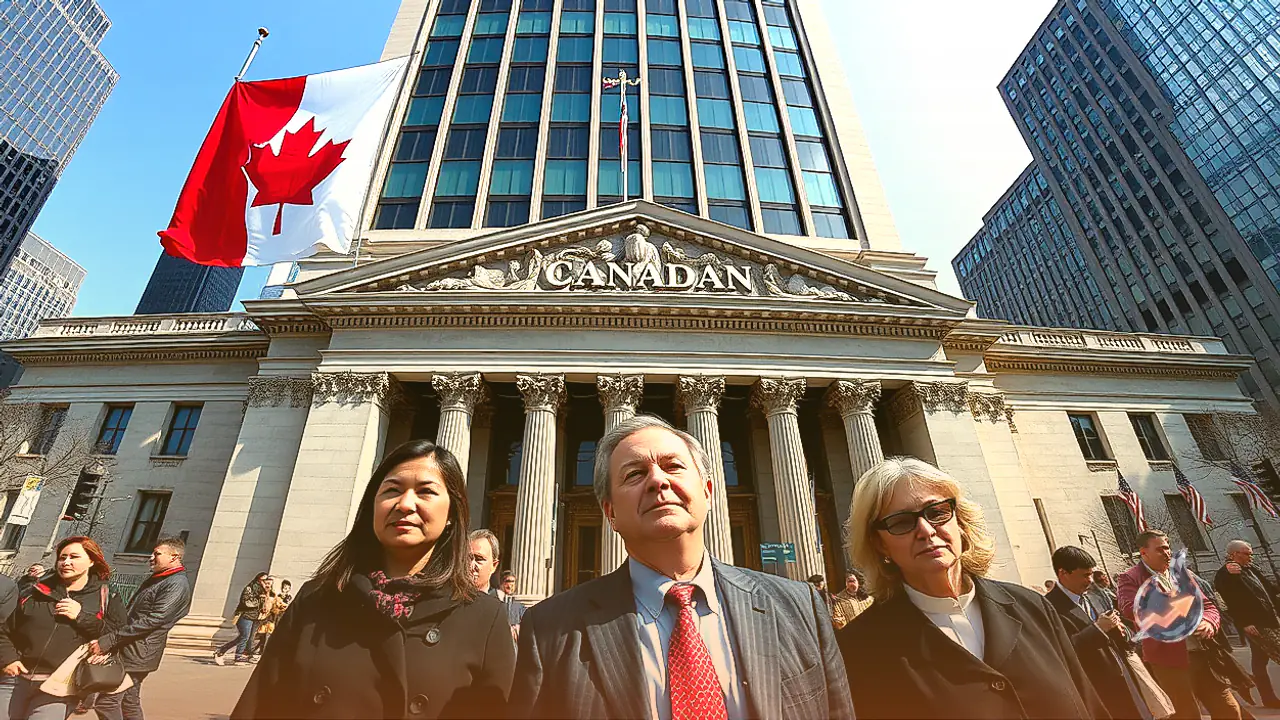
























Monetary policy at the Bank of Canada is anticipated to remain frozen through the remainder of 2026 as central bankers confront an increasingly difficult tug-of-war between sticky energy inflation and an inherently soft domestic economy. Royal Bank of Canada economists Claire Fan and Abbey Xu conducted a detailed assessment of Canada's incoming inflation figures alongside the third-quarter Business Outlook Survey, concluding that these opposing forces will leave policymakers unable to adjust benchmark interest rates heading into their October 28 decision.
Balancing Inflation Threats and Economic Weakness
Ahead of the monetary policy gathering on October 28, central bank leadership faces serious concerns regarding the trajectory of headline consumer prices. Elevated crude oil prices continue to pose a sustained threat, threatening to spill beyond direct retail gasoline costs into broader, non-energy goods and consumer services. When logistics, power, and manufacturing costs climb due to fuel price spikes, secondary price increases frequently emerge across the entire economic pipeline.
Furthermore, analysts note the distinct danger of rising inflation expectations among both commercial businesses and ordinary households. If persistent fuel expenses persuade economic participants that overall inflation will stay high over a multi-year horizon, wage-setting behaviors and corporate pricing models shift upward automatically. This structural pressure makes central bankers extremely cautious about cutting borrowing costs prematurely, even when the broader economy requires stimulative support.
Labor Market Softening and Slower Economic Growth
Against these ongoing price pressures sits an underlying Canadian economy that remains conspicuously frail. Economic progress across the country has turned uneven and choppy. Following a comparatively stronger pace of expansion during the second quarter, real GDP growth is projected to slow noticeably in the second half of 2026, pointing toward diminishing private consumption and restrained capital expenditures.
Employment statistics further underscore the prevailing domestic vulnerability. Payroll counts declined consecutively across both August and September, signaling reduced hiring appetites among employers. Meanwhile, the nationwide unemployment rate has effectively plateaued at approximately 6.5% over the past three months, following meaningful downward progress recorded in the prior year. This stagnation in job creation presents an acute policy dilemma, as elevated interest rates continue to strain indebted households and cash-constrained businesses.
Currency Markets React to Central Bank Messaging
The delicate balancing act observed in Canada reflects broader uncertainties playing out across global currency and interest rate markets. In the United States, Federal Reserve Chair Warsh delivered remarks reaffirming his determination to deliver price stability, while pointedly avoiding any explicit forward guidance regarding the timeline or direction of subsequent rate adjustments. This calculated neutrality prompted traders to pare back dollar holdings, exerting downside pressure on the greenback.
In Asian trading hours on Friday, the Australian Dollar capitalized on this dollar weakness, with the AUD/USD currency pair regaining upward momentum and stretching toward the 0.6950 threshold. Concurrently, USD/JPY faced renewed selling interest, surrendering the 158.00 level as market participants repositioned portfolios in light of the Federal Reserve's non-committal stance. Central bank hesitation worldwide has kept foreign exchange volatility elevated across major trading pairs.
Commodities and Cryptocurrencies Under Pressure
Commodities and alternative financial assets have experienced comparable indecision amid shifting macro parameters. Spot gold prices alternated between small gains and modest declines on Friday, lingering just beneath the psychological threshold of $4,200 per troy ounce. A mild pullback in the US Dollar provided baseline support, but a muted recovery in US Treasury yields across standard maturities kept gold traders from establishing a clear directional breakout.
Digital asset markets have similarly struggled under broader macroeconomic headwinds throughout October. Bitcoin (BTC) tumbled below the $80,000 mark earlier in the week before mounting a partial recovery to trade near $82,000 on Friday. Waning retail demand, tight liquidity conditions, and elevated sovereign yields have limited capital inflows across the cryptocurrency ecosystem, dampening speculative risk appetite.
Long-Term Policy Implications for 2026
Given the competing dynamics of persistent supply-driven inflation and weakening internal demand, central bankers in Canada have very limited room to maneuver. Cutting interest rates to revive a softening labor market could easily reignite broader inflation, while raising rates to choke off energy-linked price pressures risks precipitating a deeper economic downturn. Consequently, analysts at Royal Bank of Canada project that the Bank of Canada will remain locked in an uncomfortable holding pattern through the end of 2026.