
















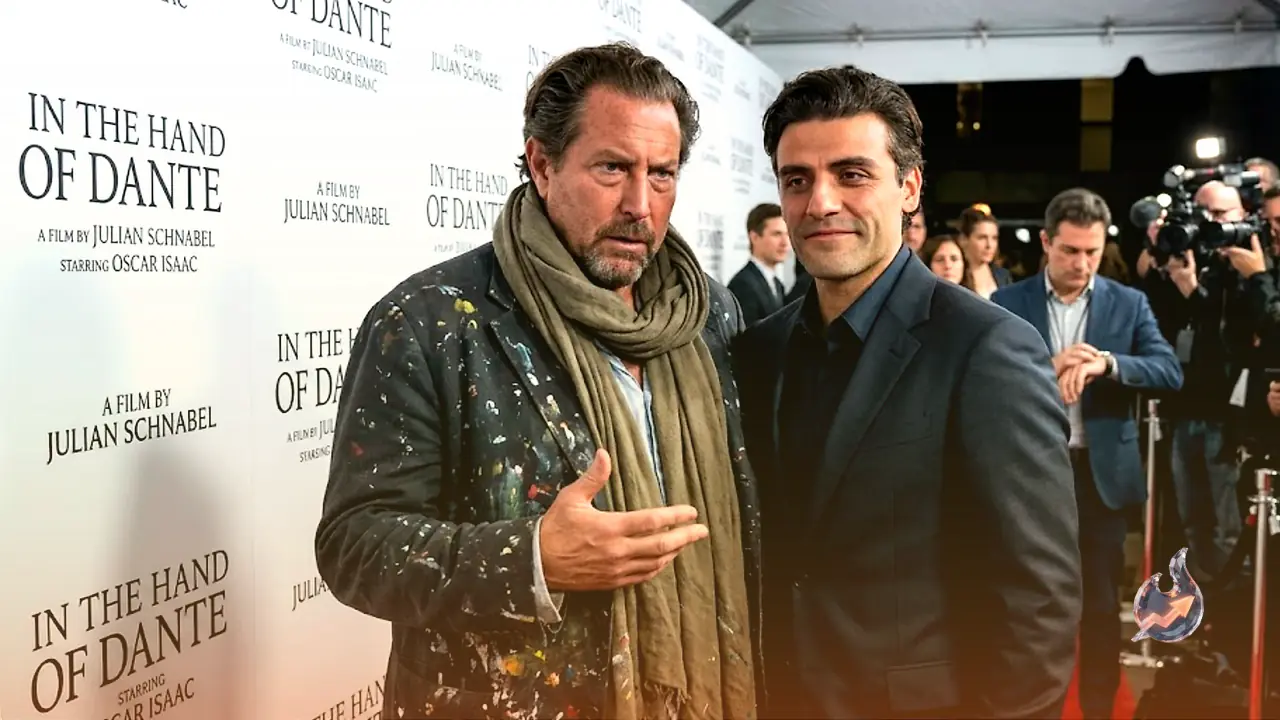

Some films reach for the heights of grand art and land flat on their faces. The In The Hand Of Dante review in a line: this is a strange, self-defeating effort from director Julian Schnabel, a filmmaker who has reached real emotional depths before. His locked-in-syndrome drama The Diving Bell And The Butterfly and his Vincent van Gogh portrait At Eternity's Gate both touched something genuinely profound. This one does the reverse, managing to feel pretentious and misjudged at nearly every turn.
Two timelines, one overstretched idea
The story runs along twin timelines, with Oscar Isaac at the centre of both. He plays the 14th-century poet Dante Alighieri, author of the 'Divine Comedy', and the real-life New York "literary iconoclast" Nick Tosches. The present-day strand is shot in crisp black-and-white, while the historical flashbacks burst into bright, almost cartoonish colour. The film is built on Tosches' sprawling, ambitious 2002 novel of the same name, in which Tosches cast himself as a semi-fictional lead.
In the modern thread, Tosches takes a job from an old friend to steal a rare copy of Dante's 'The Divine Comedy', a task that pulls him into the orbit of the Mafia. Back in the 1300s, Dante wrestles with his spiritual and creative life, though the film pitches this at a level of pomposity so heavy it tips into unintentional comedy.
A starry cast, almost all miscast
Borrowing the Cloud Atlas trick of one actor wearing many faces, several performers take on dual roles across both eras. Gal Gadot, Louis Cancelmi and Gerard Butler all double up, with Butler appearing as both a viciously violent Mob enforcer and the Pope. Martin Scorsese also turns up, sporting an enormous beard, in a baffling cameo as Dante's mentor. None of it is anywhere near as entertaining as that description makes it sound. Almost everyone is badly miscast, right across the board.
Schnabel's tone and approach feel both wildly self-important and fatally unsure of whatever it is trying to say.
Pretty in places, dull throughout
The ambition seems plain enough: to craft something on the scale of epic Renaissance-era poetry, a grand, metafictional artwork about art itself. Occasionally it does look handsome. Mostly, though, it is simply too long and too boring. "My books can't be edited any more than a leopard can be manicured," Nick declares early on. The irony is hard to miss, because a firmer hand in the edit might have trimmed this two-and-a-half-hour folly into something even remotely watchable.