
Most warring couples book a counsellor. The pair at the centre of 'Over Your Dead Body' pick a far darker shortcut: they decide to murder one another instead. That grimly funny premise is the engine of this gruesome dark comedy, directed by The Lonely Island's Jorma Taccone, the filmmaker behind 'Popstar: Never Stop Never Stopping'.
A Marriage On The Rocks
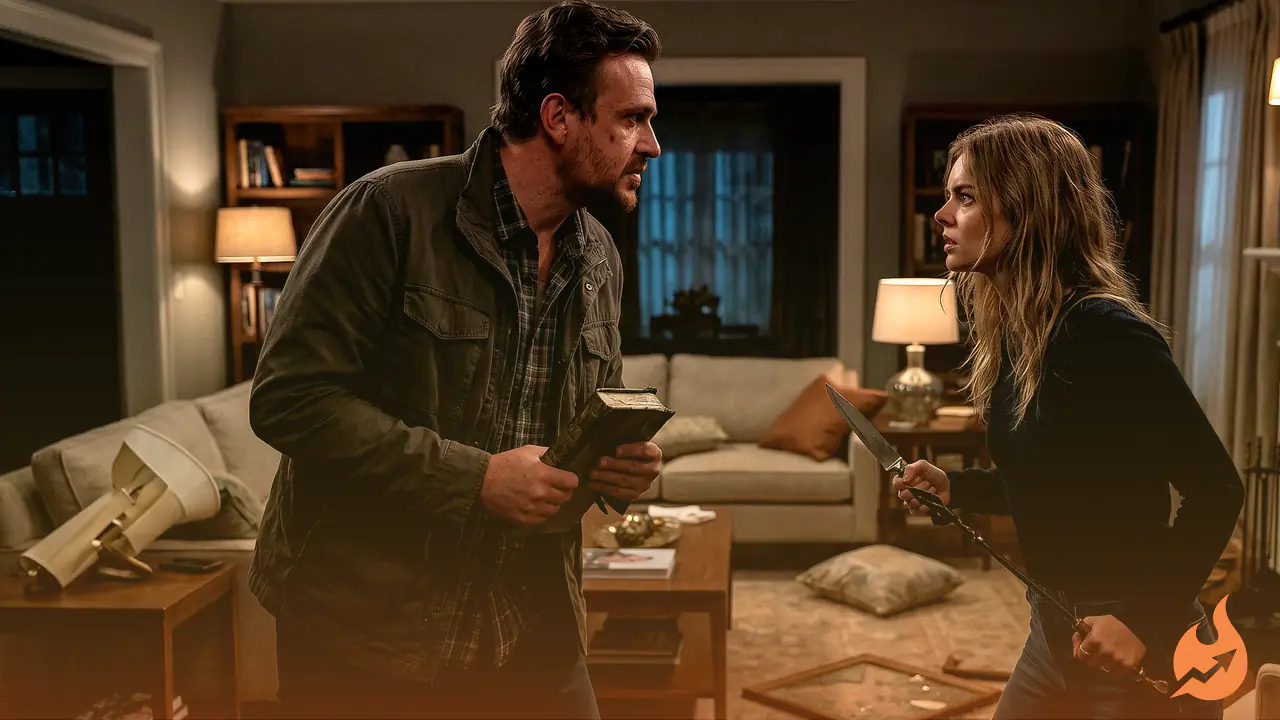
Jason Segel plays Dan, an antsy, uninspired director who once made feature films but now finds himself stuck shooting adverts and short-form content. His marriage to Lisa, an aspiring actor played by Samara Weaving (truly one of the finest on-screen screamers around), is falling apart. In an attempt to patch things up, he takes her away to his father's cabin in the woods. There they eat steak, play the world's most annoying game of Scrabble, and bicker without pause.
Two People, One Plan
Then comes the moment Dan creeps up behind Lisa, chloroform in hand, intending to knock her out before knocking her off. The plan is to cash in her life-insurance money and finally escape her belittling. But he gets a nasty shock: Lisa was plotting the exact same thing.
The two confess their bloody intentions and promptly start arguing over whose crocodile tears would play better for the police. That standoff is interrupted by some unexpected visitors to the cabin, who leave the couple fighting for their lives in an altogether different way.
A Starry Affair
The film is a remake of Tommy Wirkola's 2021 Norwegian movie 'The Trip'. Wirkola is the writer-director behind 'Thrash'. The casting here is genuinely glittering. Segel is a modern comedy icon, and the film makes no secret of its admiration for his co-star:
Weaving is one of the best Final Girls in the business.
They are later joined by Timothy Olyphant and Juliette Lewis, both on twisted, villainous form. All of which keeps 'Over Your Dead Body' watchable, especially during the scathing back-and-forths between Dan and Lisa. That central dynamic is the most interesting thing on offer, even if the couple's actual problems, cheating, debt, and a lack of respect for each other's creative ambitions, feel generic and under-explored.
Where It Comes Apart
Once the rest of the ensemble arrives, though, the film shifts gears into far more hyperbolic and graphic territory. The violence is intense and stylised, yet it often feels unnecessary, and its shock value is completely undercut by how understated the characters' reactions are. There is also a nasty streak in how it handles sexual violence, which, rather than reading as jokey or subversive, simply leaves a sour taste.
The upshot is a second half that feels like a totally different film from the one the set-up promised, crammed with incidents the script never gives us enough reason to care about, all building towards a disappointing finale.