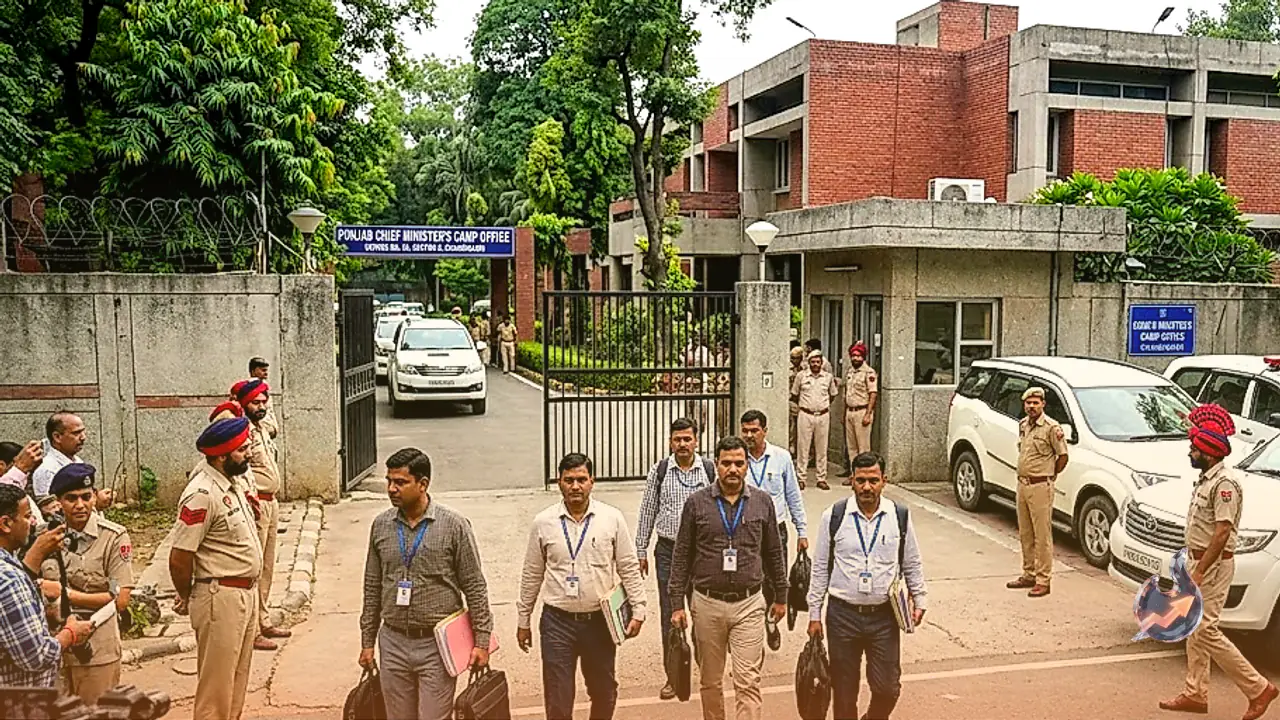



















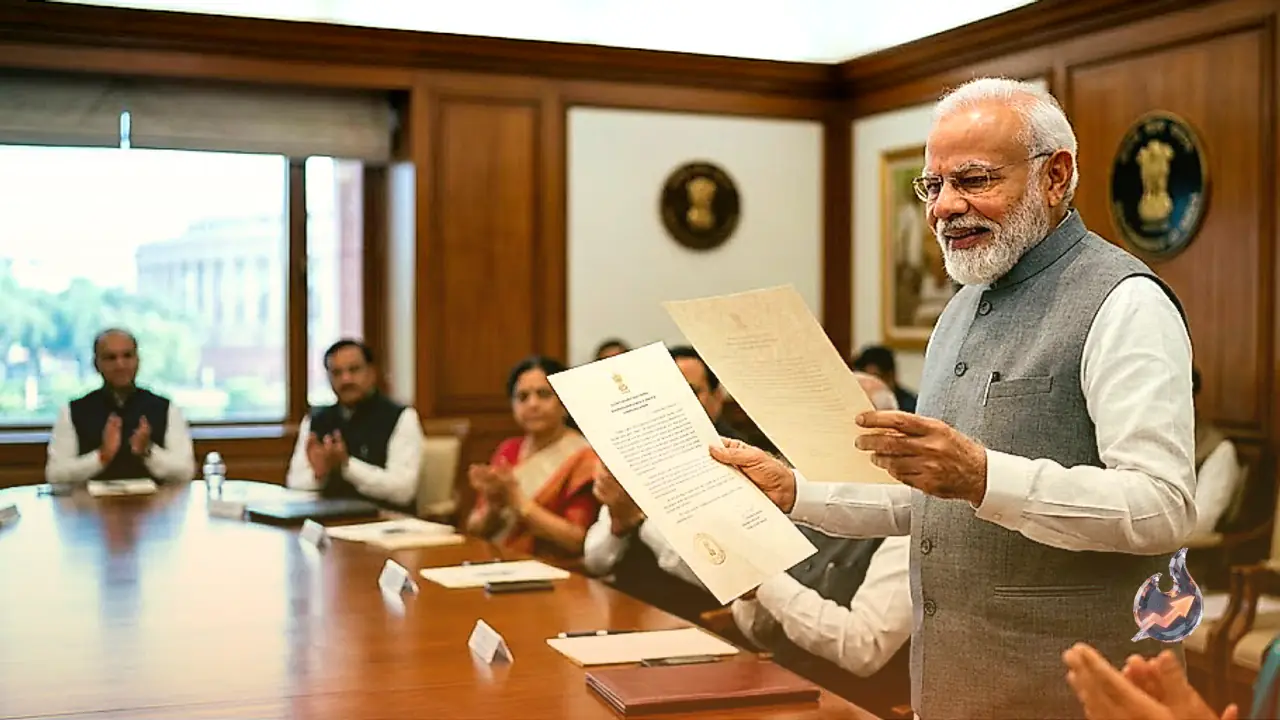

The Union Cabinet has formally approved a congratulatory and gratitude resolution commemorating Prime Minister Narendra Modi on completing an uninterrupted 25-year milestone as the head of government. The resolution presents a comprehensive evaluation of a prolonged governance era that altered the functioning of state machinery across both regional and federal domains. Electoral victories spanning three terms in the Gujarat legislative assembly followed by three consecutive general election triumphs at the Centre reflect enduring public confidence in this administrative model. The Cabinet document outlines ten major transformations, demonstrating how administrative innovations initially tested at the provincial level were subsequently scaled into national policy architectures.
Translating Regional Administrative Models into National Policy
Several administrative experiments first implemented during Narendra Modi's tenure as Chief Minister of Gujarat subsequently became foundational components of central governance. In Gujarat, the SWAGAT initiative established an institutional channel to resolve citizen grievances directly. This grievance redressal framework earned formal international recognition in 2010.
That operational template was later adapted at the Centre as the PRAGATI platform. The mechanism accelerated prolonged infrastructure ventures that had remained stalled in bureaucratic channels. Direct inter-governmental reviews connecting senior administrators and state Chief Ministers eliminated procedural bottlenecks. Similarly, the structural framework of Gujarat's Jyotigram Yojana served as the template for rolling out dedicated, segregated electrical feeders for agricultural and domestic power consumption nationwide.
Expansion of Financial Inclusion and Targeted Welfare Delivery
The Cabinet resolution underlines that insights gained from early-life deprivation helped shape subsequent social welfare interventions. Paper-heavy procedural schemes were systematically replaced with an operational architecture focused on direct end-user delivery.
Nearly 60 crore Jan Dhan accounts were established to integrate every citizen into the organized banking structure. Over 4 crore permanent housing units were constructed, and approximately 25 crore individuals were lifted above the poverty line. By removing intermediary layers and routing public funds straight to beneficiaries through digital channels, the administration established institutional transparency across state programs.
Livelihood Initiatives for Women and Youth Development
Economic self-reliance among women was linked directly to practical enterprise rather than nominal welfare assistance. Around 3.5 crore rural women were transitioned into Lakhpati Didis by integrating them with small-scale industrial activities. Concurrently, legislation reserving legislative seats for women in Parliament and state assemblies was enacted to ensure long-term political representation.
To channel youth participation, public investments supported the startup ecosystem and large-scale skill development initiatives. Agricultural stability was reinforced via the PM Kisan program, which transferred over 4 lakh crore rupees directly into the bank accounts of cultivating farmers. Dedicated developmental programs were also executed across remote pockets to uplift vulnerable tribal communities.
Complex Structural Reforms and Legal Modernization
The resolution notes that significant structural interventions were pursued without prioritizing immediate political calculations. The rollout of the Goods and Services Tax represented one such demanding and multifaceted economic reform.
Outdated colonial-era legal statutes were formally replaced with updated criminal codes. Public initiatives including digital payments and the Swachh Bharat mission were converted into grassroots citizen drives, ensuring direct public ownership. These outcomes illustrated that rigorous administrative adjustments, when implemented with consistent purpose, garner enduring public cooperation.
Capital Expenditure Expansion and Domestic Production Capabilities
Public capital expenditure was escalated from 2 lakh crore rupees to more than 12 lakh crore rupees. This strategic capital injection translated into the comprehensive overhaul and expansion of both national highway systems and the railway network.
Domestic electronics manufacturing demonstrated notable growth, expanding from 2 lakh crore rupees to beyond 13 lakh crore rupees. In parallel, substantial state initiatives targeted indigenous defense manufacturing and semiconductor chip fabrication facilities. These focused programs achieved a marked reduction in external import dependencies across critical strategic categories.
Technological Deployment from Daily Governance to Space Exploration
Technological innovations were moved out of specialized research settings to interface directly with daily citizen life. Advanced mobile telecom infrastructure alongside biometric identity frameworks enabled friction-free distribution of public benefits.
The Unified Payments Interface reshaped domestic transactional finance. During the coronavirus crisis, the swift domestic creation of vaccines and the later achievement of Chandrayaan reaching the lunar south polar region established visible benchmarks of domestic scientific capability. At present, critical institutional backing and infrastructure access are being extended to private entities operating in space exploration and artificial intelligence.
National Security Posture and Global Diplomatic Engagement
When worldwide supply chains fractured during the pandemic, domestic buffers shielded the population. In response to recent West Asian tensions and fluctuating energy markets, pre-emptive commercial and diplomatic steps ensured stable supplies of crude oil while checking domestic price volatility.
National security doctrines underwent decisive recalibration, demonstrating zero tolerance against cross-border terrorism through actions such as surgical strikes and air strikes. The revocation of Article 370 and the creation of the Chief of Defence Staff fulfilled structural administrative recommendations that had lingered for decades. Security operations contained insurgencies across northeastern states while strengthening administrative command across Left-Wing Extremism zones. Internationally, India preserved an autonomous diplomatic path, building consensus across the G20 forum and securing the formal induction of the African Union as a permanent member.