




















The political landscape of India underwent a seismic shift in 1975. When the Emergency was declared on June 25, 1975, the repercussions were felt not only at the national level but deeply affected state governance structures. At that time, Hemwati Nandan Bahuguna was steering the state of Uttar Pradesh. He was a seasoned Congress leader and a formidable organizer, whose voice held weight from Lucknow to the corridors of power in Delhi. However, this period marked the most difficult chapter of his political journey, as the central leadership’s influence within the Congress party became increasingly assertive.
Early life and activism
Born on April 25, 1919, into a Brahmin family in Garhwal—which was then part of the United Provinces and is now in Uttarakhand—Hemwati Nandan Bahuguna was deeply involved in the independence movement since his student days. He participated in the Quit India Movement, which resulted in his imprisonment. Following independence, he steadily carved out a distinct identity within the Congress organization. His organizational prowess, eloquent speaking style, and strong hold over party workers quickly brought him to the attention of the national leadership.
Rising to the post of Chief Minister
In 1973, the Congress party selected Hemwati Nandan Bahuguna to replace Kamlapati Tripathi as the Chief Minister of Uttar Pradesh. He took the oath of office on November 8, 1973. Subsequently, in the 1974 assembly elections, the Congress secured a majority, and Bahuguna was re-elected as the Chief Minister. During that era, Uttar Pradesh was considered the most significant state in the country's political arena, making the Chief Minister's role exceptionally influential.
The widening rift
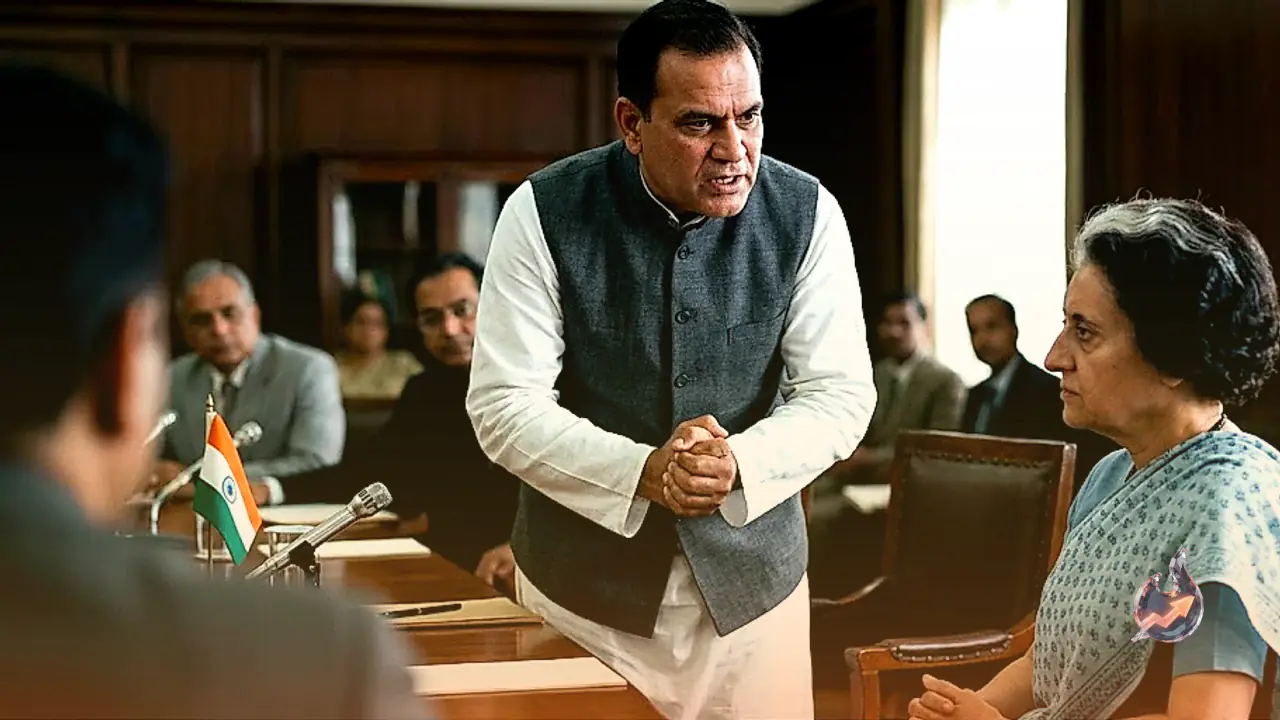
After the massive victory in the 1971 Lok Sabha elections and the success of the Bangladesh war, Indira Gandhi’s political stature was at its zenith. However, by 1974-75, the situation changed due to rising inflation, student unrest, the JP movement, and overall political instability. On June 12, 1975, the Allahabad High Court declared Indira Gandhi’s election from the Rae Bareli constituency invalid, further escalating tensions. According to his biography, 'Hemwati Nandan Bahuguna: A Political Crusader,' Bahuguna valued democratic institutions, whereas the decision-making style under Indira Gandhi was becoming increasingly centralized. Reports from The Indian Express suggest that during the Emergency, his distance from Sanjay Gandhi also widened, which significantly influenced his political trajectory.
Departure from power
On November 29, 1975, Hemwati Nandan Bahuguna resigned from the position of Chief Minister, and Narain Dutt Tiwari was appointed in his place. Historians view this development in the context of the internal power struggles of the Congress party and the mounting influence of the central leadership. While records do not attribute his removal to a single event, it is documented that the differences had become irreconcilable. Even after stepping down, Bahuguna remained active. In 1977, after the lifting of the Emergency, he left the Congress and, alongside Jagjivan Ram and Nandini Satpathy, formed the 'Congress for Democracy,' which eventually merged with the Janata Party. Indira Gandhi herself had acknowledged that Bahuguna’s influence in Uttar Pradesh posed a major threat to the Congress party.
Why this story matters
The story of Hemwati Nandan Bahuguna is not just about a Chief Minister losing his chair; it reflects the shifting dynamics between Delhi and the states, the changing power balance within the Congress, and the challenges faced by Indian democracy during the Emergency. When discussions arise regarding the most critical chapters of Uttar Pradesh’s political history, the name of Hemwati Nandan Bahuguna remains central. His life journey brings together the complexities of power, organization, disagreement, and political courage.