
The Sultanpur district of Uttar Pradesh carries a curious electoral history. For a long stretch, the people who occupied its Lok Sabha seat were largely those who were not even born in the district. In other words, the leaders who reached Parliament from here often came from elsewhere, and local voters repeatedly handed them their mandate.
The Early MPs and the Era of Outsiders
When India held its first general election in 1951-52, Sultanpur's first Member of Parliament was Mohammad Ahmad Kazmi, an advocate by profession who originally belonged to Allahabad. He was followed in the 1957 election by Govind Malviya, son of Pandit Madan Mohan Malviya, who contested from the seat and was elected. His tenure, however, was cut short — Govind Malviya passed away while still serving as the sitting MP.
The 1961 By-Election That Rewrote the Script
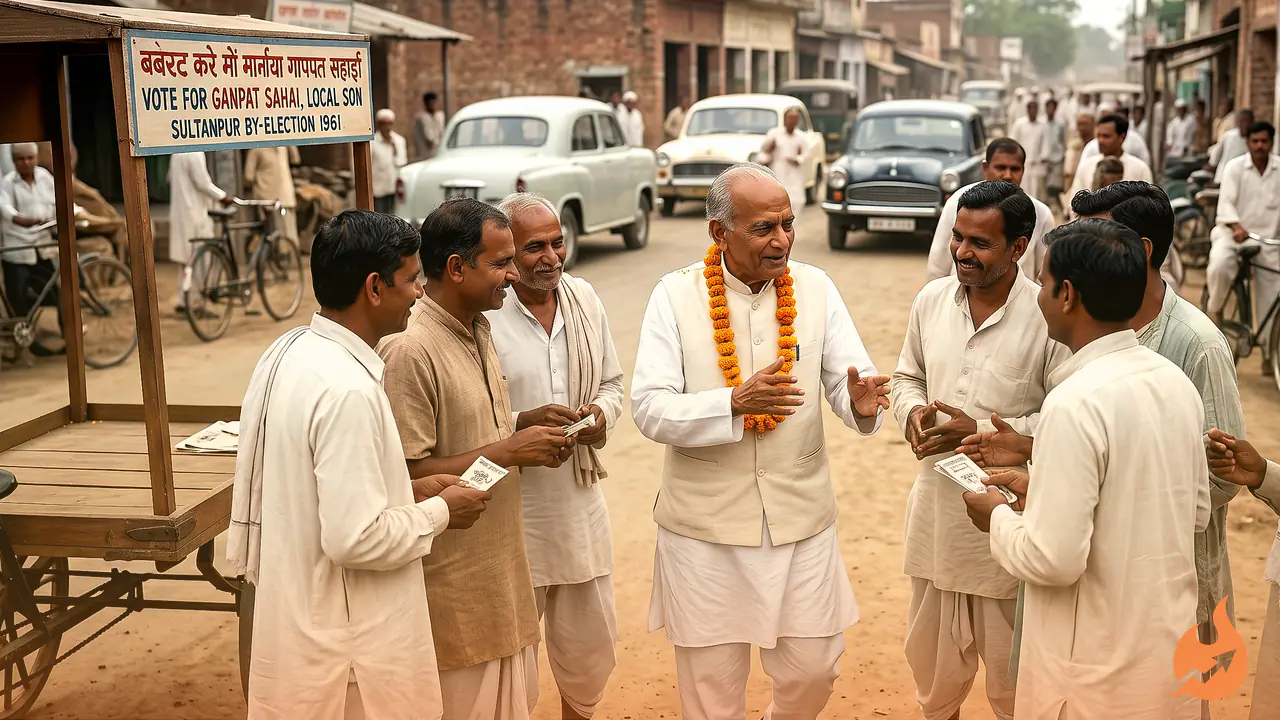
Govind Malviya's death forced a by-election on the Sultanpur seat in 1961. This time the Congress placed a big bet, fielding KC Pant — Krishna Chandra Pant, the son of Pandit Govind Vallabh Pant. But the mood among Sultanpur's voters had shifted. They weighed the question of local versus outside candidate and delivered their verdict on the basis of local identity. The result was a defeat for KC Pant, and the seat went to Babu Ganpat Sahai. It was the first time that the person winning the Lok Sabha from Sultanpur was himself a leader from the district.
The contest was a tight one. By the numbers, Babu Ganpat Sahai polled 37,785 votes, while Krishna Chandra Pant secured 36,656. The margin between victory and defeat was not large, yet local sentiment tipped the scales.
A Big Lesson for the Congress Leadership
According to senior journalist Raj Khanna, Krishna Chandra Pant's arrival in Sultanpur emerged as an important lesson for the Congress leadership. Pant did forge an electoral connection with this seat, but after that he scarcely ever set foot in Sultanpur again. In the 1961 by-election, the issue of the local versus the outside candidate was widely debated, and it was this very theme that shaped the direction of the contest.
When Every Congress Move Fell Flat
Vikram Brijendra Singh, a senior journalist from Sultanpur district, tells TrendKia that Pant's decision to contest from here was an important chapter in his political career. In fact, the Congress had pulled out every possible trick to ensure his win. At the time, Chandra Bhanu Gupta was the Chief Minister of Uttar Pradesh, and the heavy responsibility of getting party candidate Pant elected rested squarely on him. No stone was left unturned at either the government or the organisational level. From pacifying disgruntled Congressmen to wooing voters, every effort was made — yet all of it failed, and Krishna Chandra Pant was handed a defeat in the 1961 by-election.