
In today's fast-paced romantic landscape, where casual flings, one-night stands, and accelerated physical intimacy have become cultural staples, a significant number of individuals find themselves entirely alienated by the casual scene. The reality star Khloé Kardashian recently opened up an important public discussion regarding demisexuality during an episode of her podcast, Khloé in Wonder Land. Conversing with her longtime companion Simon Huck, the 42-year-old explained that she first encountered the term when Huck mentioned his own therapist had labeled him demisexual. Huck elaborated that the term denotes someone who requires an established emotional connection with another human being prior to developing any sexual attraction, remarking that this characterisation seemed to fit Khloé as well. Khloé has candidly stated that she has abstained from sex for nearly five years following her separation from her former long-term partner Tristan Thompson, with whom she shares two children. She joked that she could not recall ever having a one-night stand, adding that she feels no innate compulsion to pursue casual encounters, preferring instead to hold out until a genuine emotional rapport emerges.
The Disconnect Within Modern Casual Encounters
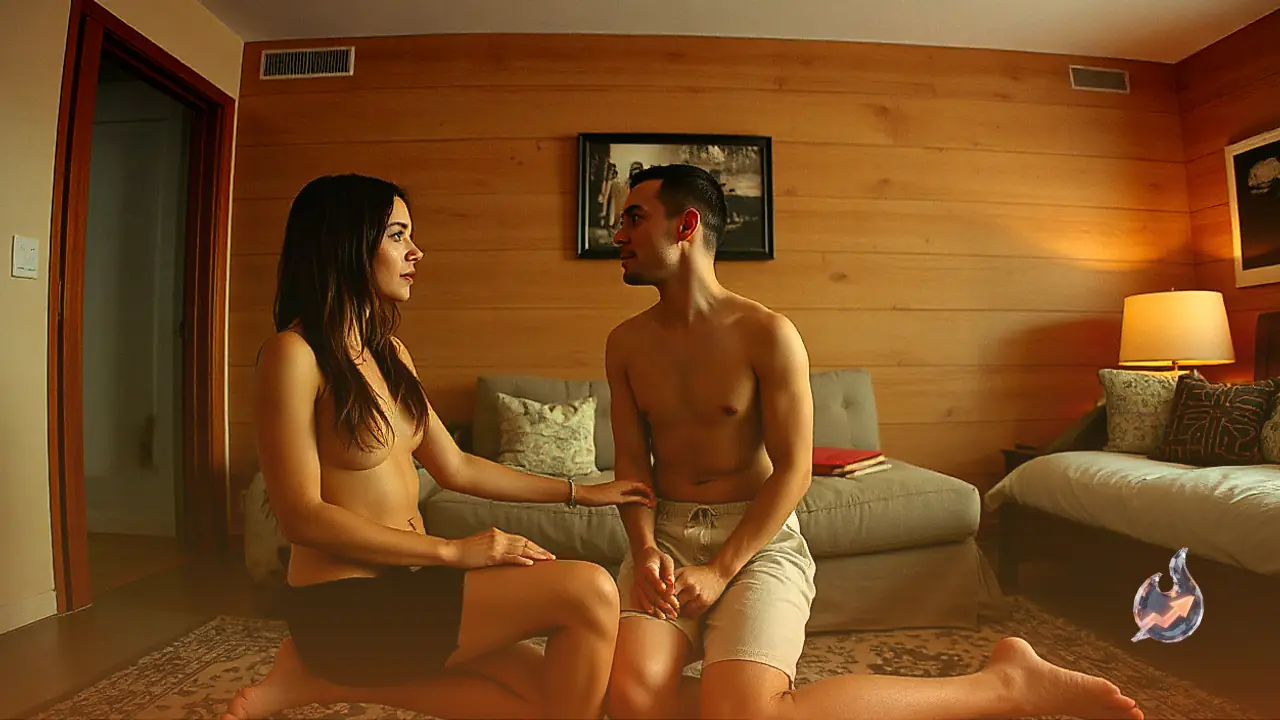
Navigating modern dating environments can be profoundly disorienting when personal inclinations clash with prevailing social norms. Many young adults in their mid-twenties undergo moments of sharp reckoning regarding their private lives. In one illustrative instance, a 26-year-old woman ended an evening of drinks by inviting an attractive stranger back to her home. Yet, the moment they settled into bed, she experienced an immediate wave of sobriety and realised she had absolutely no desire to engage in physical intimacy. After she voiced her boundaries, her companion accepted them, and they simply turned over to sleep. Lying beside that stranger, however, she closely examined her personal history and recognised that every single casual encounter she had ever experienced had left her completely unfulfilled.
The issue was never purely physical performance; rather, emotional detachment rendered the encounters entirely vacant. She consistently felt bored, numb, and eager for the minutes to pass so the encounter would end. Having previously labeled herself pansexual, the complete absence of genuine spark toward either women or men generated intense feelings of fraudulence, self-doubt, alienation, and perceived inadequacy in a culture where spontaneous physical chemistry is assumed to be universal.
Transitioning From Serial Relationships to Singlehood
Individuals who are naturally relationship-oriented frequently transition smoothly between long-term commitments during their early adult years. Spending ages 16 through 21 across two back-to-back partnerships often leads to a romanticised curiosity about singlehood. While committed relationships provide genuine solace and emotional security during difficult periods, people often feel they missed an opportunity to explore casual autonomy.
However, entering the world of uncommitted encounters frequently shatters those expectations. Despite friends sharing anecdotes of thrilling passion, liberation, and intense fulfillment, the reality often falls utterly flat. Gazing upon an attractive person in a casual setting can feel as detached as admiring the beautiful binding of a book; an intellectual recognition of aesthetics devoid of any visceral spark or internal pull. Even after repeating the experiment in hopes of experiencing some elusive chemical rush, the result remains unchanged: without a personal foundation, any casual encounter remains cold and hollow.
Distinguishing Demisexuality From Asexuality
Experiencing persistent detachment during casual situations often drives individuals to conduct their own research to understand what sets them apart. Those familiar with online communities and discussions around asexuality may initially look to that label for answers. However, asexuality often fails to match their lived experience: within committed partnerships, they genuinely desire, initiate, and enjoy sex, experiencing full physical attraction once trust and intimacy are secured.
Continuing to investigate leads many to discover demisexuality, defined as an orientation where a person experiences sexual attraction only after forming a significant emotional bond with their partner. Discovering this terminology provides profound relief, reassuring individuals that they are neither broken nor defective. Yet, this epiphany can also bring anxiety regarding future prospects, as modern courtship frequently relies on sexual compatibility as an initial test before emotional intimacy is even considered.
Slowing the Pace and Embracing Self-Discovery
Recognising one's demisexuality requires a complete restructuring of personal dating approaches. Establishing strict, clear boundaries to take things slowly often exposes how many prospective partners are unwilling to invest emotional patience, causing many to withdraw from dating altogether to prioritise self-fulfillment and personal growth.
Stepping away from traditional dating environments allows genuine connections to form organically in unexpected spaces. Undertaking a gruelling 500-mile walk across southern Europe provides an ideal environment for genuine self-reflection. In one instance, sheltering from the brutal Spanish heat under a tree led to an impromptu meeting with a fellow traveller from Brussels, who was five years younger. Over the course of the following six weeks, the pair shared their daily journey with others while setting aside time for intimate conversations in the evenings, discussing worldviews, dreams, insecurities, and personal histories.
Observing someone treat everyone around them with genuine curiosity, kindness, and attentiveness demonstrates a rare appreciation for human depth. After weeks of uninterrupted conversation and shared vulnerability, a casual first date naturally followed, marking the return of true romantic attraction and a genuine crush. Now three years into that relationship, the experience illustrates that understanding one's emotional needs is an indispensable prerequisite to cultivating a lasting and fulfilling partnership.