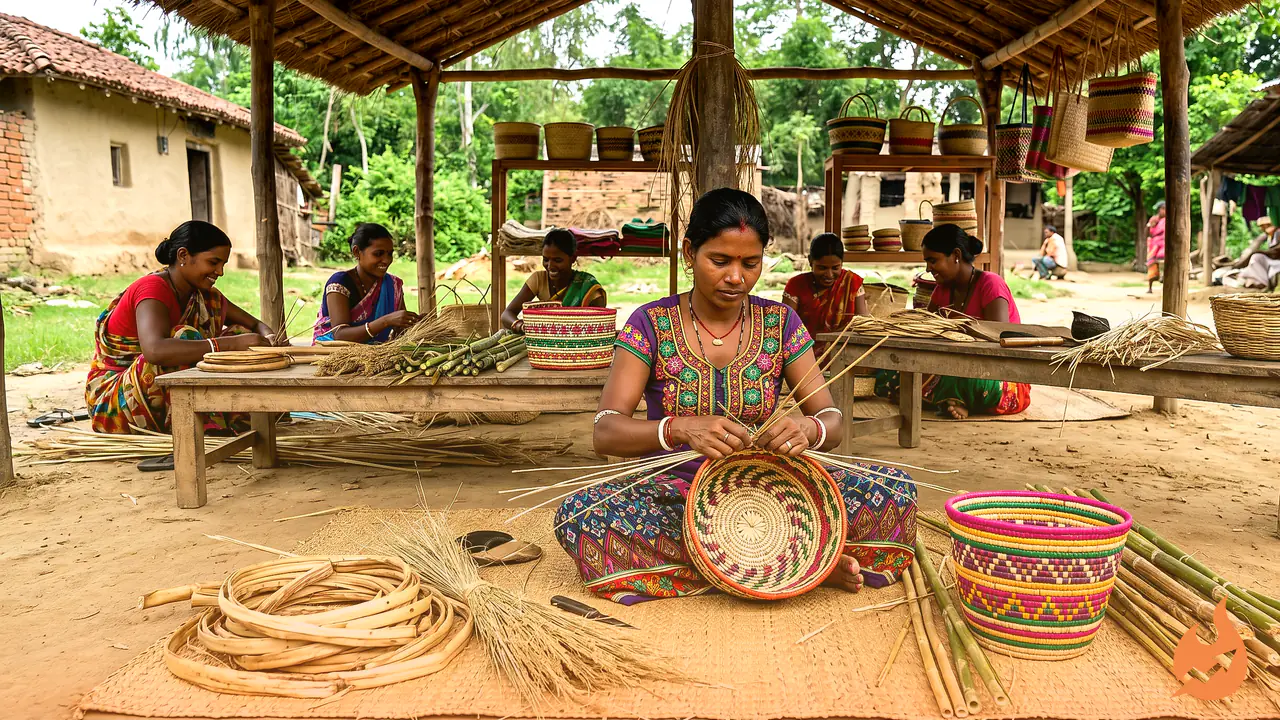

In the forest-fringe villages of Uttar Pradesh's Bahraich district, women of the Tharu tribe have found a way to turn even the things most people throw away into a source of income. Grass, climbing vines, river hyacinth, leftover crop stalks and even banana stems — all of these are being transformed by their skill into products that now enjoy strong demand in the market.
Everyday and Decorative Items From Munj Grass
Munj grass grows not only in Bahraich but in almost every forest across India. In the villages bordering Bahraich's forests, Tharu women use this grass to make a range of items — boxes to keep rotis, pots for flowers or decoration, and much more. The process takes real effort. The women first cut the grass from the forest, dry it, clean it thoroughly, then soak it in water before weaving it and adding colour.
Cane Furniture: Once an Unknown Name
There was a time when people did not even know the name of cane furniture. But as times changed it became so popular that today chairs, tables, swings and all sorts of decorative pieces are being made from it in every corner of India. Cane is a plant that grows on its own in the forest, climbing up from the ground over bushes and tall trees. It is cut, dried and shaped into attractive chairs and dining tables. Demand for these is now rising sharply, and people are earning good money through them.
River Hyacinth and a Cap That Beats the Heat
Bahraich's Mihinpurwa area sits right next to the forest. The women living in its villages make items not only from forest materials but also from the water hyacinth found in the river. Among these is a special heat-beating cap that brings considerable relief in harsh sunshine. It blocks direct sunlight, keeping the head cool.
Lotus Stems Become a Means of Earning
In the rivers and ponds of rural and forest areas, people have now started cultivating lotus for employment. The fruit and flower of the lotus have long been put to use, but now women are also using its stem to become self-reliant and earn a good income. For this, the stem is brought in and dried, then woven to make various decorative items and bags.
Durable Products From Banana Stems People Throw Away
These women have not made a livelihood only out of forest materials — they have gone a step further and started using even the waste banana stem that people discard as useless. Once the fruit has been harvested and the stem is thrown away, the women collect it, clean it, dry it and craft charming items from it. These include baskets (dalia), decorative pieces and much more, all of which are quite durable and cause no harm to the environment even after they decompose.
Hand Fans From Wild Bamboo
With changing times, people have begun making many kinds of items from bamboo as well. These days the women living near the forest are making hand fans from wild bamboo to provide relief in the heat, and earning well from them. To make them, hollow bamboo is brought in and carefully split down the middle into several parts to form the hand fan. The women then sell these at good prices, becoming self-reliant while sharpening their craft.
Wheat Stalks Earn the 'One District One Product' Tag
In Bahraich, the wheat stalk has been included under the One District One Product (ODOP) scheme, and it all began in the village itself. Tharu tribe women started making captivating artworks from wheat stalks, which gradually grew so popular that the government granted it One District One Product status. Today, women across villages and the countryside are earning good money by making various items from wheat stalks, bringing pride to the district and the entire state.
Magic From Leftover Field Stalks Too
The Tharu women are showing their skill not just with waste from the forest but also with the residue of grains grown in their own fields. After harvesting the arhar (pigeon pea) crop, they use the leftover stalks to make different items that are beautiful to look at and quite durable as well. In this way, these women are crafting useful goods from all kinds of forest and farm materials and earning a good living.