






















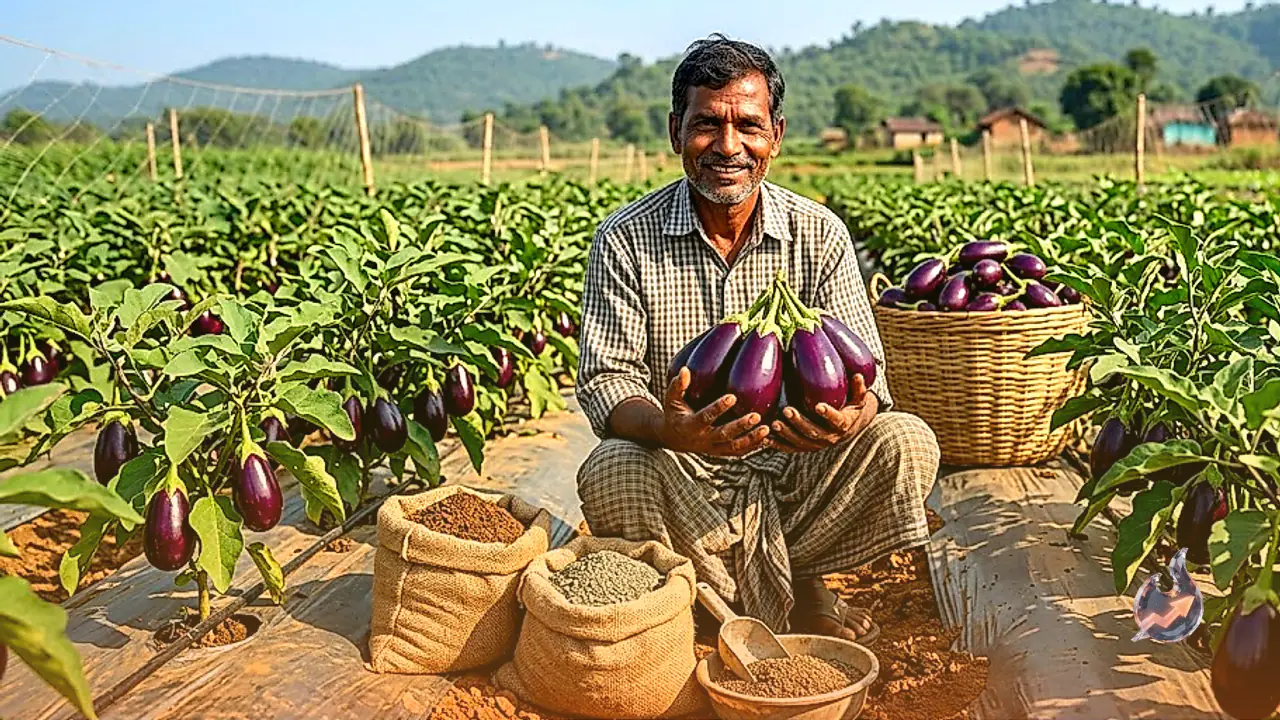

In Ranchi, the capital of Jharkhand, a farmer named Shyam has turned a single acre of land into a brinjal farm that yields close to 3 tonnes of produce, and according to him, not one brinjal comes out rotten. That claim isn't just talk, it comes from years of relying on homemade fertilisers, mulching techniques and careful field management rather than expensive market chemicals.
Why brinjal actually rots
Shyam explains that rotting in brinjal plants almost always comes down to just two reasons, nothing else. The first is poor soil fertility, and the second is inadequate watering. Because of this, he keeps a close watch on both factors throughout the growing season, making sure irrigation is timely and the soil stays nutrient rich. He believes that if farmers simply fix these two basics, the rotting problem disappears almost entirely.
A homemade fertiliser built from neem and mustard cake
Alongside regular irrigation, Shyam prepares a special fertiliser using neem cake and mustard cake. While preparing this mix, he adds a small quantity of cow urine to it as well. He says that once this mixture is applied to the field, pests simply stop appearing. It is an entirely homegrown, low cost method that skips expensive pesticides altogether, yet delivers results he trusts season after season.
Mulching paper keeps weeds and pests away
Shyam makes it a point to use mulching paper across his field. Its biggest benefit, he says, is that weeds stop growing and every drop of water and every bit of fertiliser applied goes straight to the plant's roots instead of being wasted. His advice to other farmers is simple, never grow brinjal without mulching paper, because it significantly cuts down the chances of a pest infestation.
Netting the field to keep animals out
The second major step, according to Shyam, is fencing the entire field with netting so that no animal can wander in. He points out that stray animals, big or small, often enter fields and leave behind waste, which in turn attracts pests and insects. This is a factor most farmers overlook, yet it is one of the biggest reasons crops get damaged. That is precisely why Shyam has wrapped his entire field in netting.
Watering three times a day and staking every plant
Shyam is particular about how much water his plants get. During summer, he irrigates the field up to three times a day so the plants never run short of moisture. He also plants small sticks next to every brinjal plant to give it support, helping it grow upward instead of bending or drooping toward the ground.
Why the plant should never touch the ground
According to Shyam, letting a brinjal plant touch the soil directly is a major mistake. When that happens, the plant and its fruit develop spots, which sharply raises the risk of pest attacks. That is why he always keeps the plants propped up with sticks, well clear of the ground. Alongside this, he continues using vermicompost and cow dung manure regularly in his field, which keeps the soil healthy and helps the crop stay protected for the long term.