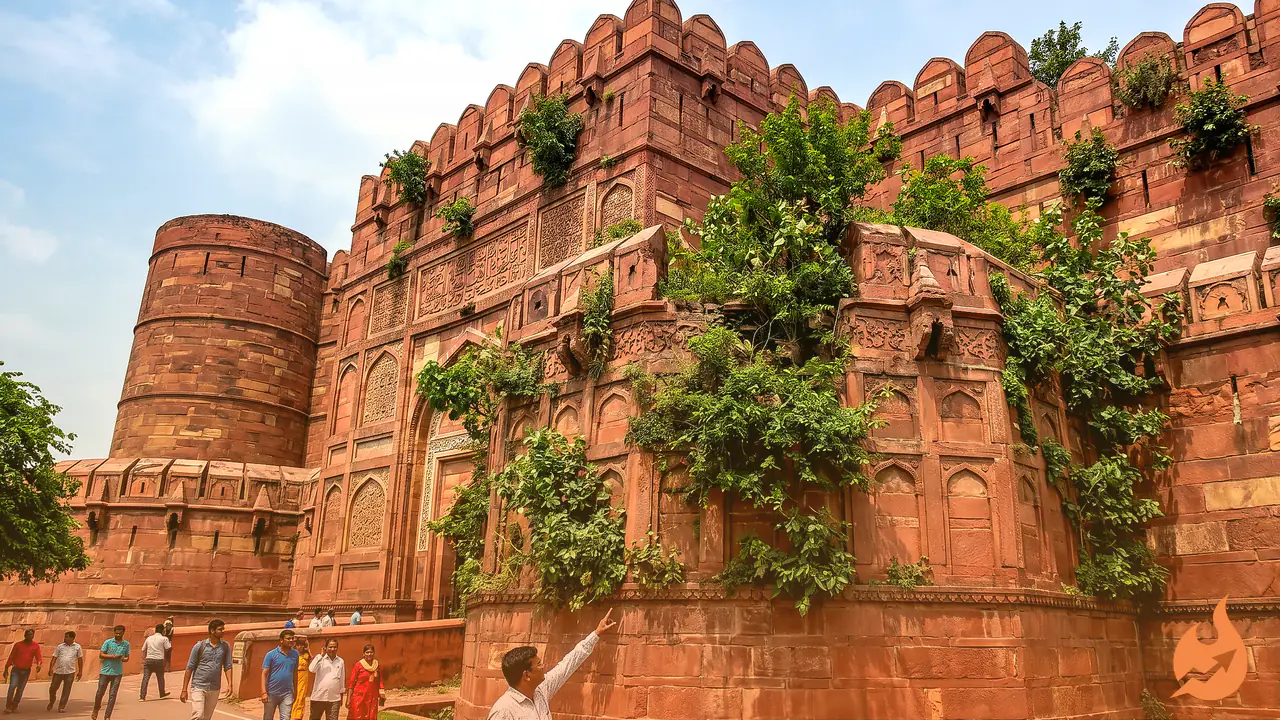

Agra, in Uttar Pradesh, was once the nerve centre of Mughal rule, and its great fort stood as the strongest symbol of that power. Today the same monument is quietly heading toward trouble, with wild plants sprouting all along its outer walls. In several spots these plants have grown so large that, if they are not cleared in time, they could split the fort's sturdy walls and cause serious damage.
One Of Three World Heritage Sites, Yet Neglected
Agra was known as the capital of the Mughals, and for many years their emperors governed while living inside this very fort. It is one of the three UNESCO World Heritage Sites located in Agra, and thousands of tourists arrive every single day to admire its beauty. At present the fort is a protected site under the Archaeological Survey of India, and crores of rupees are spent on its upkeep every year. Despite that, a variety of plants have sprung up on the outer walls, and at many points they have grown to a considerable size.
The Grandeur Of Diwan-e-Khas And Diwan-e-Aam
Built from red sandstone, the fort is famous worldwide for its exquisite carvings and is also called the 'Mini Lal Qila' (Mini Red Fort). It was once the principal residence of the Mughals, and it was from here that royal decrees and farmans were issued. Inside, in the 'Diwan-e-Khas', the emperor would sit with select and royal figures to take decisions on strategy and trade — a space where not everyone was permitted to come and go.
The 'Diwan-e-Aam', on the other hand, was where the emperor listened to the grievances and problems of ordinary people. The emperor's ministers and all his courtiers would be present in this hall, and people's difficulties were resolved on the spot. Today several parts of the fort have been closed off to ordinary visitors, while the outer walls keep crying out for repair. The real question now is when exactly the ASI will turn its attention this way and begin the work of removing these plants.
From Badalgarh To The Agra Fort
The fort's history runs even deeper than the Mughal era. According to historical accounts, it was originally a small brick fort known as 'Badalgarh', held by the Rajput king Badal Singh. In 1080 AD, the army of Mahmud Ghazni seized it. Later, in the year 1504, Sultan Sikandar Lodi of the Delhi Sultanate travelled to Agra, had the old fort repaired and spent some time here. In the 16th century, after the Second Battle of Panipat, the Mughal emperor Akbar took control of the fort.
In 1565, Akbar had the old structure demolished and ordered the construction of a vast new fort in red sandstone. Historians say that after the relentless labour of around 4,000 craftsmen, this magnificent fort was completed in the year 1573. After that, several Mughal emperors ruled while residing here. Today, domestic and foreign tourists come to take in its unmatched beauty — but the plants growing on its outer walls are staining that very beauty. Unless they are removed soon, the danger of deep cracks forming in the walls will remain.