






















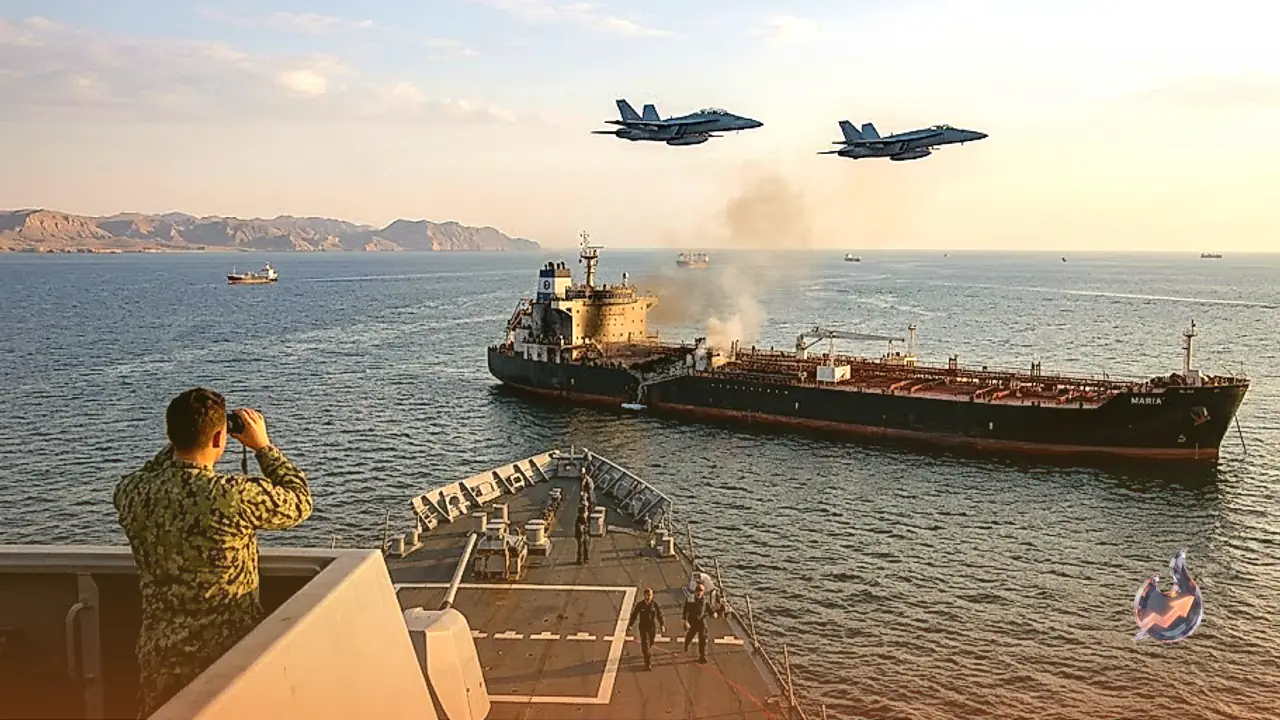

The US military has unleashed a fresh round of strikes against Iran, widening a campaign it says is aimed at keeping the Strait of Hormuz open to shipping. The US Central Command (CENTCOM) confirmed the new wave of attacks on Wednesday, underlining just how central this narrow waterway remains, a passage through which a large share of the world's crude oil moves, so that any clash here feeds straight into global energy prices.
Alongside the strikes, the military said US aircraft fired missiles into an oil tanker's smokestack in the critical channel, disabling the vessel entirely. Meanwhile, when reporters asked US President Donald Trump whether Iran faced a deadline before the US began attacking Iranian bridges, Trump said he does not like giving deadlines.
Iran's Response
Iran's top negotiator and parliamentary speaker Mohammed Bagher Ghalibaf laid out his country's stance amid the escalating tension. He said Iran has "never welcomed war, nor do we now," while adding that "we must always be prepared for battle and stand firm to protect our national security and interests." The message made clear that Tehran is not seeking a confrontation, yet is in no mood to back down under pressure either.
An Immediate Jolt to the Oil Market
The geopolitical strain showed up almost instantly in crude prices. At the time of writing, West Texas Intermediate (WTI) was up 0.55% on the day at $79.60. Any threat to a chokepoint like Hormuz raises fears of supply disruption, and it is precisely that fear that nudges prices higher.
What WTI Crude Actually Is
WTI oil is a type of crude oil traded on international markets. WTI stands for West Texas Intermediate, one of three major crude types, the other two being Brent and Dubai Crude. It is also referred to as "light" and "sweet" because of its relatively low gravity and low sulfur content respectively. Considered a high quality oil that is easily refined, it is sourced in the United States and distributed through the Cushing hub, known as "The Pipeline Crossroads of the World." WTI serves as a benchmark for the oil market, and its price is frequently the figure quoted in the media.
What Drives the Price
Like every other asset, supply and demand are the key forces behind the WTI oil price. Strong global growth tends to lift demand and prices, while weak global growth does the opposite. Political instability, wars and sanctions can disrupt supply and move prices, exactly the kind of pressure now playing out around Iran. The decisions of OPEC, the group of major oil-producing countries, are another key driver.
The value of the US dollar also matters, since oil is predominantly traded in dollars. A weaker dollar can make oil more affordable and therefore support demand, while a stronger dollar makes it costlier.
The Role of Inventory Reports
The weekly oil inventory reports published by the American Petroleum Institute (API) and the Energy Information Agency (EIA) also move the WTI price. Changes in inventories reflect the shifting balance of supply and demand. A drop in inventories can signal rising demand and push prices up, while higher inventories point to increased supply and drag prices down. API releases its report every Tuesday and EIA the day after. Their results are usually similar, landing within 1% of each other 75% of the time, and the EIA data is regarded as more reliable because it comes from a government agency.
The Weight of OPEC and OPEC+
OPEC, the Organization of the Petroleum Exporting Countries, is a group of 12 oil-producing nations that collectively set production quotas for its members at twice-yearly meetings, and those calls often ripple through WTI prices. When OPEC lowers quotas it can tighten supply and push oil prices higher, while raising output has the reverse effect. OPEC+ refers to the wider group that adds ten extra non-OPEC members, the most notable of which is Russia.
Taken together, the latest American strikes on Iran and the deepening standoff over the Strait of Hormuz are not merely a military story. They sit at the heart of an equation that shapes everything from pump prices for ordinary drivers to the health of major economies worldwide.