





















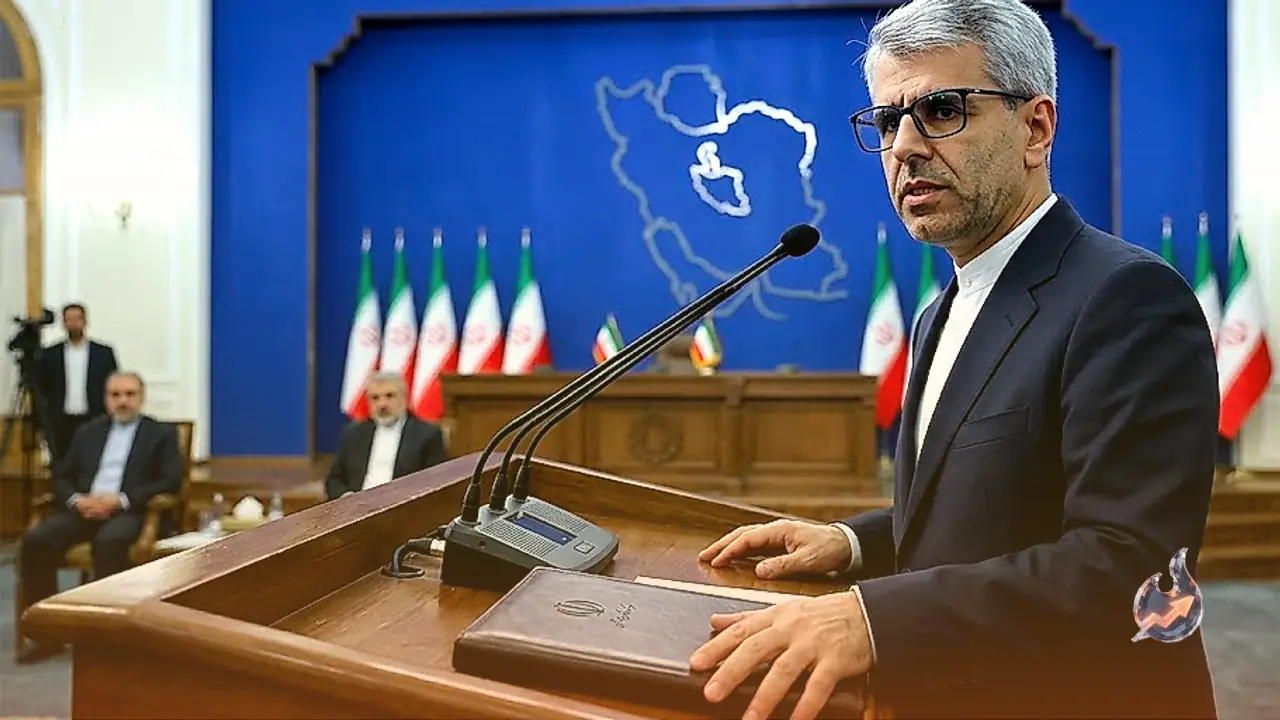

Iran has made it clear that it has no plans to resume talks with the United States for now. Foreign Ministry spokesperson Esmaeil Baghaei said on Wednesday that the country's full attention and energy are currently focused on its own security and defense. The remark comes at a time when military tension between the United States and Iran keeps deepening across West Asia. According to Iran's state media, Baghaei also said Iran no longer considers itself bound to honour the memorandum of understanding it had signed with the United States, one that was meant to end the ongoing conflict in the region.
Why Iran Is Refusing To Return To The Table
Baghaei said Iran will not return to the negotiating table as long as the United States keeps violating its commitments under the memorandum of understanding reached on June 17. He said there is currently no plan for talks and that the country's entire focus is on its own defense. His comments came in response to a US claim that its military operations would eventually force Iran back to the negotiating table. Iran has separately already made clear that it will not compromise on the Strait of Hormuz, and that the United States will not be able to force the waterway open through war.
Iran's New Stand On The Memorandum Of Understanding
The Foreign Ministry spokesperson said Iran believes the United States failed to fulfil its responsibilities under the agreement right from the start, which is why Iran has also decided to reconsider its own obligations. Baghaei explained it this way: "A memorandum of understanding is based on mutual commitments between both sides. If the other side violates it, we are also not obligated to fulfil our responsibilities. This is a principle, and we will continue to follow this path. The other side showed bad faith from the very first article of the memorandum of understanding and broke its promises." In other words, Iran's argument is that once the United States broke trust at the very foundation of the agreement, there is no reason for Iran to honour it unilaterally.
Public Backing And A Warning Of Retaliation
Baghaei also claimed there is widespread public support within Iran to counter US pressure. Alongside this, he issued a clear warning that if Iran comes under any military attack, its armed forces will respond with full force. He said: "Our armed forces will respond to any aggressor with full force. If they attack, they too will face a counterattack." This warning comes at a time when the United States continues to carry out military operations against Iran's coastal areas, which has further raised the risk of confrontation between the two countries.
Escalating Standoff Over The Strait Of Hormuz
The United States says these military operations are aimed at weakening Iranian military capabilities that could be used to threaten commercial vessels passing through the Strait of Hormuz. Iran, however, has completely rejected these allegations. Iran argues that under Article 5 of the 14-point memorandum of understanding, the responsibility for managing traffic through the Strait of Hormuz was assigned to Tehran itself, making the US allegations baseless. Tensions between the two countries have intensified further following recent US military operations targeting Iran's infrastructure and maritime assets, and there is currently no sign of either side easing its position.